Warm Minimal in a Singapore Home: Matching Solid Wood and Bamboo Furniture the Right Way
Most Singapore flats I walk into in Tampines, Bedok, or Punggol are doing the same quiet thing right now. The homeowner has pulled the curtains a little wider, painted the walls a soft off-white, and is now staring at a piece of paper with measurements, wondering which piece of furniture will not break the spell. The brief I keep hearing is the same: warm, minimal, calm. The unspoken requirement is that every piece must survive a narrow lift, a tight service corridor, and the realities of an HDB or condo doorway, usually around 90 cm wide.
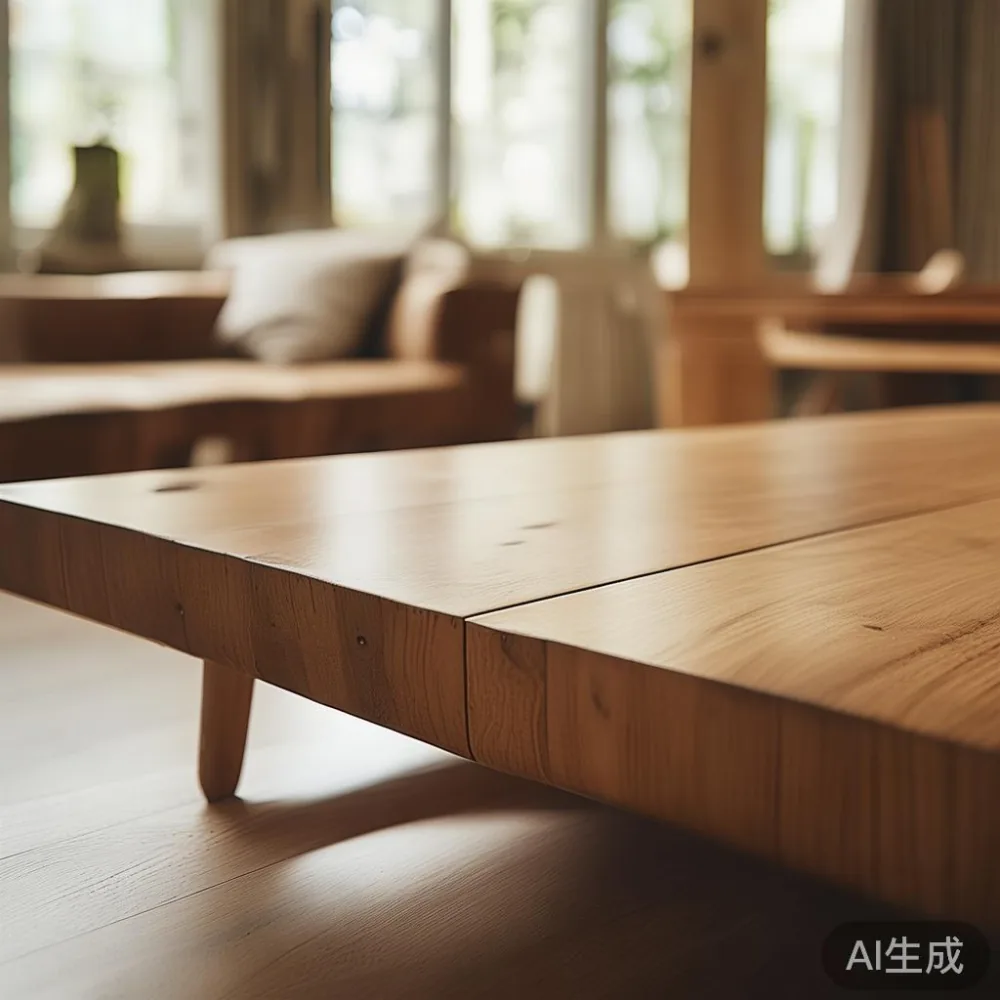
This guide is written for that exact moment. It assumes you are working with a compact Singapore floor plan, a measured budget in SGD, and a love for materials that age well, especially bamboo furniture, solid oak, walnut, and ash. I will reference pieces I have seen in actual homes, including a dining table from a Foshan workshop called MIDHILL that turned up at a friend's Punggol Waterway terrace last month, packed flat and assembled in under 40 minutes with two people.
What does warm minimal really mean in a 90 sqm HDB?
Warm minimal is not Scandinavian white. It is closer to a Japanese ryokan crossed with a Provence kitchen, light luxury without the gilt. The palette stays narrow: off-white walls, light beige stone or micro-cement, one warm wood tone, one darker accent, and a single soft textile in oat, sand, or clay. The light in a Singapore afternoon is strong, so warm minimal relies on diffusing rather than blocking it with linen roller blinds and light-filtering sheers.
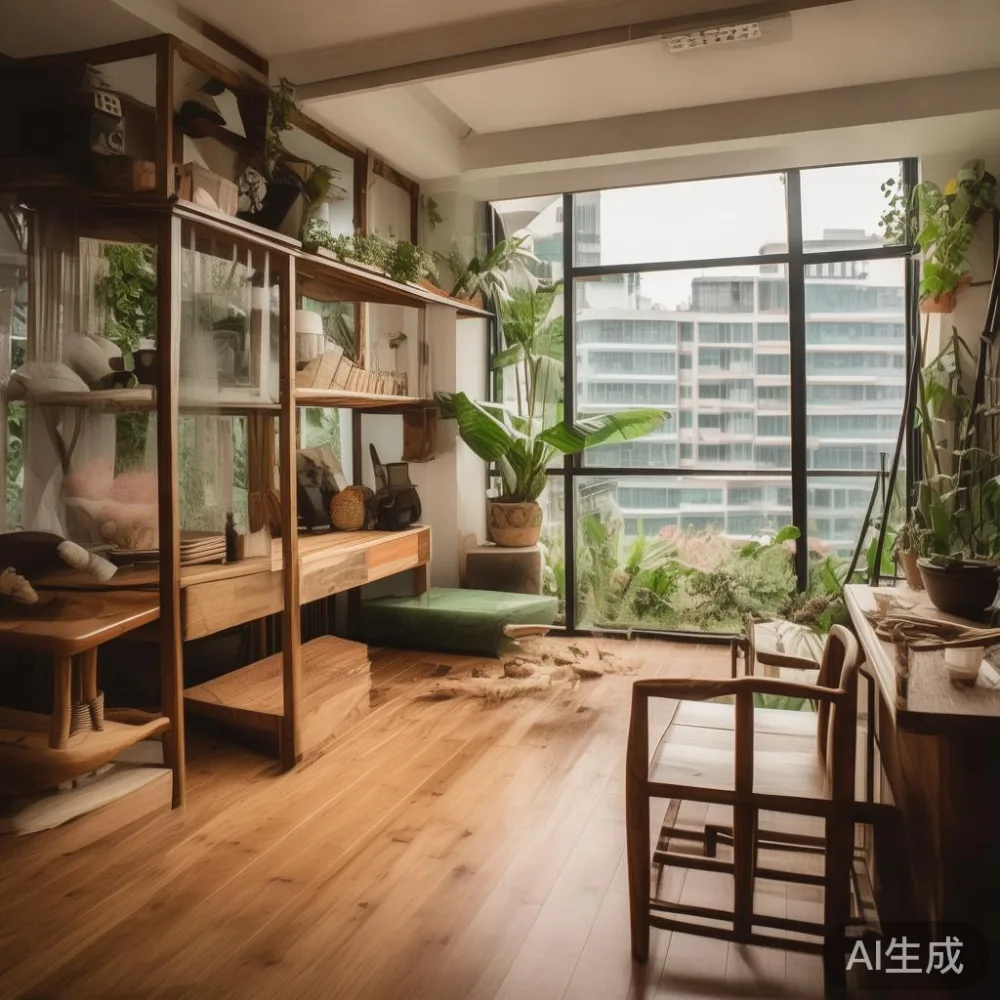
For furniture, think fewer pieces and better bones. A solid wood sofa frame with a removable linen cover, a bed frame with a low headboard, a dining table that seats six but extends to eight for festive occasions, a wardrobe that runs floor to ceiling to hide visual noise, and one nightstand per side. Bamboo furniture fits this brief naturally because the grain is warm, the lines are quiet, and the price in SGD is friendly compared to imported solid oak.
How do I plan around lift, corridor, and doorway widths before I order?
Before any aesthetic talk, you measure. Singapore HDB lifts are typically 1.1 m wide by 1.4 m deep with a door opening around 80 cm. Newer condos at Punggol Northshore or Bedok are similar, though some private lifts reach 1.6 m. Service corridors and front doors tend to sit between 90 cm and 1 m. Anything that cannot work through these three checkpoints either has to be flat-packed, knocked-down construction, or it simply does not enter your home.
When I visited my colleague's three-bedder in Tampines GreenRidges last month, the dining table he had shortlisted was 1.8 m long, 90 cm wide, solid oak, 78 cm high. The packaging was a flat-pack with two halves and a bolt-on leg system. Total weight was around 62 kg split across three cartons, which two men carried to the 14th floor without needing the service lift. That is the standard to aim for. A 1.6 m to 2 m dining table under 70 kg in flat-pack form is the sweet spot for most HDB staircases and corridors. The same rule applies to wardrobe modules: keep each panel under 240 cm tall and under 35 kg, so a single delivery crew can wheel it through the service door without dismantling it on the landing.
If you are buying a marble table, the calculus changes. A 1.4 m sintered stone or marble dining top can weigh 80 to 110 kg and will not survive a tight turn in a 1990s HDB corridor unless it is delivered in two halves with a seam. Ask the seller, in writing, whether the top is one piece or split, and whether the base assembles around the top on site.
Which furniture pieces anchor a warm minimal living room?
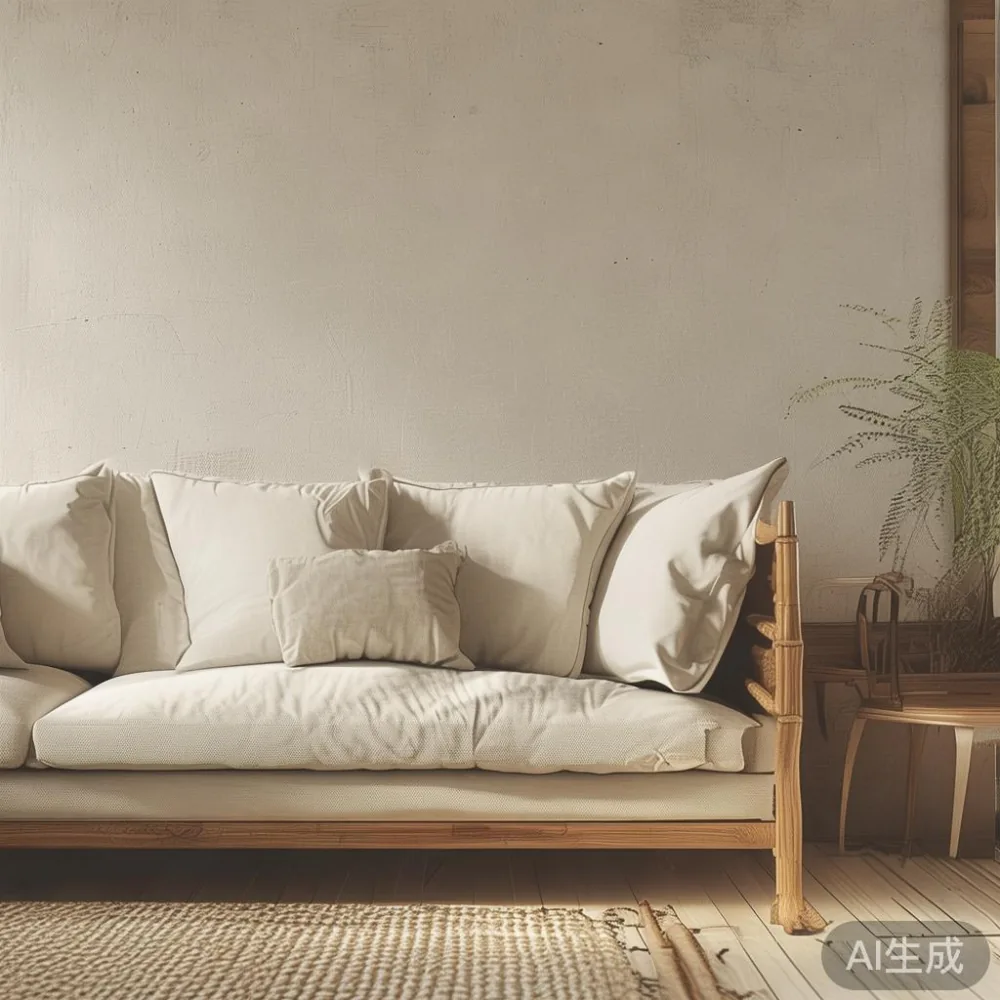
The living room carries most of the visual weight, so it deserves three anchored pieces: a solid wood sofa, a low coffee table or light luxury TV console, and one tall storage element, usually an open shelf or a slatted bamboo screen. The sofa should sit low, around 82 to 85 cm back height, with arms no thicker than 12 cm so the silhouette stays clean. A 2.4 m three-seater in oak or ash frame, with a removable linen-blend cover in oat or fog grey, reads warm without shouting.
The TV console is where most Singapore homes over-design. Resist the temptation to buy a glossy media wall. A 1.8 m to 2.2 m light luxury TV console in solid ash, with two soft-close drawers and a single open shelf for the router and console, will cost roughly SGD 1,400 to SGD 2,200 from direct-from-factory brands, and will outlast three flat-screen upgrades. Add a sintered stone or marble top if you want the post-modern light luxury accent, but keep the body wood so the warmth does not disappear.
The bamboo furniture moment happens at the storage element. A 1.2 m bamboo sideboard with sliding panels, or a pair of bamboo ladder shelves, introduces the texture that makes warm minimal feel lived-in rather than catalogued. Bamboo also handles Singapore humidity better than MDF, which is the secret reason many designers in Bedok Reservoir and Punggol Field quietly specify it.
European light luxury sofa vs Modern sofa: how do I choose for a 3-bedroom condo?
Homeowners ask me this every week, so I will answer it directly. A European light luxury sofa tends to mean a slightly higher back, around 90 to 95 cm, deeper seat depth of 60 to 65 cm, a tighter weave of the linen, and subtle piping or contrast stitching along the arms. The frame is usually beech or ash, and the cushions blend down and feather over a foam core. A Modern sofa in the warm-minimal sense is lower, around 80 to 84 cm back, firmer seat of 55 to 58 cm depth, and a more squared silhouette, often with exposed solid wood legs in walnut.
For a Punggol or Bedok condo with a 3.2 m living room wall, I usually recommend the Modern sofa profile because it leaves breathing room for a 60 cm deep console behind it and a reading floor lamp. The European light luxury sofa works better in a 4.5 m or longer living wall, such as a jumbo flat in Tanjong Rhu or a penthouse in District 9. Decide by wall length, not by mood board. The wall will tell you the truth.
If you are sourcing for a project, asking for wholesale European light luxury furniture catalogues from a factory rather than a retail middleman can cut the per-piece cost by roughly 30 to 40 percent, because the margin stack on a Singapore retail sofa is heavy, especially after 9 percent GST. Direct sourcing is also where you can specify fabric, foam density, and frame timber without paying boutique markups.
French bed vs Modern bed: which one suits a master bedroom in Tampines or Punggol?
The master bedroom is where the warm minimal palette gets tested, and where the French bed vs Modern bed question becomes very practical. A French-inspired bed in this context is not a baroque piece. It refers to a low platform bed with a slightly upholstered headboard, often in a soft curved silhouette, around 110 to 120 cm headboard height, and a frame in light oak or beech. A Modern bed in the warm-minimal sense has a slimmer, harder line: a rectilinear headboard around 90 to 100 cm, exposed solid wood legs of 18 to 22 cm, and a platform base that sometimes incorporates a thin marble or sintered stone inset along the headboard ledge.
For a typical HDB master bedroom of around 14 to 16 sqm, the Modern bed wins on proportion. A king-size French-style bed with a 110 cm curved headboard eats about 35 cm of visual depth and can crowd the air-con ledge. The Modern bed keeps the silhouette tight and leaves room for two slim nightstand pieces of 45 cm width on either side. For a condo master bedroom of 20 sqm or more, the French bed earns its space because the curved headboard acts as the room's focal wall and you can afford to layer a bench at the foot of the bed.
Whichever you pick, insist on a slatted base rather than a flat board. Singapore humidity will punish a sealed MDF base within five to seven years. Solid ash slats at 5 cm spacing will outlast your lease.
American sofa vs Nordic sofa: which silhouette fits a compact Singapore living room?
The American sofa vs Nordic sofa debate is really a question about depth and leg visibility. An American profile is wider, deeper, and sits lower to the ground, with a back cushion that is generously filled and arms that are wide enough to balance a laptop. A Nordic profile is narrower, with a tighter seat depth around 55 cm, a clearly visible solid wood leg of 18 to 20 cm, and a back that does not fully envelop you.
For most Singapore HDB living rooms between 18 and 28 sqm, the Nordic profile is the safer choice because it preserves walking circulation. The American silhouette shines in a 35 sqm or larger condo living room where the sofa can float away from the wall and a 90 cm walkway can wrap behind it. If you are choosing a three-seater, the Nordic profile usually measures around 2.1 to 2.3 m, while the American profile runs 2.4 to 2.6 m, and that extra 30 cm decides whether your side table still fits.
How do I style a Japandi sofa in an apartment without making it look bare?
The phrase how to style Japandi sofa in apartment comes up so often that it deserves its own short answer. Japandi sits between Japanese restraint and Scandinavian warmth. The trick is one textile, one ceramic, one plant, and one book stack per surface. On the sofa itself, a single 50 x 50 cm linen cushion in clay and one runner throw in oat is enough. Add a 35 cm ceramic vase on the side, and resist a second cushion. The empty corner of the sofa is the point.
A Japandi sofa in a Singapore apartment also benefits from a low 30 to 35 cm coffee table in solid ash or bamboo, which keeps the eye line low and makes the ceiling feel taller. Place a single tray on the table, not three objects. If you want a rug, a 200 x 290 cm wool or wool-blend in undyed ivory grounds the room without competing with the sofa.
What about the dining table, wardrobe, and nightstand in the same warm-minimal language?
Treat these three pieces as a set in tone, not in style. The dining table in solid oak or ash, 1.6 to 1.8 m long, 90 cm wide, sits comfortably in a four-top configuration with chairs that have a slim 4 to 5 cm leg. Add two extra chairs for festive seasons and store them against a wall in bamboo furniture cabinetry, which is a quiet use of the material you already have in the living zone.
The wardrobe should run floor to ceiling in the same wood tone as the bed frame, with finger-pulls rather than knobs, and one long vertical panel in rattan or cane if you want to soften the front. Rattan and bamboo furniture doors age gracefully in Singapore because they breathe, and they keep wardrobe smells down in our climate.
The nightstand is where most homes overspend. A 45 cm wide, 40 cm deep solid ash nightstand with a single drawer and an open shelf for a book is enough. Avoid glass tops, which fingerprint easily under Singapore's humidity. A small marble table tray on top is a fair compromise, around 30 x 20 cm, which gives you the post-modern light luxury accent without committing to a full marble table in the bedroom.
What should I budget in SGD for a complete warm-minimal set in 2026?
For a 90 sqm three-bedder in Tampines or Punggol, a realistic warm-minimal furniture set in 2026 looks roughly like this. A solid wood sofa in oak frame with linen cover, three-seater, 2.2 m: SGD 2,400 to SGD 3,200 from direct factory brands. A 1.8 m dining table in ash with six chairs: SGD 1,800 to SGD 2,600. A king-size solid ash bed frame with slatted base: SGD 1,400 to SGD 2,000. A floor-to-ceiling wardrobe in three modules, around 2.4 m wide: SGD 2,200 to SGD 3,000. Two nightstands: SGD 500 to SGD 800. A 1.8 m light luxury TV console in ash with a sintered stone top: SGD 1,400 to SGD 2,200. A bamboo sideboard or screen: SGD 600 to SGD 1,100. Delivery and assembly in Singapore, including GST: SGD 350 to SGD 650.
Total land somewhere between SGD 10,650 and SGD 15,550, depending on fabric grade and stone thickness. Shipping thresholds for direct-from-factory orders typically sit around US$350, which translates to roughly SGD 480, so consolidating into one order usually means free shipping and one delivery slot, which is friendlier to your lift booking. A 14-day return window is reasonable to ask for, and a 10-year structural warranty on the frame is now standard from Foshan factories I trust, including MIDHILL, whose bamboo furniture pieces and ash frames I have now seen in three Singapore homes without a complaint on joinery.
Which mistakes should I avoid on the day of delivery?
Three mistakes account for most of the regret I hear about. First, people forget to measure the turn from the service corridor into the front door. A 1.9 m wardrobe panel will not make a 1.6 m right-angle turn. Second, people skip the lift booking. Newer condos require a 30 to 60 minute lift reservation, and the delivery slot costs nothing but the time. Third, people forget to check whether the dining table top is one piece or two. If it is one piece and weighs over 70 kg, you will struggle to bring it up a service staircase. Insist on a split top or a knock-down frame, both of which are standard from serious Foshan workshops.
One last tip that saved my colleague in Punggol last month. Photograph every flat-pack carton at the doorway before opening, while the delivery driver is still there. If anything arrives damaged, the photo and the driver signature settle the claim in under a week. If everything arrives clean, the photos become a quiet record of what you actually bought, which is half the fun of warm minimal: knowing every piece by its grain, its weight, and the day it entered your home.