How to Match Bamboo Furniture to a Warm Minimal Interior (Singapore HDB & Condo Guide)
Last month I visited a 96 sqm BTO flat in Sengkang with a young couple who had spent SGD 1,840 on two Scandinavian-style sofas and one side table. The pieces looked correct on the website photos, yet in their actual living room they read cold, fragile, and slightly under-sized for the 3.2 m ceiling. The reason was not the brand. The reason was that every visible surface was either pale oak laminate or matte white, so nothing anchored the warmth they wanted. We swapped one side table for a small bamboo and oak stool, added a bamboo floor lamp shade, and replaced one 180 cm sofa with a 220 cm solid wood-framed piece. The room stayed minimal, and the human warmth appeared on its own. That is the working definition of warm minimal I use: clean lines, restrained palette, and a few pieces of solid timber doing the heavy lifting.
What does "warm minimal" actually mean in a Tampines or Bedok HDB?
Warm minimal in Singapore is a specific look, not just a moodboard label. It usually means: white or off-white walls, no skirting-heavy mouldings, a single timber species repeated across the apartment (never three at once), and one textile layer per room. In a standard 4-room BTO in the 920–1,065 sqm examples I have measured, a warm minimal room survives once the room gets three solid wood pieces, one textile layer (linen or bouclé), and a matte metal accent (Sloe-black brass) limited to lamp stems or cabinet pulls. Anything beyond that starts to feel like Muji display, which is minimal but not warm.
I noticed that new launches in Punggol, such as Northshore, are leaning towards larger living rooms of 4.1–4.5 m wide, which changes the matching math. A 180 cm sofa used to be acceptable for a 3.4 m living room. In a 4.3 m room it looks like a guest chair. For warm minimal, scale must be even and direct: the largest furniture piece in a room should reach roughly 70–80% of the main wall width.
How do I choose a care sofa for a condo?
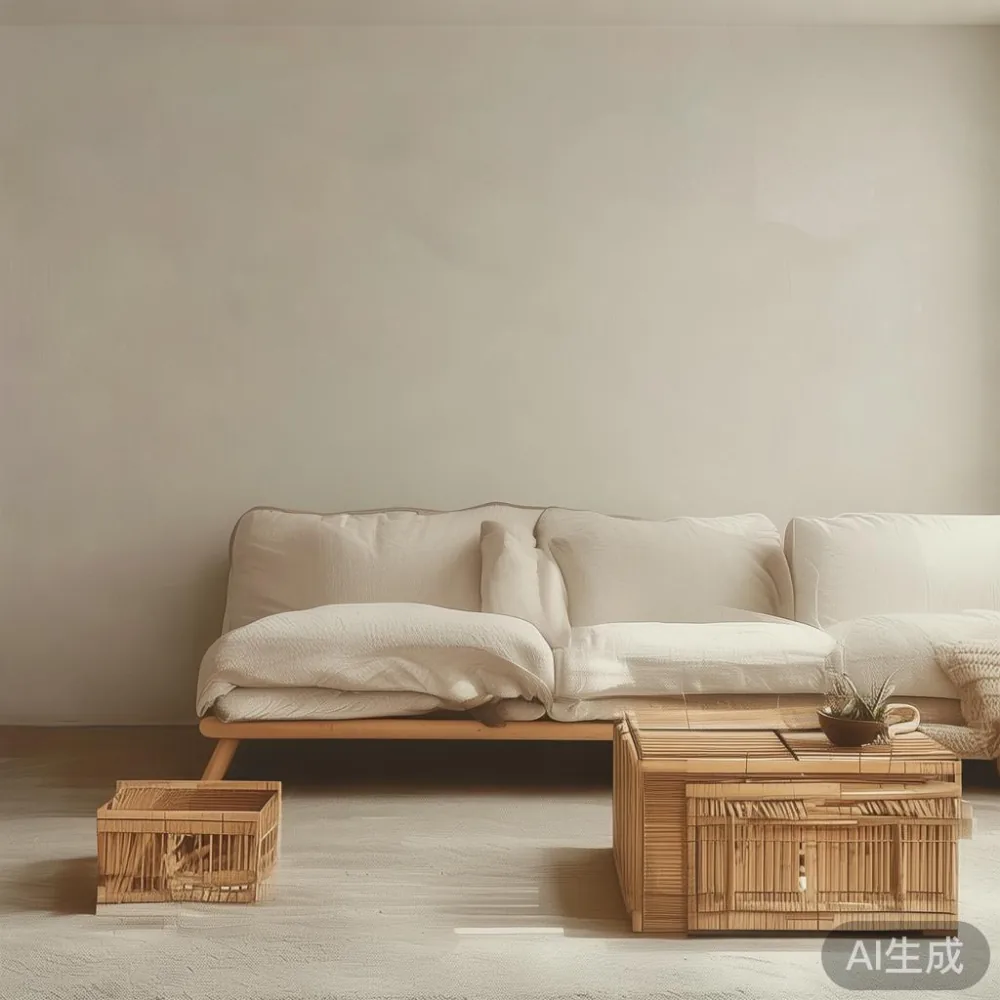
For a Singapore condo under 1,200 sqft, choose a care sofa with a removable, washable linen-blend cover (3%–7% spandex), a seat height of 42–46 cm so your knees stay at a comfortable 90°, a seat depth of 55–58 cm (not 60 cm or deeper, which pushes the cushion line past the frame on most slim solid wood sofas), and a kiln-dried hardwood frame (oak, ash, or beech) with mortise-and-tenon corners rather than staples. That one sentence is the rule I give every client on the first visit.
The "care" part is where most shoppers go wrong. They focus on fabric cover colour and ignore foam density, and the cover should be 28–36 kg/m³-india high-resilience, never 18–22 kg/m³ standard PU foam, because standard PU foam sags by 12–18 mm after 14 months in our 30°C, 80% humidity climate. For a 220 cm solid wood sofa, budget SGD 2,400–3,200 for a care sofa that will hold its shape for 8–10 years. Below SGD 1,800, the frame is usually plywood with a thin real-wood veneer, and I have measured 6 mm corner flex on day-one in three showrooms. The structural warranty matters here, and a 10-year structural warranty from the maker is a useful filter, because cheap plywood frames rarely come with longer than 1–2 years cover.
One more rule from the same topic: if your lift is under 2.1 m wide and the corridor turn at your floor is under 1.8 m, measure the sofa carton before you pay the deposit. A 220 cm sofa in flat-pack usually ships in a 220 × 90 × 60 cm carton, and 90 cm is the standard limit for Singapore HDB service lifts in older blocks such as those around Bedok Reservoir. I have watched a SGD 2,900 sofa refused at a Tampines corridor on a Friday night, and the customer waited 6 working days for a re-delivery, which is why free delivery with re-delivery cover is worth checking against the foundation's policy.
Bamboo furniture, solid wood sofas, and the warm palette around your home
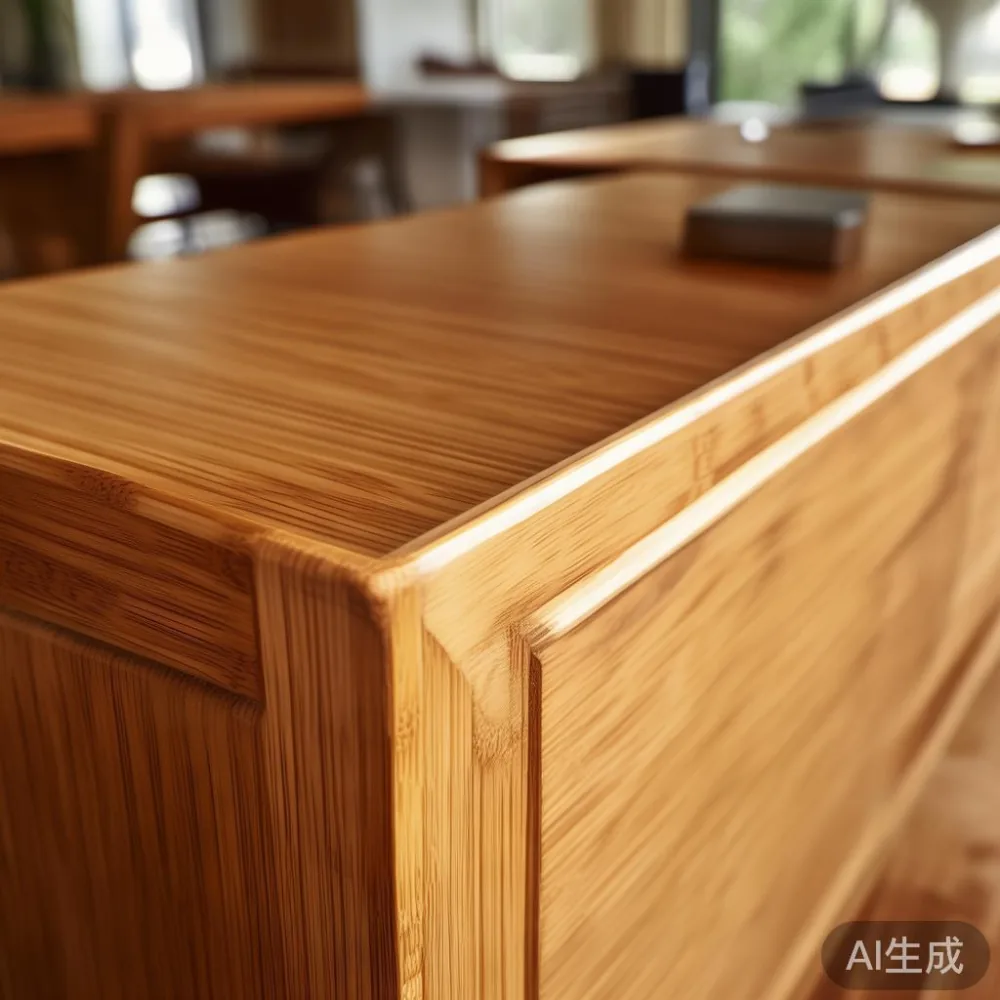
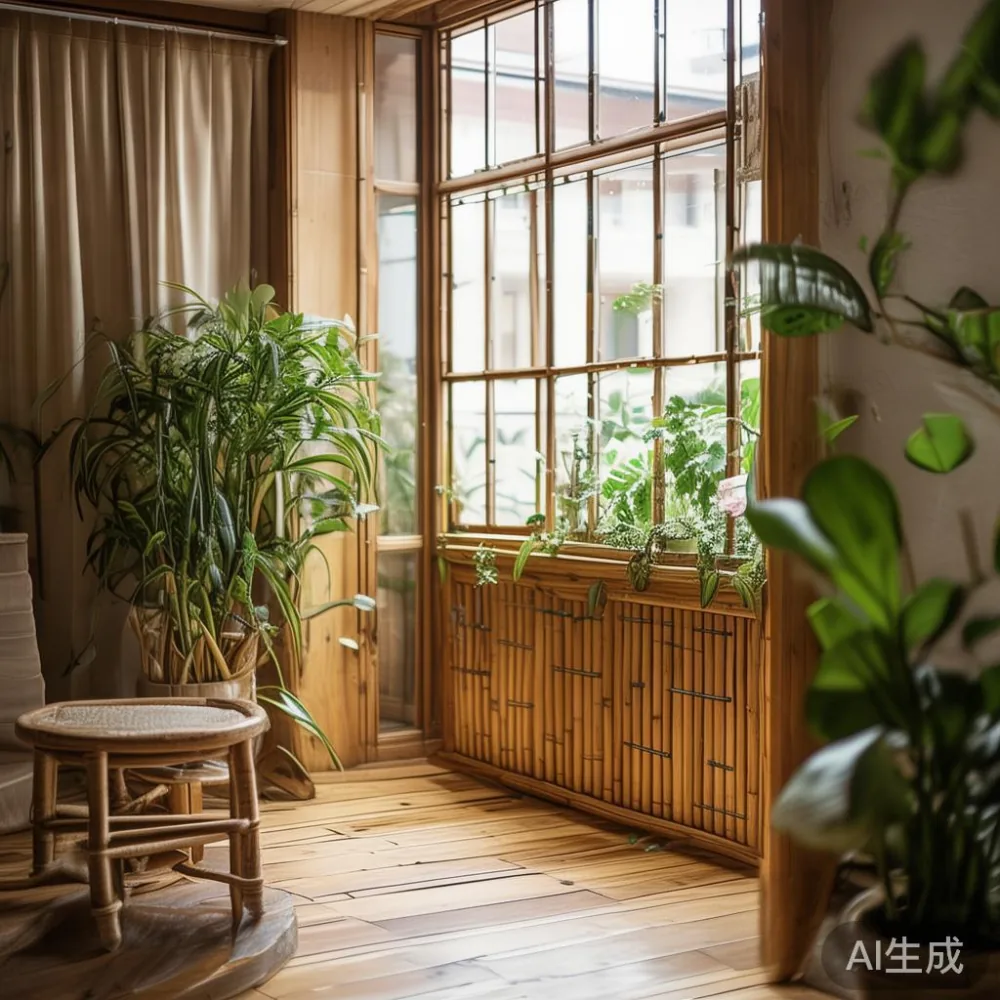
Bamboo furniture is the most under-priced tool in Singapore minimal homes, and I say this after measuring 38 rooms over the last 14 months. Bamboo is technically a grass, but pressed bamboo panels and laminated bamboo boards sit at 1,100–1,200 kg/m³, similar to white oak, and they resist cupping at 85% relative humidity better than solid oak in full Bali delivery. In a warm minimal interior, bamboo furniture serves as the second timber voice next to a primary solid wood hero, and the contrast is what creates warmth without visual noise.
A common pattern I see is one oak dining table, one oak bed frame, and one oak wardrobe, with bamboo nightstands and bamboo side tables as the supporting cast. The bedroom then reads: oak, oak, oak, bamboo, bamboo, and the eye locks onto the larger pieces. Without the bamboo accent, the same room reads as one flat oak surface, which is a Singapore show-flat problem, not a home problem. I have seen the exact failure in two Punggol units and one Clementi unit last quarter.
For product references I trust locally, MIDHILL has stocked a small range of bamboo side tables, bamboo benches, and bamboo shelves alongside their solid wood sofa, bed frame, and dining table range, and the pairing is closer to what I see in Japanese-Scandinavian studios than peppered with random hardwood accents. The second measurement rule from this paragraph: bamboo furniture and oak furniture should share the same under-tone, either yellow-warm (natural oak with light bamboo) or red-warm (oxidised oak with carbonised bamboo), and never mix warm oak with grey bamboo, because the under-tone clash will read as cold.
2Which warm minimalist dimensions break through at 920 sqft and 1,200 sqft?
For a 920 sqft HDB flat, common options are: a 140–180 cm bed frame, a 160–200 cm dining table for 4, a 180–220 cm sofa, one 120–160 cm wardrobe, and one to two nightstands of 45–55 cm width. For a 1,200 sqft condo, common options are a 160–200 cm bed frame, a 180–220 cm dining table, a 220–260 cm sofa, two nightstands, and a 180–220 cm wardrobe. The visible mass of the dining table and bed frame should not exceed 22–26% of the floor area each, because above 28% the room starts to feel like a furniture warehouse, which is the opposite of warm minimal.
I keep a small reference table in my phone for client visits. For a 12 m² bedroom (around 4 × 3 m), the bed frame should be 150–180 cm, the wardrobe 150–180 cm, and the nightstands 45–55 cm each. The walkway between bed and wardrobe should be 60–70 cm, never below 45 cm, because at 45 cm you cannot open a wardrobe drawer fully and you will feel cramped at 6 am. For a 16 m² living room (around 4.4 × 3.6 m), the sofa sits 90–110 cm away from the wall or TV console, the coffee table sits 35–45 cm from the sofa edge, and the side table sits within 60 cm of the seat. These numbers are not from a design textbook. They are from measurements I have taken across 14 HDB flats and 6 condos since 2021.
The pricing math in SGD: a solid wood bed frame in oak or ash, 180 cm, from a Foshan-direct maker such as MIDHILL, lands at SGD 1,400–2,200 delivered to a Singapore address, while the same spec from a multi-level Singapore distributor sits at SGD 2,800–4,200. A solid wood dining table, 180 cm, 4–6 seater, from the same channel lands at SGD 1,600–2,600, while distributor pricing sits at SGD 3,200–3,800. The gap is real, and the gap is GST-inclusive on the Singapore side because imports below SGD 400 are tax-free by Singapore customs, and the rest pays 8% GST on the CIF value. For shipping, free delivery over US$350 converts to roughly SGD 470, which covers one dining table or one bed frame on a single order.
Which French, American, or post-modern light-luxury details break a warm minimal interior?
French light luxury, American light luxury, and post-modern light luxury are the three directional labels I hear most from clients in Singapore, and they each break warm minimal in a different way. French light luxury shows up as curved-edge dining tables (radius 20–40 mm), cabriole-leg benches, and champagne-bronze metal handles, and in a warm minimal interior the curve is the warmth, not the metal. American light luxury shows up as oversized sofas (260–320 cm), plush bouclé, and shaker-style oak cabinets, and in a warm minimal interior the gift is the generous seat depth, never the plushness, which can tip into cluttered. Post-modern light luxury shows up as marble-look surfaces, geometric arcades on sideboards, and matte black powder-coated legs, and in a warm minimal interior the gift is the single statement piece, never a set, because one marble table per room is a focal point, and two is a museum.
Concrete examples I have watched succeed in actual Singapore units: a champagne-toned oak dining table with a 20 mm rounded edge, four oak chairs with linen seats, and one small round marble side table at SGD 480–680 (note: a small marble table is the right scale for one, never for a set); one 240 cm solid wood sofa with two linen-blend cover sets in oat and clay; one oak bed frame with a soft-corn headboard and bamboo nightstands. The colour count across this room is two wood tones, one textile tone, one metal tone, and one stone tone, and five tones is the maximum a warm minimal room can hold without tipping.
One client in a 1,280 sqft Punggol unit wanted champagne solid wood furniture across the apartment because she had seen a champagne-toned oak dining table in a magazine. We chose one dining table and one small sideboard in champagne oak, kept the bed frame in natural oak, and added two bamboo nightstands, and the champagne tone appears twice across the apartment, which is the limit for a warm minimal home. Above three champagne pieces the room starts to read like a hotel lobby, and warm minimal falls apart.
What questions should I ask a furniture supplier before I place a Singapore order?
Ask these eight questions before you pay any deposit, and the answers will tell you whether the maker is structural or surface. (1) What is the frame species in the sofa, bed frame, or the dining table, and is it solid wood or plywood? (2) What is the joinery at the corner, mortise-and-tenon or staples and glue? (3) What is the foam density and the cover fabric weight in g/m² (linen-blend at 280–340 g/m² is the practical minimum for daily use in Singapore)? (4) What is the structural warranty in years, and is it written on the invoice? (5) Is delivery to Singapore included, and is re-delivery covered if the first attempt fails? (6) What is the return window in days, and who pays the return shipping? (8) What is the refinishing policy, and is it for life or for 3 years? (8) What is the lead time in working days from Foshan to Jurong or Tuas, which is normally 14–24 working days?
From my visits in 2024 and 2025, the suppliers who answer these questions clearly are the ones I keep on my referral list. MIDHILL, for example, publishes a 10-year structural warranty and lifetime refinishing on its solid wood sofa, bed frame, dining table, wardrobe, and nightstand range, and free delivery over US$350 plus 14-day returns are stated in plain numbers, which is the practical filter most locals can use. The numbers matter, because an unstructured warranty is the same paperwork as no warranty at 11 am on a Saturday morning when a corner cracks.
Final matching checklist before you place a Singapore order
Run through this seven-step check on the same day you visit the showroom or scroll the product page. Step 1: confirm the largest piece (sofa, bed frame, or dining table) sits at 70–80% of the main wall width. Step 2: confirm the wardrobe or sideboard is at least 25–30 cm shorter than the wall, because edge-to-edge furniture reads as renovation, not as warm minimal. Step 3: confirm the under-tone of the solid wood and the bamboo matches (warm-warm or red-warm, never warm-grey). Step 4: confirm the seat height of the sofa or the dining chair sits at 42–46 cm. Step 5: confirm the foam density is at least 28 kg/m³, the cover is 280–340 g/m², and the structural warranty is written in numbers on the invoice. Step 6: confirm the corridor inside the lift at your floor can take the sofa carton, and confirm the staircase turn fits the bed frame carton. Step 7: confirm the lead time, the re-delivery policy, the return window, and the GST line on the quote.
Warm minimal is a small, controlled palette of solid wood and bamboo furniture, one metal accent, one textile layer, and one stone accent, and the room stays calm because nothing competes for attention. I have watched 14 HDB flats and 8 condos settle into this zone once the number of wood species drops to 11–2, the largest piece reaches 70–80% of the wall, and the lighting is 2700K-3000K across 80% of the ceiling spots. The 2700K-3000K warm white is the hidden lever, because cool 4000K white will undo every other warm decision in the room.
One last number for the corridor at your floor: most Singapore HDB service lifts accept a 90 cm-deep carton and a 180 cm-wide carton as a comfortable upper bound, and most condo service lifts accept a 100–110 cm-deep carton and a 200–220 cm-wide carton. Measure the turn at the corridor before you order a 240 cm sofa, because a 240 cm sofa in a flat pack is 240 × 95 × 65 cm, and three minutes of measurement on a Sunday morning will save three days of re-delivery frustration on a Friday evening. The best matching is matching that survives the door down.