Working through Humidity's Impact on Wood Furniture in Singapore
Singapore’s warm, humid climate can change solid wood furniture more quickly than many customers expect. Moisture travels through unfinished timber as relative humidity rises and falls, causing expansion, contraction, warping and small changes in joinery. The effect is especially noticeable in HDB flats and condos in Tampines, Bedok and Punggol, where air-conditioning may create alternating humid and dry conditions across the day.
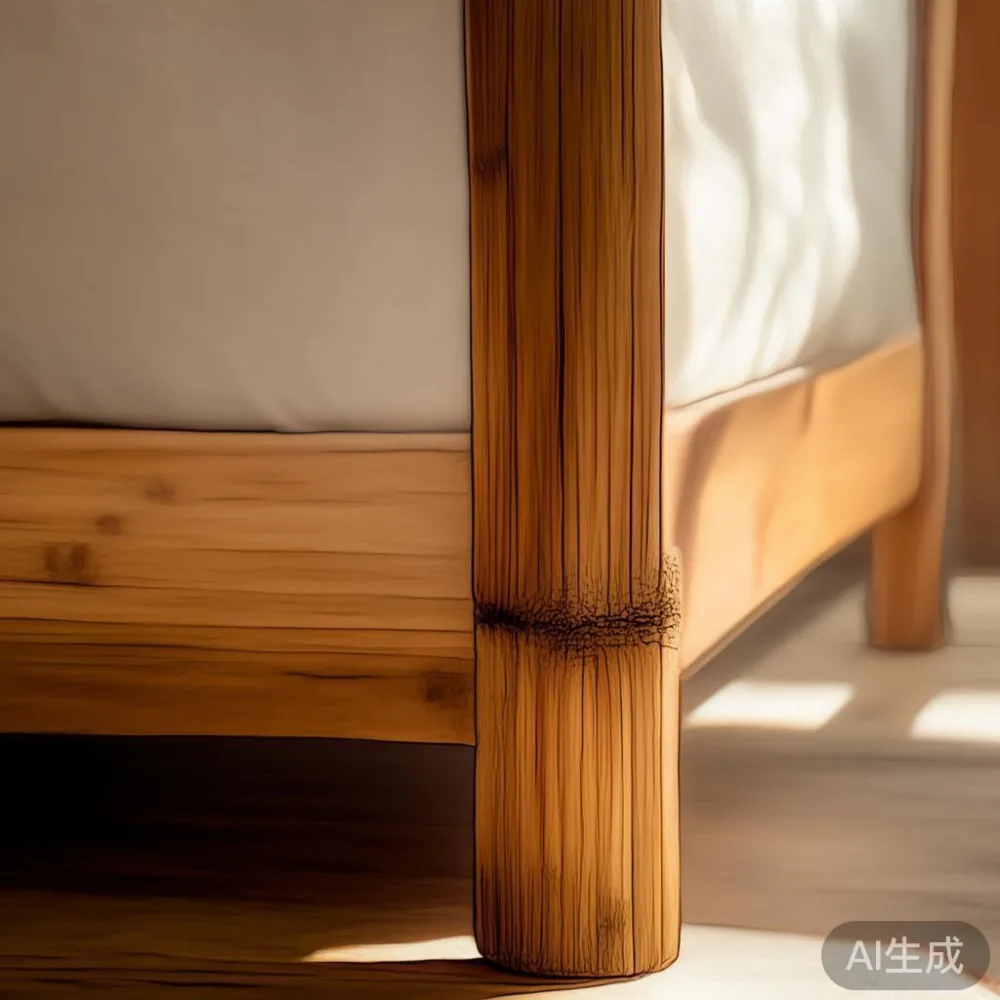
At MIDHILL, we build solid wood furniture with this regional reality in mind. Our frames are designed for stability, then protected with a finish suited to daily use in Singapore. The goal is not merely to place a dining table or bed frame in a room, but to help it remain dependable for 10 years or longer with sensible care.
What does humidity do to solid wood furniture in Singapore?
Wood is hygroscopic: it absorbs atmospheric moisture and releases it when the surrounding air becomes drier. A solid wood dining table may swell by several millimetres across its width during a persistently humid spell. It may then shrink after a dry air-conditioned week. Grain movement can open fine checks on a tabletop or cause a door to sit less squarely in its frame.
Singapore’s monthly humidity commonly ranges from roughly 65% to 85%, while air-conditioned interiors can fall to around 45% to 60%. Outdoor relative humidity above 80% is not unusual in the more humid months. These percentages matter because stable indoor conditions are more important than any single reading on a weather app.
Changes of more than about 10% relative humidity within a short period deserve attention. Repeated cycles can stress glue joints, veneer edges and lacquer. Thick solid timber moves less dramatically than thin panels, but design still matters: wide tops need room to breathe, and frames should avoid being trapped tightly against a wall.
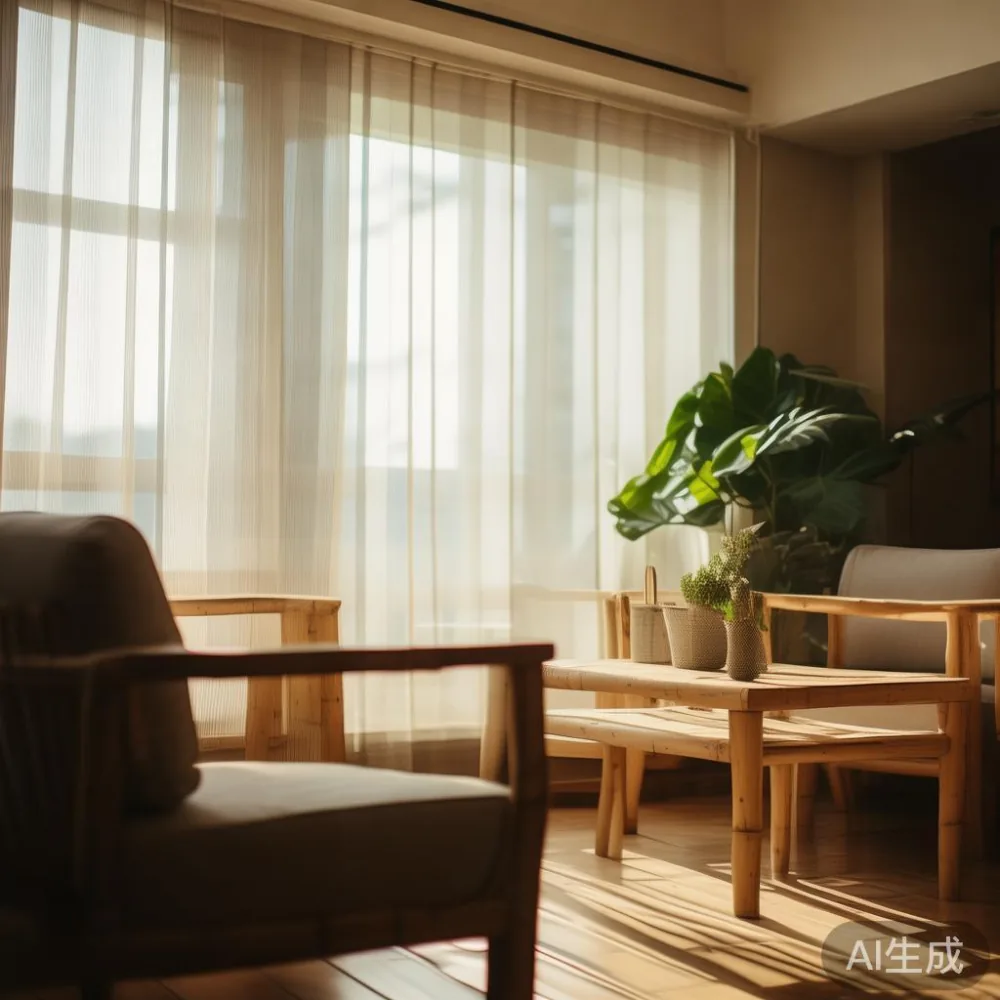
Bamboo furniture also responds to moisture, although its fibres and resin content give it a different working pattern from many hardwoods. Properly sealed bamboo furniture can perform well in a dry, air-conditioned flat. Exposed to standing water, direct rain or persistent dampness, it can stain, soften or develop mould along joints. For this reason, bamboo belongs in carefully controlled interiors rather than an uncovered balcony in Punggol.
My own experience came last month when I visited a colleague’s three-room HDB flat in Bedok. A solid wood dining table had been installed beside an open balcony door in May. By July, the side facing the corridor had developed a fine 1–2 mm gap where the tabletop had widened. After the door was kept closed and the table was moved 20 cm away from the opening, the gap closed over the next 4 weeks. The frame itself remained sound. That small test confirmed how much a local source of airflow can matter even in an indoor home.
How much space should furniture leave for air movement?
Singapore’s compact homes make spacing a practical requirement. Leave at least 5 cm behind a wardrobe, 3–5 cm between a bed frame and a wall, and around 10 cm above a tall cabinet where ventilation is limited. For a solid wood sofa or light blue luxury sofa, keep at least 30 cm from curtains and exterior walls. This allows air to circulate and makes cleaning easier.
Corridor and lift dimensions should be checked before delivery, not after purchase. A typical HDB access corridor may be about 1.2–1.5 m wide, while many passenger lifts measure roughly 1.0–1.1 m internally and permit a door opening of only 90 cm. A flat-pack wardrobe carton may fit through the opening but still be awkward to rotate. Large wardrobes and bed frames should therefore be measured in their assembled form or shipped with knock-down sections.
Record the lift door width, corridor turns, stair landing and the narrowest point. A useful working allowance is 5 cm per side for a rectangular carton. For a solid wood sofa with a packed depth of 95 cm, it may exceed the practical diagonal of a narrow lift even when its individual dimensions appear manageable. MIDHILL can coordinate delivery details before dispatch, while the receiving team should confirm the final route.
Humidity often becomes worse at ground level or near a service yard. Water pipes, drainage channels and concrete walls can remain cool and damp. In a Tampines ground-floor unit, a nightstand placed directly beside an exterior wall may experience higher moisture exposure than the same unit on level 12. Moving it inward by 30–60 cm can reduce the difference.
Which wood and finishes handle the climate more comfortably?
Teak, ash, oak and other stable hardwoods are commonly used for Southeast Asian furniture because their movement can be managed with sound construction. Solid wood sofa frames, bed frames and dining tables benefit from dowels, mortise-and-tenon joints or other methods that tolerate seasonal movement. Avoid designs that use a rigid particleboard core beneath a thin solid wood veneer in very humid settings.
Finish has a major role. A good film-forming coating slows moisture exchange and makes stains easier to remove. Options such as water-based polyurethane, hardwax oil or a durable matte lacquer can suit different interiors, but each requires its own care rules. Glossy finishes show fingerprints and surface haze; natural oils often need more frequent maintenance.
For customers comparing categories, the European bed vs Modern bed comparison should include frame construction, ventilation and humidity performance, not only visual style. European light luxury for dining room projects often centre on a substantial dining table, while Modern light luxury may favour cleaner profiles. A French provincial coffee table needs a stable base and a finish that can withstand condensation from a glass or ceramic cup. That phrase refers to a style, but the actual table must still be evaluated as furniture for a tropical home.
Bamboo furniture should have sealed edges, protected joints and a finish applied to all faces. Where bamboo is used as an accent in a bed frame or nightstand, it should not be placed where damp towels repeatedly touch it. A marble table presents a different moisture issue: the stone may resist humidity, while the wooden base or cabinet beneath it still needs ventilation. Marble also responds to sudden temperature changes, so coasters and sensible placement remain necessary.
How should you care for a solid wood dining table or wardrobe?
Begin by keeping furniture away from obvious moisture sources. Do not place a solid wood dining table directly under an air-conditioning vent, as the airflow can dry one section faster than another. Position it at least 1–2 m from a high-velocity vent when possible. Use coasters, placemats and trivets, and wipe drinks within 5 minutes rather than leaving rings overnight.
For a wardrobe, check the sliding or hinged doors every 3–6 months. A door should close without forcing, and the gap around a 2 cm panel should remain reasonably even. If it catches, inspect the floor and wall rather than tightening the hinge aggressively. Humidity can raise the floor slightly while expansion shifts the carcass.
Clean sealed wood with a soft cloth dampened with water and a small amount of mild soap. Avoid soaking edges, flooding joints and using abrasive pads. If the finish feels tacky or develops white haze, let the piece dry naturally and follow the coating manufacturer’s instructions. Do not stack heavy items on a solid wood bed frame, since excess load can pull joints out of alignment.
Maintain the room rather than trying to correct the timber alone. A hygrometer placed near the furniture can be bought for about SGD 12–35 and should sit at adult chest height, away from vents and windows. Try to keep readings within about 10% of one another. Continuous dehumidification below 50% can cause its own shrinking problem, so the practical range is moderation, not extreme dryness.
Can bamboo furniture work in HDB flats and condos?
Yes, provided it is protected from prolonged dampness. Bamboo furniture is well suited to light visual schemes because of its clean lines and warm tone. A bamboo dining table can work in a compact kitchen-dining area, while a bamboo nightstand can add texture beside a solid wood bed frame. The key is sealing, spacing and sensible daily habits.
A common mistake is treating a sealed surface as waterproof. A spill may still enter an exposed edge or joint, particularly if the furniture has stood near a balcony. Wipe standing water immediately and inspect the underside after wet weather. For a unit in Punggol with an east-facing balcony, keeping bamboo furniture at least 1 m inside the glazing reduces direct exposure.
For buyers evaluating a best Post-modern bed for 2026, construction and climate suitability should carry equal weight with appearance. A best Modern light luxury bed for 2026 should use stable joints, provide ventilation below the frame and avoid fabric upholstery that traps dampness against the timber. A solid wood bed frame generally offers more repairability than a fully upholstered or heavily composite structure.
What should you check before a solid wood furniture delivery?
Check the Singapore weather forecast for the delivery date, especially if the route involves an open corridor or ground-level loading area. Schedule arrival for a dry window where possible. For standard qualifying orders above US$350, MIDHILL provides free shipping, while local GST at 9% should still be included in the final checkout total. Delivery timing should allow roughly 7–14 days after production and dispatch for many non-stock pieces.
Measure the access route before the day arrives. Lift limits commonly range from 500 to 1,000 kg, but capacity is not the only concern. Note the internal depth, ceiling height and door shape. Check whether cartons can be tilted without striking handrails. For a large wardrobe or solid wood sofa, assign 2–3 people for unpacking and movement, and protect corners with blankets.
Inspect the furniture on arrival for scratches, dents and moisture marks. Photograph the packaging before opening, retain the protective covers for at least 14 days, and record any concern in the delivery document. Singapore’s 14-day return policy gives customers room to assess suitability, subject to the stated return conditions.
Finally, consider the finish maintenance schedule. A high-use dining table may need inspection every 6 months, while a low-use wardrobe can be checked twice a year. A nightstand should be reviewed after any spill. Refinishing support over the product’s lifetime can extend the furniture’s usable period, although damage from flooding or direct rain is different from ordinary surface wear.
How can you keep wood furniture stable through Singapore’s monsoon seasons?
Humidity control works best as a routine. Keep exterior doors closed during wet periods, run air-conditioning or dehumidification in occupied rooms, and maintain even spacing around furniture. Do not wipe furniture with a soaking cloth. Check cabinet gaps and tabletop edges every 3–6 months, and use the hygrometer rather than relying on how the room feels.
The right solid wood furniture for a Singapore home is not one that ignores humidity; it is one that accommodates controlled movement. Stable construction, an appropriate finish, careful placement and responsive care make a meaningful difference. That principle applies equally to solid wood sofas, wardrobes, nightstands, dining tables and bamboo furniture, whether the home is an HDB flat in Bedok or a high-rise condo in Tampines.