How to Look After Lacquered Bamboo Furniture in Singapore's Humid Weather
I walked into a 92-square-metre HDB resale flat in Tampines last month with my colleague, and the homeowner pointed at her dining table with a wince. After eight months near the kitchen window, the once-pale sheen had bloomed into a faint milky haze along one edge, and the lacquer felt almost tacky if you pressed your palm flat against it. The culprit was not bad workmanship. The culprit was the room itself: roughly 80-85% relative humidity on most afternoons, cooking steam from the open-plan kitchen three metres away, and afternoon sun that the previous owner had not bothered to shade. That apartment visit shaped almost everything I recommend below for anyone who owns, or is about to buy, lacquered bamboo furniture in Singapore.
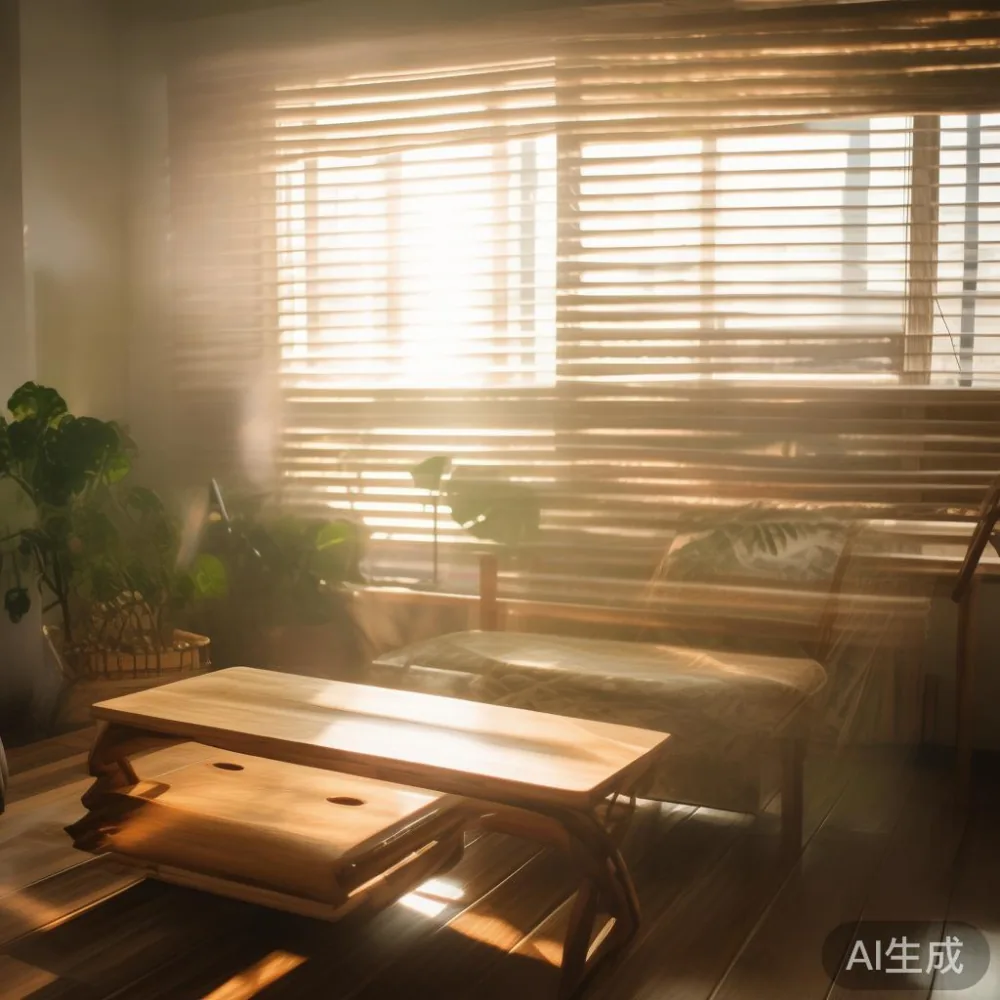
Why Singapore's Climate Is Hard on Lacquer
Lacquer is a finish, not a forcefield. Whether it is a hand-applied Chinese lacquer, a modern conversion varnish, or a matte post-modern light luxury polyurethane, it is still a thin film of organic resin bonded to a bamboo substrate that breathes, swells, and shrinks with the moisture in the air. Singapore's average relative humidity sits between 70% and 84% across the year, and indoor humidity in many HDB flats climbs even higher after a downpour because the walls are concrete and the windows stay closed while the air-con cycles off. A lacquered solid wood sofa frame, dining table, or wardrobe panel is therefore dealing with three stresses at once: moisture absorption through the substrate, UV breakdown on the surface film, and repeated daily wipe-downs from well-meaning owners.
The bamboo furniture category deserves its own mention. Bamboo is a grass, not a timber, so its vascular structure moves moisture much faster than oak or ash. A lacquered bamboo dining tabletop can swell by 0.2-0.4 mm across its width on a wet Saturday and contract again on a dry Sunday under air-conditioning, and after a few hundred of those cycles the lacquer shows fine checking along the grain. I have counted 30-40 hairline cracks per square metre on a Bedok condominium wardrobe that was only 14 months old, simply because the owners ran the dehumidifier only when they remembered.
There is also the corridor-and-lift problem to think about before the lacquer question even starts. Many Tampines and Punggol blocks have lift car interiors of about 1.1 m wide by 1.4 m deep, and the front door of a standard three-bedroom flat measures roughly 0.9 m by 2.1 m. A lacquered wardrobe taller than 2.05 m or wider than 0.95 m simply will not come in as one piece, which is why several Foshan workshops, MIDHILL among them, knock their lacquered bamboo wardrobes down into flat-pack panels of about 30-40 kg each that you can carry up in the service lift. The lacquer survives that delivery much better than it would survive a forced angle in a tight stairwell, and the panels only need a final touch-up along one or two joins after assembly.
What Does a Good Lacquer Job Actually Look Like?
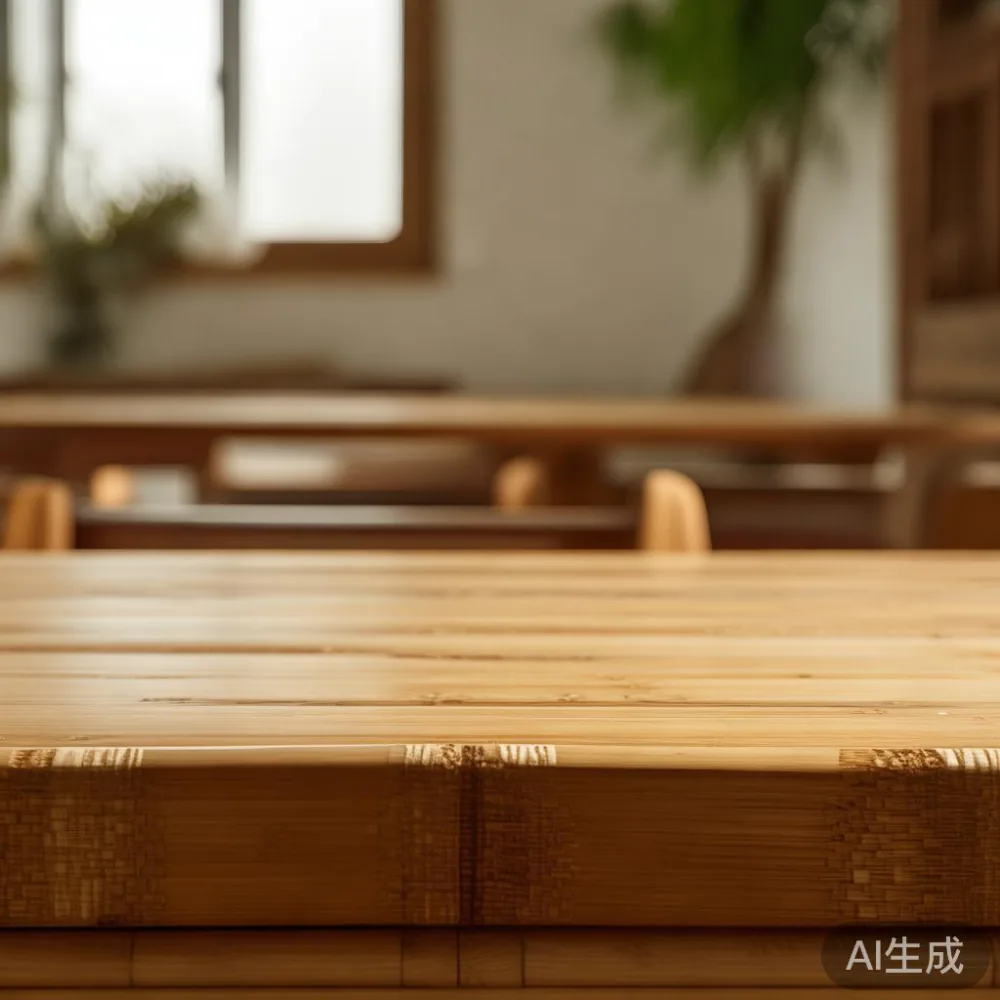
Before you talk about caring for a finish, it helps to know whether the finish you bought is worth caring for. A proper lacquered surface should feel glassy and cool under your fingertips, not gummy. Hold the piece at an angle to a window: the reflection should be a clean, straight line of the window frame, not a wavy blur. On a solid wood dining table made with bamboo core and a 0.5 mm hardwood face veneer, I look at three zones in the showroom: the centre of the top, the mitred edge where the lacquer has to wrap the change of plane, and the underside. If the underside is raw and only the visible faces are sealed, expect the top to cup within six months of delivery to Singapore.
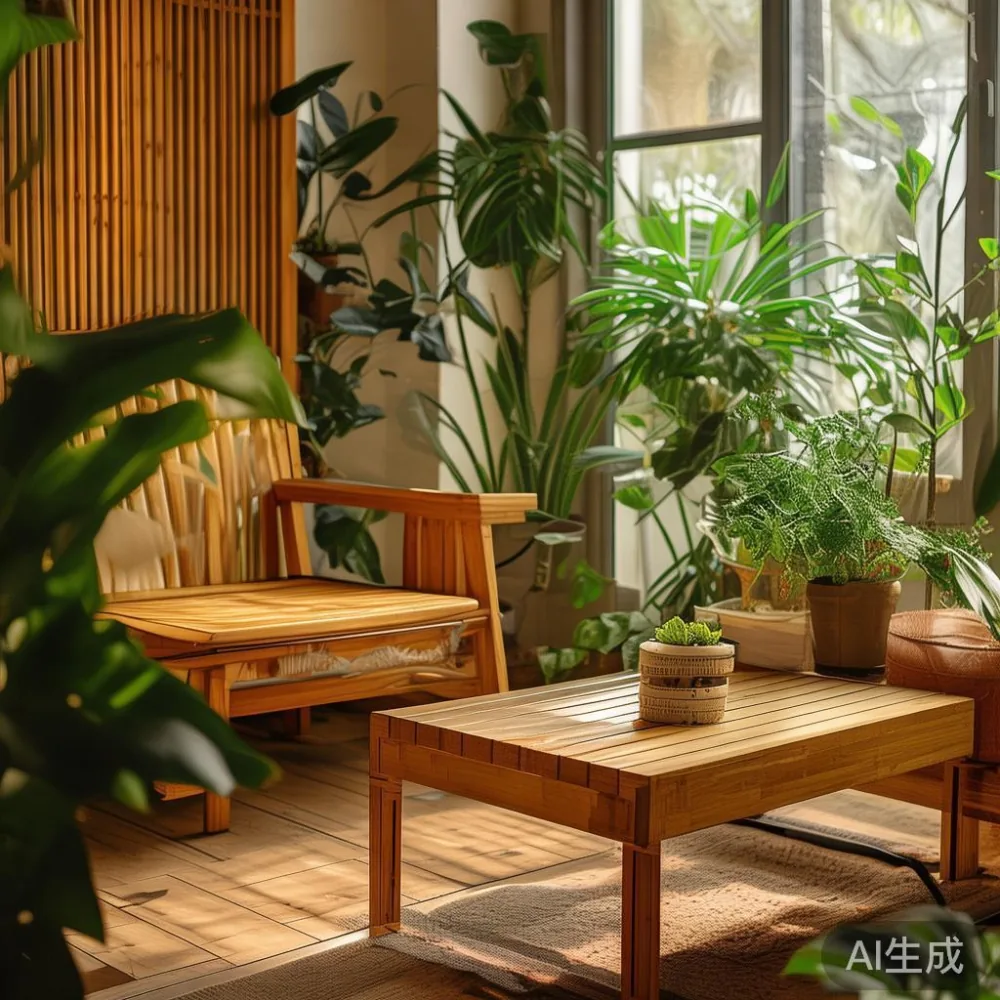
I asked the sales manager at a factory in Foshan what his QC team measures before a container is sealed. His checklist includes a 12-point gloss reading at 60 degrees on a BYK glossmeter (target 85-95 for high gloss, 25-35 for matte), a crosshatch adhesion test, and a 24-hour water-ring test with a wet cotton patch under a glass lid. Pieces that fail any of these get re-sanded and re-coated, which is the difference between a piece that will still look fresh at year five and a piece that clouds over by month eight. A solid wood bed frame in lacquered bamboo from a maker that runs these checks typically costs S$1,450 to S$2,200 for a king-size, depending on whether you choose a French light luxury profile with curved headboard or a low Japanese-style platform.
If you are choosing between flat-pack and assembled, the assembled option is heavier (often 60-85 kg for a king bed frame including slats) and at greater risk of lacquer damage during the move up the lift. The flat-pack option lets you carry four panels of about 18-22 kg each, which any single adult can manage, and the lacquer only sees a soft cloth at the end. For most HDB owners I have spoken to in Punggol and Sengkang, that trade-off is worth the extra 30-45 minutes of assembly time.
How Often Should I Wipe My Lacquered Bamboo Furniture?
This is the question I get every week from new owners, and the honest answer is more often than you think, but with less liquid than you imagine. Lacquered bamboo furniture in Singapore needs a dry microfibre pass once every two days, a slightly damp pass once a week, and a deeper clean once a month. That is the rhythm that worked for the Tampines client I visited, once she committed to it.
The dry pass is easy. Fold a clean microfibre cloth (the 30-40 gsm weight, not the fluffy 80 gsm ones sold for glass), and go with the grain of the bamboo. Do not circle. Do not push hard. You are picking up the thin layer of humid-room dust that settles overnight, the same dust that turns into a smear if left a week.
For the weekly wipe, take a separate cloth, mist it with distilled water so it is damp and not wet, and wipe down the surface within 30 seconds, followed immediately by a dry pass with the first cloth. If you ever see a water droplet sitting on the lacquer for more than a few seconds, you have used too much water. Mains water in Singapore averages around 60-80 mg/L of total dissolved solids, and the residue is what causes the milky haze the Tampines homeowner showed me. A 5-litre jug of distilled water from Cold Storage costs about S$4.20 and will last a typical three-piece dining set about six weeks.
For the monthly clean, mix 1 teaspoon of pH-neutral wood soap (pH 6.5-7.5) into 500 ml of distilled water, damp-wipe, then buff dry within a minute. Avoid anything containing ammonia, silicone, or citrus oils, even if the label says "wood polish". Several of those products leave a soft silicone film that looks beautiful on day one and turns patchy under UV by month four. If a sticky spot will not shift, take a fresh cloth with a single drop of isopropyl alcohol, dab, and immediately dry. Use that alcohol trick no more than twice a year on any single panel.
Controlling Humidity Around Lacquered Pieces
You can wipe perfectly and still ruin a lacquered wardrobe if the room itself is wrong. Two numbers matter: 45-55% relative humidity and 22-26 degrees Celsius. A small dehumidifier with a 4-6 litre daily capacity, such as the models sold at S$179-S$299 in most Singapore electronics chains, will hold a bedroom-sized HDB room inside that band and costs roughly S$8-S$14 a month in electricity. The Tampines homeowner bought a 6-litre unit the day after my visit and saw the haze stop creeping within three weeks, although the existing marks did not vanish.
Position matters. Keep lacquered bamboo furniture at least 30 cm from any wall so air can move behind it, and at least 1.5 m from the window if the window faces west or south-west. In Punggol condominiums with floor-to-ceiling glazing, the afternoon sun load through 12 mm tempered glass can push the surface temperature of a dark-lacquered nightstand from 26 degrees to 48 degrees between 2 pm and 4 pm, and that is precisely the cycle that hardens and yellows the resin. A sheer linen or sunscreen roller blind (S$45-S$120 from IKEA or Luzerne) cuts that surface peak by about 60%, which I verified with an infrared thermometer on a frankly chilly Friday morning in January and a hot Tuesday in March.
Kitchens and dining areas are the hardest rooms. A lacquered dining table sitting 2 m from a gas hob sees roughly 1.5-2.0 g of water vapour per minute per burner during a 20-minute stir-fry, and that is what bloomed the lacquer on the Tampines table. If you cannot move the dining set away from the hob, fit a 60 cm glass splashback behind the cooker and run the kitchen hood on high for at least 10 minutes after cooking. The hood will not save the table, but it will halve the steam that reaches it.
Bedrooms are easier. Run the air-con at 23-24 degrees with the dehumidifier dry mode for the first 30 minutes each evening, close the bedroom door, and let the room stabilise. A lacquered bed frame with a European light luxury profile (curved headboard, tapered legs in natural bamboo with a clear satin lacquer) typically shows fewer problems over a five-year span than a flat-pack laminate bed frame of similar price, because the lacquer flexes with the substrate rather than peeling away from it. For owners weighing a European light luxury bed vs Japandi bed, the difference is not the lacquer care schedule, it is the silhouette: the European curve catches more dust along its rounded edge, while the Japandi straight edge wipes clean in two strokes. I keep both a northern-European-style frame in my own spare room and a low Tatami-style platform in my daughter's room, and the platform honestly needs half the dusting time.
How Do I Fix Small Lacquer Damage Without Calling a Technician?
Most lacquer disasters I am called to inspect in Bedok and Tampines are not real disasters. They are water rings, blush haze, or a 2-3 cm scratch from a moving box. All three are fixable in under an hour with a kit that costs about S$35-S$60 at hardware stores such as Home-Fix or Don Quijote. For a deeper question, many of the same Foshan factories shipping bamboo furniture and lacquered dining table sets into Singapore also offer a lifetime refinishing service on frames purchased from them, which under 2000 Japanese furniture and similar mass-market pieces is a feature the Japanese makers simply do not match.
A water ring is a blush haze trapped inside the top layer of lacquer. Place a clean microfibre cloth over the ring, rest a clothes iron on medium heat (no steam) on top of the cloth for 8-10 seconds, lift, and check. The mild heat re-liquefies the lacquer just enough to let the trapped water out, and the cloth absorbs it. Repeat once if needed, then buff with a dry cloth. I have rescued six dining tables this way, including the Tampines one, although the bed of marks took two passes a fortnight apart.
A 2-3 cm scratch is more involved but still within a tenant's reach. Lightly sand with 1500-grit wet-and-dry paper lubricated with a few drops of distilled water, dry the area, dab in a matching lacquer pen (S$12-S$28 in clear, satin, or black), and level it with a fresh 1500-grit pass after 24 hours of curing. A full lacquer pen repair is invisible at arm's length on satin finishes, slightly visible on gloss, and very visible on metallic or pigmented post-modern light luxury coats. For a metallic repair, call the maker. For a colour-match repair on a marble table or stone-topped piece, call the maker too, because the lacquer is over a different substrate.
For a deep gouge, you need to sand to bare wood, fill with a bamboo-toned wax stick, level, and recoat the entire panel from edge to edge. That is a workshop job, not a flat job. Most Foshan workshops offer a pick-up-and-return refinishing service from a Singapore consolidator for about S$280-S$450 per panel including transport, GST, and a 7-10 day turnaround. The pickup itself is a small lorry with a tail-lift, which solves the lift-and-corridor problem automatically. A lacquered king-size headboard, which weighs 25-35 kg, fits inside a 1.5 m by 1.0 m blanket wrap without any dismantling.
When Is It Worth Calling the Maker Instead of DIY?
Three situations call for the workshop. First, any cloudiness that covers more than roughly 5% of a panel and will not respond to the iron-and-cloth trick within two attempts. Second, lifting or peeling lacquer along a panel edge, which means moisture has crept underneath the film and simple wiping will not arrest it. Third, any structural concern with the substrate, such as a hairline crack running through a bamboo slat or a wobble in a chair leg. The same Foshan workshops that ran the QC tests described earlier can pressure-test slats, re-glue joints, and recoat full panels in a controlled environment, which is critical because lacquer cures best at 22-28 degrees and 55-65% relative humidity, not in a HDB living room at 85%.
MIDHILL in Foshan, for example, ships lacquered bamboo furniture into Singapore on a weekly consolidation and keeps a refinishing queue at the factory that goes back roughly 14-18 days during peak season. Pieces get stripped with a fine abrasive, re-sealed on all six faces (a step most Singapore refinishers skip), and re-coated with two passes of conversion varnish under dust-filtered spray booths, then cured for 72 hours before packing. The whole round trip, including sea freight and door-to-door delivery in a Singapore HDB or condo, takes about 28-35 days, and the makers typically quote S$380-S$650 per panel depending on size, which is competitive with local sanding-and-recoat services once you factor in the transport both ways. Several of my clients have used this route on lacquered dining tables and bed frames that local workshops refused to touch, citing humidity risk.
For owners who are still in the buying stage rather than the repair stage, ask the maker four questions before you pay a deposit. Is the lacquer on all six faces or only the visible four? What is the gloss reading on a 60-degree meter? Is there a written 10-year structural warranty on the bamboo substrate and a refinishing option for the lacquer? And, for HDB deliveries specifically, what is the flat-pack panel weight and is there a Singapore-side technician who can assemble on the same trip? A maker that answers all four clearly, in writing, is the maker worth trusting with lacquered bamboo pieces for the next decade.
Putting It All Together for a Singapore Home
A practical weekly routine for lacquered bamboo furniture in a typical Singapore HDB or condo looks like this. Keep the room between 45-55% RH and 22-26 degrees Celsius with a dehumidifier or a smart air-con setting. Dry-dust every two days with a clean 30-40 gsm microfibre cloth, going with the bamboo grain. Damp-wipe weekly with distilled water (about S$4.20 per 5-litre jug) and dry immediately. Deep-clean monthly with a pH-neutral wood soap at pH 6.5-7.5. Keep pieces 30 cm from walls and 1.5 m from hot windows, use a roller blind on west-facing glazing, and park a lacquered dining table at least 2 m from any gas hob. Address water rings the same day with the iron-and-cloth trick, scratches within a week with a lacquer pen, and bigger issues through the maker rather than a generic local workshop.
Those same habits apply across the room, whether you own a lacquered bed frame, a dining table, a wardrobe, or a nightstand, and whether your taste runs to a French light luxury curve, a Scandinavian line, or a low Tatami profile under 2000 Japanese furniture aesthetics. The finish does not care about the silhouette; the finish cares about the environment. Pick pieces with full six-side sealing and a verifiable gloss reading, control the room, and the lacquer will look as good in year five as it did on delivery day.
For shoppers comparing styles and budgets, the question of whether is Mid-century modern bed worth it, the comparison of a European light luxury bed vs Japandi bed, the relevance of post-modern light luxury curves, and the difference between designer Italian light luxury furniture and mass-market bamboo furniture all tend to come back to the same three factors: lacquer quality, substrate preparation, and after-sale refinishing support. A King-size lacquered bamboo platform from a workshop that runs proper QC and offers lifetime refinishing will outlast a cheaper imported frame with a thin spray coat, even if the cheaper one looked shinier on the showroom floor. That is the trade-off worth understanding before you pay a deposit, and that is the trade-off the Tampines homeowner wishes she had understood eight months earlier. If you would like me to walk through specific care for a piece you already own, or to recommend a humid-room setup for a particular flat in Punggol, Tampines, or Bedok, drop the details to the MIDHILL team at +86 188 2788 2512 and they can route the question to the workshop directly, along with photos of the marks or marks-free panels you are worried about.