What Actually Drives the Price of Solid Wood Furniture
I learned this the slow way. Last month I visited a Tampines HDB show flat with a colleague who was furnishing a 4-room flat in Punggol. We walked past a glossy furniture showroom on Level 2 of an HDB hub, and she pointed at a dining table tagged at S$4,200. Across the corridor, a similar-looking table at a small Bukit Timah workshop was priced at S$1,750. Same shape, same six chairs, supposedly same material. She turned to me and said: "Why?" That question is the whole reason this article exists.
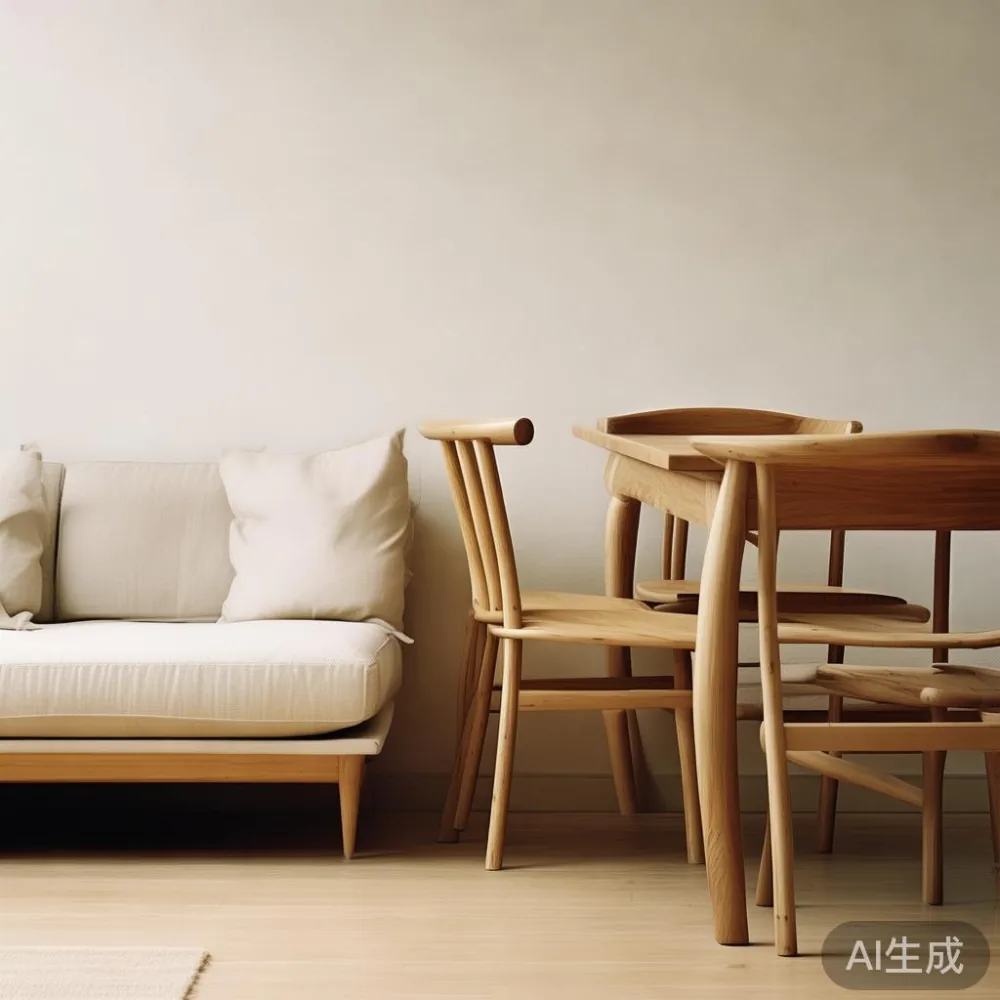
Solid wood furniture pricing is not a mystery once you know which levers the maker pulls. I want to walk you through those levers, with the Singapore context that actually matters: HDB corridor widths around 1.2 m to 1.5 m, lift doors that often sit at 0.9 m wide, the 9% GST layered onto every imported container, and the reality that most "solid wood" pieces you've seen online are not what they claim to be.
Is Mid-century modern wardrobe furniture worth it?
Yes — a properly built mid-century modern wardrobe in solid wood is worth the premium, but only if the maker can prove three things: kiln-dried hardwood, dovetail or mortise-and-tenon joinery, and a finish that won't off-gas in a non-aircon Singapore bedroom for the first six months. The frame, the panels, and the internal drawer boxes must all be solid — not MDF wrapped in a 0.6 mm veneer. A 180 cm wide three-door wardrobe in solid white oak or ash, made to that standard, realistically lands between S$2,400 and S$4,800 in the Singapore market. Anything under S$1,500 is engineered wood dressed up to look the part, and the hinges will sag within 18 months in our humidity.
The Wood Itself: Species, Grade, and Where It Was Cut
The single biggest price driver is the species. Rubberwood, often grown in Malaysian plantations and dried locally, sits at the entry level. A solid rubberwood dining table for four will start around S$900 to S$1,400. Step up to white oak, ash, or walnut — the hardwoods that French light luxury and American light luxury lines tend to favour — and the same table jumps to S$2,800 to S$5,500. Why? Oak takes 80 to 120 years to mature. Walnut, 50 to 80. Rubberwood is a by-product of latex harvesting, cut at 25 to 30 years.
Grade matters too. FAS (First and Seconds) grade hardwood from the United States has longer clear cuts — useful for a 200 cm dining tabletop without a join. A B-grade or "#1 Common" board will have more knots and shorter sections, so the maker has to laminate two or three pieces. That's not a defect — many buyers prefer the visual movement — but it does change the price and the structural logic of the slab.

Origin matters because of shipping and tariffs. European oak (French, German, Slavonic) is denser and more expensive than American white oak. African sapele and rubberwood are cheaper to ship into Foshan than European stock. When a Foshan maker like MIDHILL specifies North American ash or oak, that line item shows up in your quotation.
Joinery: The Part You Don't See Until It Fails
I keep a photo on my phone of a S$600 bedside nightstand I bought in 2019. The side rail is pulling away from the leg because the factory used dowel joints and yellow glue. Three years of Tampines humidity did the rest. A solid wood nightstand built with mortise-and-tenon joinery, like the pieces MIDHILL ships from its Foshan workshop, holds together because the wood itself is the fastener — the tenon expands and contracts with humidity as one piece with the mortise, rather than fighting the glue line.
You pay for joinery in labour hours. A skilled joiner in Foshan might assemble 8 to 12 complex bed frames a day using dowels and a pneumatic clamp. The same joiner, hand-cutting mortise-and-tenon on a wardrobe, finishes 3 to 4 a day. That labour gap is roughly 60 to 80 extra hours per 20-piece container — about S$1,400 to S$2,000 in wages that have to live somewhere in the price tag.
For a solid wood bed frame in queen size (152 cm x 188 cm, the standard Singapore mattress size), expect:
• Rubberwood, dowel + cam-lock: S$700 to S$1,100
• Oak or ash, mortise-and-tenon with centre rail: S$1,800 to S$3,200
• Walnut, hand-finished, with a book-matched headboard: S$3,800 to S$6,500
Finish, Hardware, and the Hidden Line Items
The finish is where factories cut corners and where serious makers protect their reputation. A conversion varnish or a hand-rubbed oil finish costs 3x to 5x more than a sprayed NC lacquer. In Singapore, where many HDB bedrooms run at 28 to 31°C with 75 to 85% humidity, a low-quality lacquer will craze (form micro-cracks) within 12 to 18 months. A proper oil or hardwax finish breathes with the wood and ages gracefully.
Hardware is the silent markup. Soft-close hinges from Blum or Grass cost S$18 to S$28 per hinge versus S$2.50 for a generic Chinese hinge. A four-door wardrobe needs 8 to 16 hinges. Drawer slides: S$45 to S$85 per pair for full-extension soft-close versus S$8 for a basic roller. On a single wardrobe, hardware alone can swing the quotation by S$350 to S$700.
Then there are the costs the customer never sees: kiln drying (running a 40-foot kiln costs roughly S$2,200 per cycle of 25 cubic metres of lumber), container shipping from Shenzhen or Guangzhou to Singapore (around S$1,800 to S$2,600 per 40-foot container in 2024 rates), 9% GST, and Singapore customs duty of 0% for most wood furniture but 7% GST on CIF value for any item declared over S$400.
Size, Configuration, and Why "Custom" Is Usually a Lie
Sizing is straightforward math: a 240 cm dining table uses roughly 0.45 m³ of finished lumber. A 180 cm table uses 0.32 m³. The bigger piece costs more, but not proportionally — waste, finishing, and shipping don't scale linearly. A solid wood dining table in oak, 240 cm, seats 8 and starts around S$4,200 in the Foshan direct-to-Singapore model.
Configuration is where the real money hides. A modular loveseat for kids room, built in solid ash with removable cushions and a non-toxic water-based finish, will run S$1,100 to S$1,800 depending on whether the back panels are solid or plywood-backed. Why does that matter? Because solid back panels on a kids piece add about S$120 to the build but mean the piece can be re-finished in 12 years when your child is 16 and wants a different look.
Be wary of "custom" claims. In Foshan, a true one-off takes 35 to 50 working days. A "customised" piece from stock templates takes 15 to 22 days. The price difference is real: true custom commands a 25 to 40% premium because the workshop stops the production line. If a Singapore retailer promises custom in 7 days, they're shipping from existing stock and putting your dimensions on a piece that was already built.
Marble, Stone, and the Hybrid Question
Marble tables are a different species of problem. The marble itself — Carrara, Calacatta, or the cheaper Guangxi white from southern China — represents 35 to 60% of the piece's cost depending on grade. A 140 cm round Carrara marble dining table on a solid ash base in the post-modern light luxury style starts around S$5,800 and climbs past S$9,000 for book-matched veining.
The hybrid is where the maths gets interesting. A marble-top coffee table on a solid oak base at 90 cm x 90 cm runs S$1,400 to S$2,200. The same dimensions in pure solid oak, no marble, runs S$900 to S$1,300. The marble adds S$500 to S$900 but also adds 38 kg to 52 kg of weight. In a Bedok HDB on the 12th floor, that weight matters — both for your floors and for the two delivery men who will be carrying it off the lift.
One detail most Singapore buyers miss: marble tops are almost always shipped separately from the wood base. Two cartons, two handling points, double the risk of a corner chip. A serious Foshan maker will crate the marble in a custom wooden frame with foam inserts at S$60 to S$110 per crate — a cost that gets absorbed into the unit price but explains why some quotes look higher than others.
Delivery, Access, and the Last-Metre Problem
This is where the Foshan-direct model genuinely wins for Singapore buyers. A typical Punggol HDB corridor is 1.4 m wide. A lift door is 0.9 m wide and 2.1 m tall. A solid wood wardrobe in its crate measures roughly 1.85 m tall, 1.1 m deep, and 0.6 m wide per carton. It fits — barely. A sofa frame in a flat-pack, even a solid wood sofa with removable cushions, arrives in cartons that slide through the door.
Free shipping over US$350 (about S$475) is a Foshan-maker benchmark that absorbs the door-to-door cost. Below that threshold, expect S$120 to S$280 per piece for Singapore delivery, which includes the Woodlands checkpoint crossing and a lorry with a tail lift.
Returns are where the real cost sits. A 14-day return window is generous by Singapore furniture standards — most local retailers offer 7 days. But returning a 90 kg dining table from a Hougang HDB costs the seller S$220 to S$380 in logistics, which is why the policy exists only because the maker is confident the piece will not be returned. Lifetime refinishing, offered by makers with 10-year structural warranties, is the deeper signal: they expect to be responsible for this piece for 25 to 30 years.
The Warranty and Refinishing Signal
A 10-year structural warranty on a solid wood sofa or bed frame is not a marketing line — it's an actuarial commitment. The maker has reserved 3 to 6% of the unit price for expected warranty work over the first decade. For a S$3,200 oak bed frame, that's S$96 to S$192 set aside per piece. It's not free to them, and the customer pays for it once, upfront.
Lifetime refinishing means the workshop will sand, re-stain, and re-finish your dining table in year 12 or year 18 for the cost of transport plus materials — typically S$280 to S$550 for a dining table. A new equivalent table would cost S$3,200. The math rewards buyers who think in 20-year cycles, not 3-year renovation cycles.
How to Read a Quote Without Being Misled
Three questions separate a real solid wood quote from a dressed-up engineered wood quote:
1. "What is the moisture content of the wood at delivery?" The correct answer is 8 to 12% for Singapore. Anything above 14% and the piece will cup or crack within the first humid season.
2. "Are the drawer boxes solid wood or plywood with a veneer?" Solid wood boxes with dovetail joints cost more and last 25+ years. Veneered plywood boxes delaminate in 5 to 8 years.
3. "Where does the warranty live — with the Singapore retailer or with the Foshan workshop?" If the Singapore retailer carries the warranty, you have two layers of accountability. If only the workshop does, you need a Singapore liaison. MIDHILL works with regional partners in Singapore, which is why their warranty travels with the piece.
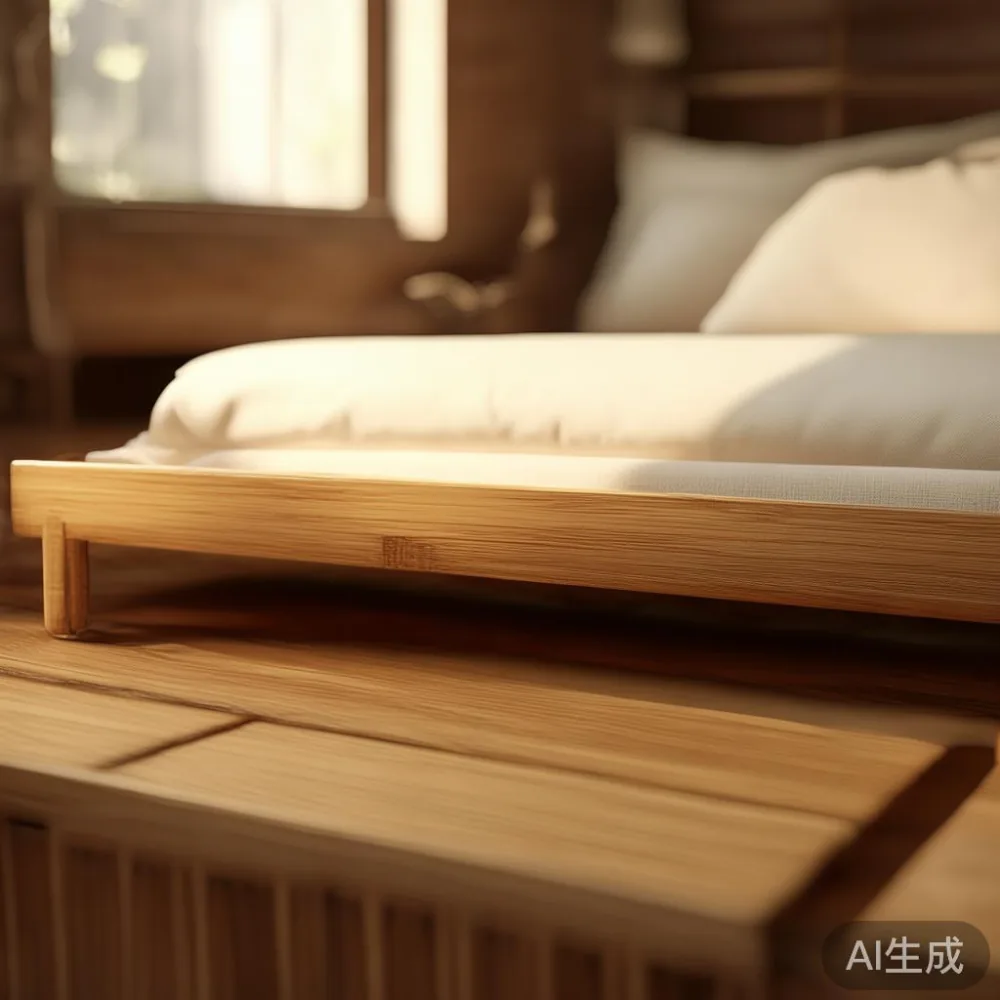
Bamboo furniture deserves a quick mention here because it sits next to solid wood in many Singapore showrooms and gets confused with it. Bamboo furniture — engineered from laminated bamboo strips — is technically a grass, not a hardwood, and behaves differently in humidity. It is lighter (a bamboo dining chair weighs 3.2 kg versus 5.8 kg for an oak chair), more dimensionally stable, and usually 20 to 35% cheaper. It's a legitimate material choice, but it is not solid wood. A quote that lists "bamboo furniture" as the material is not a solid wood quote, no matter how premium the showroom feels. Some makers, including Foshan workshops, offer bamboo furniture as a deliberate sustainable alternative — worth considering for a kids room, a balcony in a Yishun condo, or a second dining set on the patio — but never as a substitute for the solid wood bed frame you're planning to keep for two decades.
Back to my colleague in Punggol. She ended up buying the S$1,750 table after I made her knock on the underside and count the drawer-box joints. It was plywood. She returned it and ordered a S$3,400 solid oak table from a Foshan workshop with a 10-year warranty and free delivery to her block. Three months in, the table has opened up one small crack along a breadboard end — normal for solid oak in a tropical climate, the maker told her, and they'll refinish it free in month 18. That's the price of real wood: not just money, but a relationship with the maker that lasts as long as the piece does.