What Actually Drives the Price of Solid Wood Furniture — A Singapore Buyer's Guide
I still remember the afternoon my colleague Li Wen and I walked into a furniture showroom along Tampines Street 62. We had the same question on our minds: why does one 1.8m solid wood dining table cost S$1,400 and another, almost identical in shape, cost S$3,800? The shop assistant pointed at two labels that looked the same — both said "oak" — then tapped a corner of one and ran his thumbnail across a cross-section of the other. Within five minutes, the price gap made sense. That visit shaped how I now read every price tag I see in Bedok, Punggol, and even the quiet corners of KL Sentosa. If you have ever asked yourself why solid wood furniture varies so much, this guide walks through the actual numbers, the actual wood, and the actual Singapore logistics that push a price up or pull it down.
1. Wood Species: The Single Biggest Driver
Not all "solid wood" is the same species, and not all species behave the same in a humid Singapore HDB flat. The two broad buckets you will see in local showrooms are hardwoods and engineered woods, and confusing them is where many buyers lose money.
Hardwoods like oak, ash, teak, and walnut have tight grain structure. A 1.5m solid wood dining table in European oak will typically retail between S$2,200 and S$4,500 in Singapore, depending on whether the top is a single slab or finger-jointed. Teak is heavier — around 720 kg per cubic metre versus oak's 750 kg per cubic metre — and more weather-resistant, which is why a teak outdoor set pushes past S$5,000. American walnut sits at the higher end because the trees grow slower and the boards are more figured.

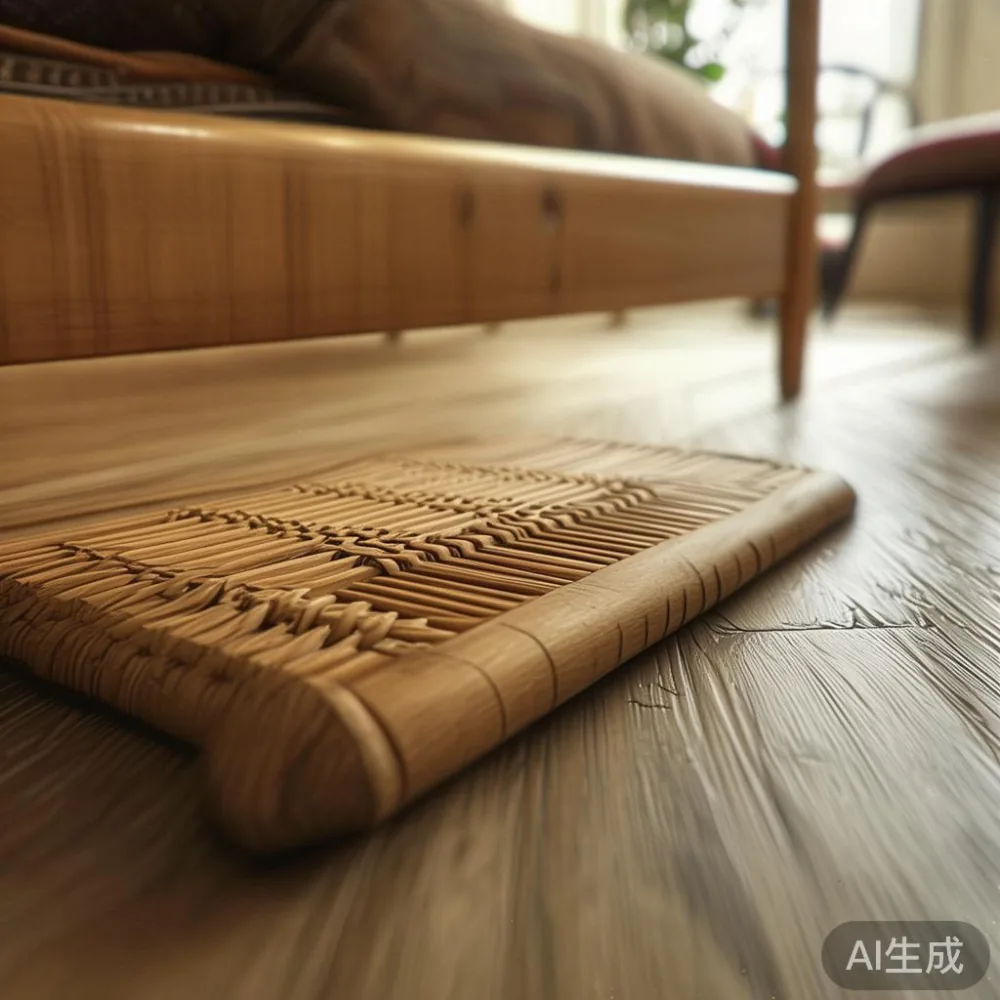
Then there are the soft hardwoods and bamboo-based options. Solid bamboo furniture is technically a grass, not a wood, which is why a well-made bamboo sideboard can be priced 30-40% below an oak equivalent — yet, because bamboo has a tensile strength higher than mild steel by weight, it holds up beautifully in bedside tables and wardrobes that need to flex slightly with humidity. I have handled a bamboo wardrobe in a Punggol condo where the homeowner told me it had survived three years of direct afternoon sun through a west-facing window without a single warp. The price was S$1,180 for a 180cm three-door unit, almost half what a teak equivalent would cost locally.
Wood from temperate climates (oak, walnut, ash) shrinks and swells more in tropical humidity. Tropical species — including bamboo, teak, and meranti — handle Singapore's 80%+ average relative humidity with less movement. That is not marketing; it is the lignin and cellulose structure of the fibre.
2. Construction: Joinery, Boards, and What Holds It Together
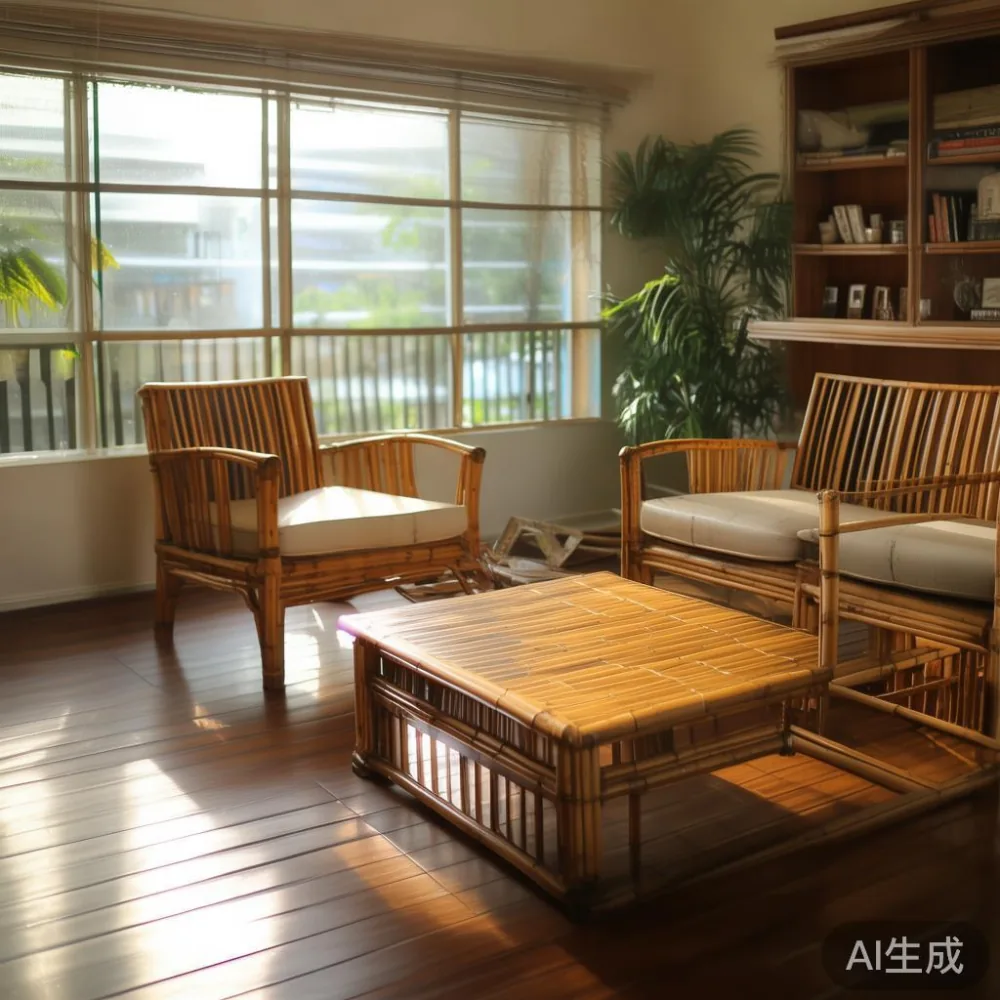
Price differences of S$500 to S$2,000 between two visually identical dining tables almost always come down to joinery and board construction. The three things I check on the showroom floor:
- Mortise-and-tenon or dovetail joints on a solid wood bed frame: these add 8-15 hours of skilled labour but extend the lifespan from roughly 8 years to 20+ years.
- Single-slab tops versus finger-jointed boards: a single 1.8m oak slab can add S$1,200-S$2,000 because the tree has to be wide enough to yield that width.
- Solid wood versus veneer: a sideboard with a 6mm walnut veneer over MDF can retail at S$900, while the same silhouette in solid walnut sits at S$2,800.
On a solid wood sofa, the internal frame is where the real cost hides. A sofa using imported European beech called long and kiln-dried to 8-12% moisture content will outlast a rubberwood frame by a factor of two to three. Kiln-dried beech adds roughly S$350-S$600 to a 2.4m three-seater price tag. I have sat on both — the beech-framed sofa, even at S$3,200, felt noticeably tighter in the armrest after six months of nightly use.
A marble table adds another layer. The base may be solid wood, but the top is either cultured marble (S$300-S$600 for the slab alone) or natural Carrara marble (S$1,200-S$2,500 for the slab alone, plus S$200-S$400 for the resin coating that prevents the porous stone from staining in kopi spills).
3. Finish: Lacquer, Oil, Wax, and the Hours Behind Them
A piece of furniture can leave the workshop raw for almost nothing, or it can spend 12-20 hours across sanding, sealing, and finishing. That time is what gives you the smooth, low-sheen feel of post-modern light luxury pieces you see in place like a Bedok showflat.
There are four common finishes in Singapore showrooms:
- NC lacquer (nitrocellulose): cheapest, around S$80-S$120 in materials per dining table, but yellows under UV and chips easily.
- PU lacquer (polyurethane): the industry default for mid-range pieces. Costs S$150-S$250 in materials and lasts 5-7 years before a refresh.
- Hardwax oil (like Osmo): S$220-S$400 in materials per piece, but allows the wood to flex with seasonal humidity. A hardwax-oiled bamboo dining table in a Punggol HDB will handle wet clothes dripping onto it much better than a PU-lacquered equivalent.
- French polish (shellac): S$400-S$700 in labour alone for a dining table, but produces the deep, mirror-like gloss you see on high-end American light luxury pieces.
At MIDHILL, the finishing line is something I have watched personally — the Foshan workshop runs a seven-stage sanding sequence and a hand-applied hardwax oil on most exposed tops, which is why their 10-year structural warranty actually means something beyond paperwork.
4. Origin, Shipping, and Singapore-Specific Costs
This is where a Singapore buyer faces costs that a US buyer never sees. A 2.4m solid wood sofa frame shipped from Foshan to Singapore arrives in two ways: assembled in a 4-4 piece flat-pack or fully assembled in a wooden crate. Fully assembled crating adds roughly S$280-S$450 to the landed cost because of the volume, but it eliminates the 90-minute assembly in my own living room.
Once the container arrives, three Singapore-specific items push the retail price up:
- GST: 9% on the landed value, payable on every imported piece since 2024.
- Delivery surcharge for HDB lifts: most lift cabins in Singapore measure 1.2m deep by 1.5m wide. A 2.2m wardrobe in its crate will not enter. Tailgate delivery (passed over the corridor railing by two deliverymen) adds S$80-S$150 per piece.
- Staircase surcharge: walk-up HDBs without lifts add S$15-S$25 per flight.
Free shipping thresholds matter. MIDHILL absorbs the S$120-S$180 delivery cost for any order above US$350 (around S$475), which is roughly the price of a single nightstand or a small bamboo sideboard. That is why a single accessory often gets delivered free while a full dining set triggers no extra shipping at all.
Where can I buy a coffee table in Singapore?
You can buy a coffee table in Singapore directly from local showrooms in Tai Seng, Tampines, and Bukit Batok, from established online retailers that ship from regional factories, or from cross-border brands that deliver flat-packed to your door — and each route delivers a different balance of price, lead time, and after-sales service.
The showroom route in Tampines gives you 30-40 options in physical dimensions you can actually measure, but you pay a 25-40% showroom markup. The online retailer route — meaning brands like MIDHILL that ship from Foshan — gives you a 1.2m solid oak coffee table for S$680 to S$950 versus S$1,400 to S$2,200 in a physical shop. Lead time is 18-28 days by container, plus 3-5 days for Singapore delivery. The local maker route (Pasir Ris, Kranji workshop visits) gives you fully custom dimensions — useful if your living room has an awkward 1.35m width between two arms of an L-shaped sofa — but charges S$1,800-S$3,500 for a single slab-topped unit.
For a marble table top, expect an extra 7-14 days because the slab is crated separately and only married to the base on arrival. For a solid wood coffee table with a hidden lift-top mechanism (the kind that raises to dining-table height), budget S$950-S$1,400 for a 1.1m unit in ash or rubberwood.
5. Warranties, Returns, and the Hidden Cost of Cheap Furniture
A S$580 dining table from an unknown Taobao seller looks cheap until the wobble starts in month four and the seller disappears. A proper warranty from an established maker — MIDHILL's 10-year structural warranty is unusually long for the segment — adds roughly S$120-S$200 to the retail price but buys you refinishing, replacement joints, and a real phone number.
14-day returns are now standard among serious Singapore sellers. The trick is who pays return shipping. For a 1.8m solid wood bed frame, return freight to a Foshan warehouse runs S$380-S$520 by sea, plus a 20% restocking fee in some cases. A local return (pickup from your Bedok flat) is cheaper — usually S$60-S$120 — which is why local stock always wins on returns, even if the unit price is 15-20% higher.
There is also lifetime refinishing to consider. A S$2,400 solid wood dining table that can be sanded and re-oiled in year 12 for S$280 has a 30-year service life. A S$1,200 veneered equivalent is usually landfill-bound by year 10. Spread the cost across years and the expensive piece becomes cheaper than the cheap one.
6. Style Premium: French Light Luxury, American Light Luxury, and the Numbers Behind Them
Style premium is the hardest cost to justify on a spreadsheet, but it is real. Three style directions dominate Singapore condo interiors in 2025:
- French light luxury — soft curves, cabriole legs, brushed brass hardware. A French-inspired solid wood bed frame in white-oak veneer over beech runs S$2,800-S$4,200 locally.
- American light luxury — chunkier proportions, shaker panels, darker walnut tones. A queen-size bed frame in this style sits at S$3,200-S$4,800.
- Post-modern light luxury — geometric lines, mixed materials including marble and brass, oversized marble tables. A 1.4m post-modern marble table with a solid ash pedestal goes for S$3,600-S$5,500.
These premiums are not just branding. The CNC time on a curved cabriole leg is 4-6 hours versus 45 minutes for a straight shaker leg. The brass hardware on a French piece costs S$45-S$90 per drawer versus S$8-S$15 for standard steel pulls. When you see a S$600 markup for "style," roughly S$280 of it is hardware and S$180 is extra finishing time.
7. So What Is a Fair Price in Singapore Today?
For a Singapore buyer in 2025, with 9% GST layered on every figure below, here are the realistic price bands you should expect from a serious seller:
- Solid wood nightstand (60cm, two-drawer): S$420-S$780 in oak or ash; S$280-S$480 in bamboo furniture grade.
- Solid wood bed frame (queen-size): S$1,800-S$3,500 in oak or beech; S$1,400-S$2,400 in solid bamboo furniture.
- Solid wood dining table (1.8m, six-seater): S$2,200-S$4,500 in oak, walnut, or ash.
- Solid wood sofa (2.4m three-seater): S$3,000-S$5,500 with fabric; S$4,200-S$6,800 with full-grain leather.
- Wardrobe (180cm three-door): S$1,800-S$3,800 depending on internal fittings.
- Marble table (1.2m coffee table): S$1,400-S$3,200 with natural marble; S$900-S$1,600 with cultured marble.
- Italian light luxury accent chair usa — a category that has crossed over heavily into local online listings — typically runs S$1,400-S$2,800 for a single bouclé or velvet accent chair, even when shipped from Foshan.
If a price lands more than 25% below these bands, something is missing: the wood is veneer, the joints are stapled, the finish is NC lacquer, or the warranty is verbal. If a price lands more than 40% above, you are paying for a Singapore showroom rent, a brand-name markup, or a custom finish that may or may not be worth it to you.
8. A Quick Checklist Before You Pay
Before you swipe that card or hit the bank transfer button, run through this eight-point list. It takes three minutes in the showroom and saves three years of regret.
- Ask for the Latin species name. "Oak" means nothing without Quercus robur or Quercus alba attached.
- Measure the moisture content. Anything above 12% will move; anything below 6% will split. A good seller will quote 8-10%.
- Inspect the underside. The bottom of a table or inside of a wardrobe tells you everything the showroom top hides.
- Check the corner blocks. Solid wood corner blocks on a sofa or bed frame add decades.
- Count the drawers. Dovetail joints on a nightstand feel rougher to open and close — that is a good sign.
- Ask about the finish type. Hardwax oil for humid HDBs, NC lacquer for aircon-ed condos only.
- Read the warranty wording. "Structural" is the key word; "cosmetic" is not.
- Confirm the delivery method. Lift access dimensions matter; tailgate delivery matters more.
The cheapest piece is the one you buy once. The most expensive piece is the one you replace twice. The price tag in front of you is the starting point, not the final number — and now you know exactly what is folded into it.