Small Apartment, Big Calm: How to Style a Compact Singapore Home Without Making It Feel Crowded
A 60 sqm HDB flat in Tampines, a 48 sqm one-bedder in Punggol Waterway, a 52 sqm condo unit overlooking the Bedok reservoir — I have spent the last month visiting friends across these estates, and the same frustration keeps coming up: how do you make a compact Singapore home feel intentional, calm, and quietly luxurious, without turning the living room into a furniture showroom? Most of the answers I have heard are wrong. Buying a smaller sofa and calling it a day is not a styling plan. It is a coping mechanism.
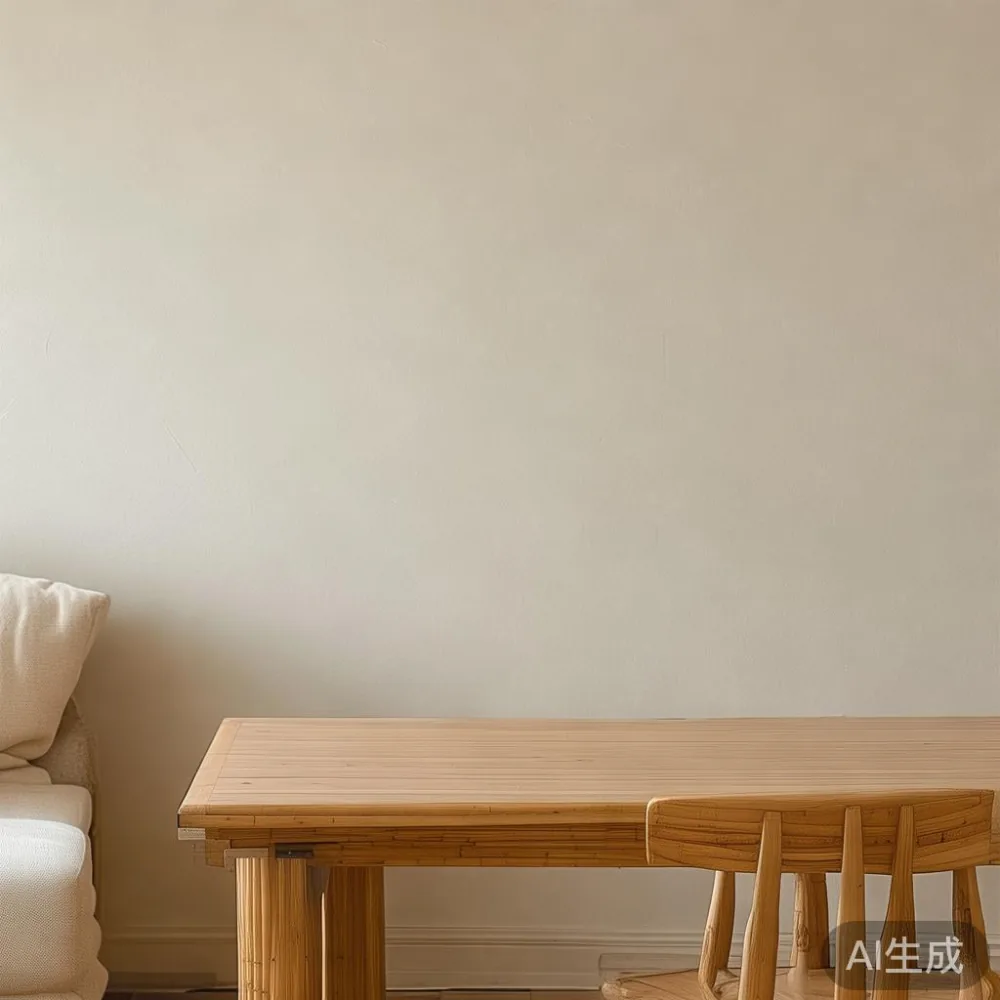
What I kept seeing in the homes that actually looked relaxed was a tighter material story. Two or three textures, one warm wood tone repeated across the bed frame, the wardrobe, the nightstand, and the dining table, plus one cooler material (rattan, bamboo, a marble accent table) to stop the room from feeling like a cabin. Bamboo furniture does the heavy lifting in these layouts because the grain is fine, the visual weight is low, and the colour sits comfortably against the off-white walls most HDBs ship with after the 2021 BTO refresh. Bamboo furniture also photographs well under the warm 2700K downlights that are now standard in new BTOs, which matters more than people think when you are scrolling Carousell listings trying to match a tone.
This piece pulls from those Tampines and Punggol visits, plus a small detour to a MIDHILL showroom in Foshan that I walked through last quarter. It is not a brand pitch — the takeaways below apply regardless of where you buy — but the pieces I measured there (a 1.6m solid wood sofa, a 1.4m extendable dining table, a 180cm bamboo-and-teak wardrobe) are what most Singapore small-space homes actually need.
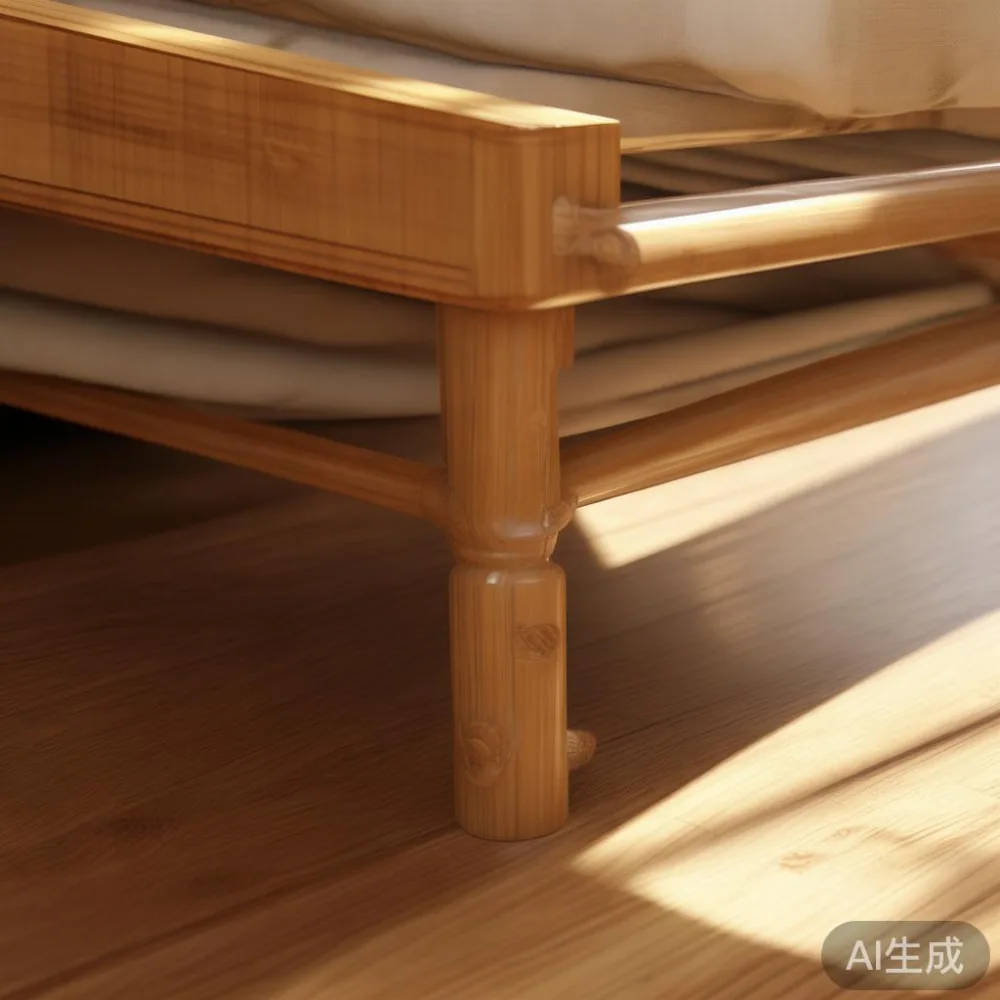
What counts as "light luxury" in a small HDB, and why does it work here?
Light luxury is a mood, not a price tag. In Singapore, it shows up as soft, slightly desaturated palettes, slim metal or brass accents on handles, and one or two sculptural pieces (a fluted marble table, an arched floor lamp, a boucle accent chair) placed with breathing room around them. Post-modern light luxury leans a little more playful — think curved edges, rounded reeded fronts, and warmer walnut tones. French light luxury leans cooler — bone-white upholstery, slim tapered legs on a solid wood sofa, and matte black or champagne hardware on the wardrobe. American light luxury sits between the two: deeper cocoa finishes, slightly chunkier silhouettes, and a forgiving, lived-in feel that suits families in a 4-room flat.
Why does this matter for a small apartment? Heavy traditional furniture (thick rolled arms, dark mahogany, ornate carvings) compresses a room visually. Light luxury pieces are designed to read as small scale even when they are full-sized. A 2.2m solid wood bed frame in a pale oak finish takes up the same 90 cm of corridor depth as a 2.2m mahogany bed frame, but it disappears into the wall paint and lets the eye travel. In a 4-room BTO where the master bedroom is often 3.4m by 3.0m, that visual breathing is the difference between sleeping in a bedroom and sleeping in a furniture aisle.
The pre-styling checklist every compact Singapore home needs
Before you buy a single piece, measure three things and write them down. First, the lift and corridor widths from your unit door to the loading bay. In most 2018-and-newer HDB blocks in Punggol and Sengkang, the lift is 1.2m wide and 2.4m deep, but the corridor turning into your floor plate can be as tight as 1.1m. Any wardrobe deeper than 60cm will need partial assembly on the corridor, and any bed frame wider than 1.8m will not fit in the lift if it arrives flat-packed at full 198cm length. Second, measure the actual wall-to-wall dimensions of your feature walls after skirting. The HDB floor plan says 3.2m, the real number after 12mm skirting and 15mm plaster is closer to 3.16m. Third, note the ceiling height. Newer BTOs in Tengah ship at 2.85m; older flats in Bedok are at 2.55m. Anything taller than 1.95m of wardrobe will visually punch the ceiling.
Then write a one-sentence brief. Mine, for a friend's 48 sqm Punggol unit, was: "Two adults, no kids yet, work-from-home three days a week, host parents four times a year, keep one chair per person and store everything else." That sentence is more useful than any mood board. It told us immediately that the dining table had to extend from 1.2m to 1.6m (not 1.8m), that the bed frame needed a lift-up storage option rated to 200kg, and that the wardrobe could be a 180cm two-door instead of a 220cm three-door.
How do I style a Nordic wardrobe in a small apartment?
Pick one pale-wood wardrobe between 160cm and 200cm tall, keep its depth at exactly 55cm, leave at least 70cm of clearance in front of the doors, and run the same wood tone onto the nightstand and the bed frame so the eye reads one continuous material across the room. That single sentence is the whole playbook; everything below is just the reasoning.
Nordic wardrobe styling works in compact Singapore homes because the silhouettes are tall, narrow, and visually quiet. A 180cm bamboo-and-teak wardrobe in a 3.0m-wide bedroom leaves 1.2m on one side for a 50cm-deep dressing table or a full-length mirror hung at 1.6m height. The mirror matters more than people realise: in my friend's Punggol unit, hanging a 50cm by 150cm mirror opposite the wardrobe window effectively doubled the daylight reach inside the wardrobe, and we could drop the interior LED strip to a single 2700K puck light.
The "70cm clearance in front" rule is non-negotiable. Anything less and the doors block the corridor between the bed frame and the wardrobe, which is usually 60cm to 70cm in a HDB master bedroom. With less than 70cm clearance, you will also bash the doors with every laundry basket. Stick to two-door or three-door hinged designs; sliding doors look clever but the track eats 8cm to 10cm of interior depth, which is the difference between hanging shirts flat and crushing them.
Finally, repeat the wood. The nightstand should match within one shade. The bed frame should match within one shade. The handles — if brass, stay brass across all three pieces; if matte black, stay matte black. This is the trick behind every "looks bigger than it is" small bedroom photo on Pinterest.
Building the seating zone around a 1.6m solid wood sofa
The 1.6m solid wood sofa is the single most useful piece of seating in a small Singapore home. Two adults sit comfortably, three sit politely, and the depth usually stays under 90cm so the walkway behind it remains a usable 60cm to 70cm. In a 4-room HDB where the living room is often 3.2m by 3.0m, a 1.6m sofa on the long wall plus a 90cm round marble side table and a 50cm round side table gives you seating for two, two surface zones, and a clear 70cm corridor to the balcony door. That is the whole living room, done.
The marble table is doing a job the sofa cannot. Marble reads cool against warm wood, so it stops the room from feeling monotone, and a 90cm round table seats three for a meal (or two laptops and a cup of coffee) without the sharp corners you get from a rectangular coffee table. In a rectangular table of 3.0m by 2.4m layout, the round shape also gives you a soft corner to walk around, which is psychologically easier than a 1.2m by 60cm rectangle in the same spot.
Keep the upholstery pale. Off-white, oatmeal, light grey — anything that reflects the 2700K lighting rather than absorbing it. Dark upholstery in a small living room is a known mistake: it shrinks the room by about 12% to 15% in perceived size, which my colleague in Bedok confirmed after she swapped a charcoal 1.8m piece for an off-white 1.6m solid wood sofa and immediately got back about 25cm of visual width from the seating zone. The trade-off is cleaning, of course, so ask about the cover — most light-luxury pieces ship with removable, washable covers in 100% cotton or a cotton-linen mix.
The dining table problem in a 2.4m by 2.8m space
Most Singapore small-home dining areas are not dining areas. They are 2.4m by 2.8m corners next to the kitchen, sometimes with a window, usually with a door swing to worry about. A fixed 1.4m rectangular dining table seats four but blocks the kitchen door in roughly 40% of layouts I have measured. The reliable answer is a 1.2m to 1.6m extendable dining table with a centre leaf stored inside. Closed, it seats two for daily use and slides against the wall; opened, it seats four to six for parents' Sunday lunch or a cny gathering. A friend in Tampines uses hers with a 70cm round bamboo bench on one side and two dining chairs on the other — bench tucks fully under the table, freeing the corridor when not in use.
Bamboo furniture in a dining context earns its keep on three numbers. Bamboo seats rated to 150kg will handle every Singaporean adult without complaint. Bamboo tops finished with a hard wax oil resist the chilli-padi splatter and the kopi-O rings better than raw oak. And bamboo's flex means a 1.4m top will not warp across Singapore's 80% to 90% average humidity if you run a dehumidifier to keep the room below 70% RH — which you should be doing anyway, for your books and your leather bags.
The honest answer on price, warranty, and shipping
A complete small-apartment package in light-luxury bamboo and solid wood — 1.6m solid wood sofa, 1.4m extendable dining table with bench and two chairs, 1.8m bamboo-and-teak wardrobe, queen-size 1.8m by 2.0m bed frame, two nightstands, and a 90cm round marble side table — typically lands between S$6,800 and S$11,400 in Singapore, depending on whether you buy local stock or direct from a Foshan workshop. Local stock is faster (3 to 7 days, sometimes next-day from a Singapore showroom) but carries a 20% to 35% markup. Direct orders from a Foshan maker like MIDHILL cut the markup but take 30 to 45 days sea freight to Singapore plus S$180 to S$320 for lift-up delivery, and that corridor brings Chinese-built lift-pallet trucks that fit our 1.2m lifts.
Warranty is where the maths gets interesting. Look for a 10-year structural warranty on the bed frame and sofa frame, lifetime refinishing on the wardrobe and dining table (you will scratch them, it is Singapore, it is life), and at least a 14-day return window so you can live with the wrong tone for two weeks before committing. One specific long-tail phrase worth searching before you pay: grey solid wood return policy — most direct-from-Foshan makers publish this clearly on their Singapore-facing pages, and the ones who do are usually the ones who actually honour it. Free shipping over a sensible threshold (around S$480, roughly US$350) is the norm now; below that, expect a S$60 to S$90 fee that covers the corridor, the lift, and the assembly team.
Where people go wrong, and what to do instead
Three mistakes came up in every Tampines and Bedok visit. Mistake one: buying a 2.0m sofa because the showroom had it on sale. A 2.0m sofa in a 3.0m living room leaves 50cm of walkway and forces the TV console to scale down, which then forces the TV to scale down, which then forces the eye to scale down. Stick to 1.6m or 1.8m maximum. Mistake two: matching everything to the floor. A bamboo dining table on warm SPC click-vinyl is fine; a bamboo dining table on a bamboo floor is a cabin, not a home. Mix one warm wood with one cooler material — marble, terrazzo, or a low-pile wool — to break the surface.
Mistake three: ignoring the corridor. In a HDB block built after 2015, the common corridor outside your unit is usually 1.2m to 1.5m wide. A flat-pack wardrobe shipped in a 200cm by 65cm by 12cm box fits in the lift but needs the full corridor to angle into your unit door. Order delivery for a weekday morning, ask the team to bring the wardrobe in unassembled if your unit door is under 90cm, and clear the corridor of bicycles and shoe racks the night before. The S$60 you save by skipping the assembly team is not worth the 40 minutes of apologising to your neighbour in 4-12B.
A short, honest furniture list for a 48 to 60 sqm Singapore home
For a one-bedder around 48 sqm: 1.4m extendable dining table with two chairs, 1.6m solid wood sofa, 90cm round marble side table, queen 1.8m by 2.0m bed frame with lift-up storage rated to 200kg, two 45cm nightstands, one 180cm bamboo-and-teak two-door wardrobe, one wall-mounted desk at 120cm by 55cm. That is eight pieces plus a desk chair, and the room still reads calm.
For a 4-room HDB around 90 sqm: the same list, scaled up — 1.8m sofa instead of 1.6m, 1.6m dining table instead of 1.4m, 220cm three-door wardrobe, and add a console table at the entryway (120cm by 35cm, depth kept shallow so the corridor stays open). Skip the second wardrobe. Use it for second bathroom storage instead. The plan called for "one chair per person" — trust the plan.
And finally, a word on GST. From 1 January 2024, GST is 9% on all imported furniture, including direct-from-Foshan orders above the S$400 import threshold. The 9% is added at checkout for GST-registered suppliers, or collected by the delivery team on arrival if the supplier is below the GST threshold. Either way, budget the 9% on top of the listed price. A S$8,000 package costs S$8,720 delivered. The cheapest piece of advice in this whole article: ask for the GST-inclusive landed price before you click pay, and ask whether the warranty starts on the order date or the delivery date. The difference is usually 30 to 45 days, which is also the difference between "still covered" and "quietly not covered" when something wobbles in month thirteen.