Humidity in Singapore and What It Does to Your Solid Wood Furniture
Last month I visited a newly renovated four-room flat in Tampines with my colleague, a joinery supervisor who has fitted out over 60 HDB units in the past five years. The owners had bought a beautiful solid wood dining table from a regional brand six months earlier, and the panels were already cupping. The air-con ran at 23 degrees all day, but the windows stayed shut and the indoor humidity was sitting at 78 percent. The table, the supplier had told them, was "kiln-dried." Kiln-dried, yes — but kiln-dried for a climate very different from Singapore's. It was a useful reminder that a piece of furniture built for temperate Europe or northern China simply does not arrive ready for life in an HDB corridor that traps moisture twelve months a year.
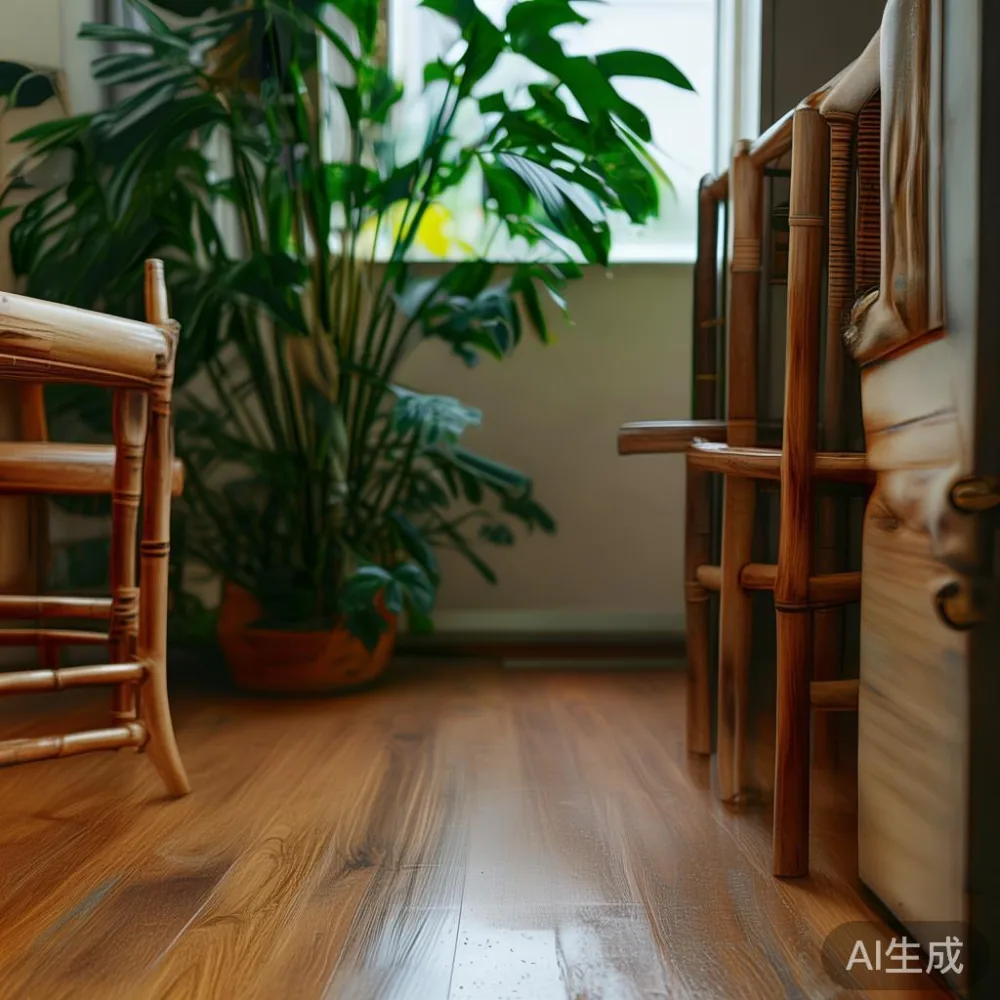
Foshan has spent thirty years learning this lesson the slow way. As a manufacturing city sitting on the Pearl River Delta, it sits inside the same broad humidity envelope as Kuala Lumpur, Jakarta, and Singapore — a fact that matters when you are choosing between an imported piece and one designed by makers who live with the same climate you do. MIDHILL has been building solid wood pieces in that environment since 2008, exporting to fifteen-plus markets from its Foshan base, and shipping direct to Singapore with full insurance and free delivery on orders above SGD 480. Their ten-year structural warranty and lifetime refinishing service are direct responses to what humidity does to wood over years, not weeks. This guide is built around what every Singapore homeowner should understand before buying any solid wood sofa, bed frame, dining table, wardrobe, nightstand, or marble table for a local flat or condo.
Why is humidity such a problem for wood furniture in Singapore?
Singapore's outdoor relative humidity sits between 70 and 90 percent for most of the year, and indoor humidity in an air-conditioned HDB flat rarely drops below 60 percent unless a proper dehumidifier is running. Solid wood is hygroscopic — it absorbs and releases moisture to stay in balance with its surroundings. When indoor humidity climbs past 65 percent, wood fibres swell; when it falls below 45 percent, they shrink. A swing of twenty points within twenty-four hours is enough to cause movement that no glue, no dowel, and no factory finish can fully control. Furniture imported from places where the annual humidity averages 45 to 55 percent is, in effect, calibrated for the wrong world.
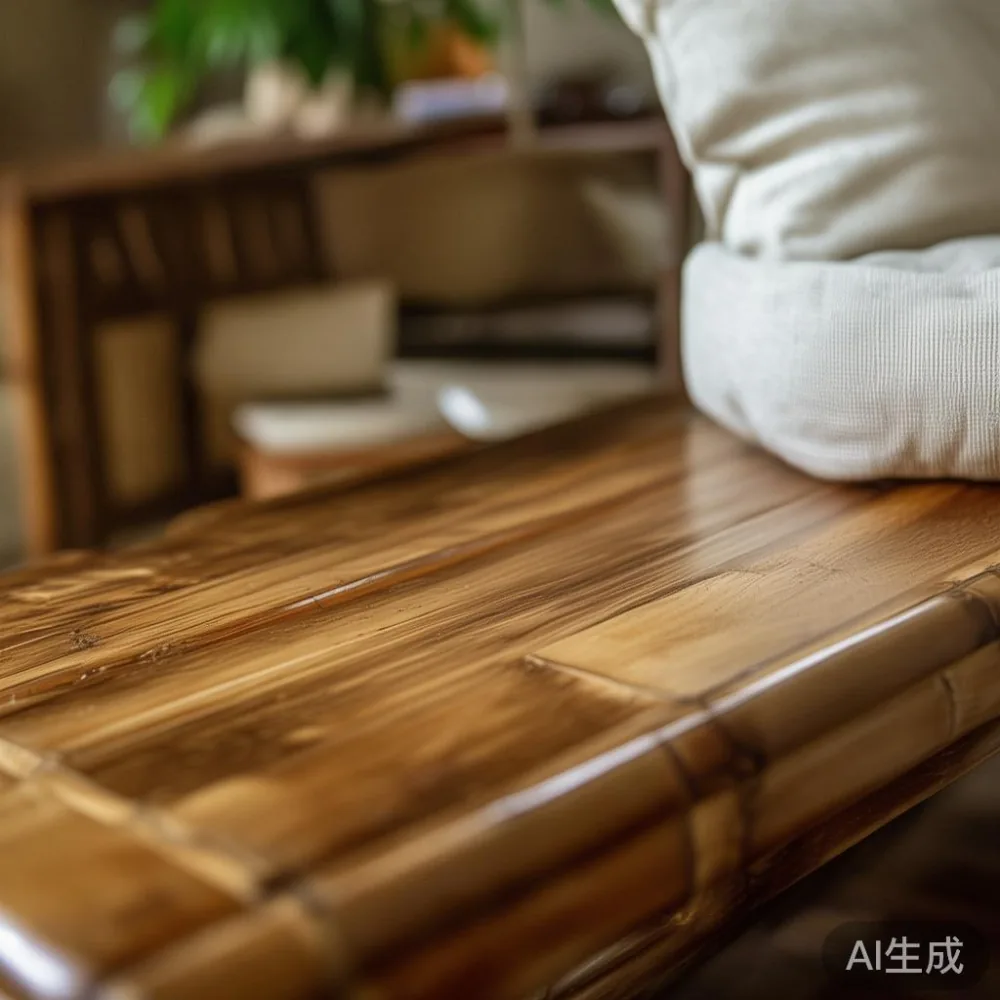
The problem is not just the wood. A solid wood dining table is really a system: top panels, apron rails, legs, and a finish. When the top expands sideways but the apron rails — which run perpendicular — do not swell at the same rate, the table racks. When a wardrobe side panel bows outward by three to four millimetres in August, the door stops sealing by Chinese New Year. This is why experienced local buyers now ask about factory acclimatisation, not just about kiln-drying certificates. A reputable Foshan maker like MIDHILL typically air-dries timber in ventilated yards for eight to sixteen weeks after the kiln cycle, letting the boards settle toward the moisture content they will actually see in a tropical home.
What humidity levels are safe for a solid wood bed frame or wardrobe?
For most solid wood bedroom pieces, a target of 50 to 60 percent relative humidity is the practical sweet spot. Below 45 percent, you risk shrinkage at the joints and movement in wide panels such as the headboard of a solid wood bed frame or the side panels of a three-door wardrobe. Above 65 percent, you invite mould on unfinished surfaces, white clouding on lacquer, and the slow loosening of mortise-and-tenon joints. I keep a simple hygrometer in each of the bedrooms I help family members set up — a calibrated unit costs around SGD 18 at any local electronics store and pays for itself within the first wet season.
Placement matters as much as humidity. Keep a solid wood bed frame at least fifteen centimetres away from an external wall, especially on higher floors where the afternoon sun heats the plaster and pushes the wall surface above thirty-two degrees. The same rule applies to a wardrobe: leave a five-centimetre gap at the back for air movement. Bathrooms adjacent to bedrooms are a frequent hidden source of moisture; a small dehumidifier rated at eight to twelve litres per day, costing between SGD 169 and SGD 260, will keep a standard HDB bedroom in the safe range even during the December monsoon surge. Lift access in most HDB blocks in Bedok and Punggol restricts wardrobe height to roughly 2.1 metres once the box is tilted — a useful number to keep in mind when ordering.
How does humidity affect a solid wood dining table and a nightstand?
A dining table is the most exposed piece in a Singapore home because the surface area is large and the air underneath is often stagnant. Expect a top made of 4-centimetre-thick solid wood planks to move up to three millimetres in width across a single wet season. Quality tables handle this by using breadboard ends secured with elongated slot screws that allow the centre planks to slide as a group, and by leaving the apron rails mechanically fastened rather than glued. When you are comparing two pieces at a showroom, run your hand along the underside of the top: if the planks feel tight against each other with no expansion gaps at all, the maker has built for a drier climate.
A nightstand is more forgiving because the panels are small — typically forty-five centimetres wide and thirty-eight centimetres deep — and the structure is light. Still, drawer runners stick and drawer faces rack when humidity climbs, and this is where the difference between a 14-day return window and a one-year workmanship warranty becomes real. For customers comparing an American budget under1000 korea import against a Foshan-made piece, the practical question is which one comes with a local service team, a documented moisture-content specification for tropical use, and a clear refinishing path. A solid wood nightstand should be specified with a moisture content between eight and twelve percent at delivery, and the maker should be able to tell you the number before you pay.
How do I choose a chaise lounge for a entryway?
Choose a chaise lounge for an entryway by prioritising a kiln-dried solid wood frame, a low centre of gravity, and a footprint that leaves at least eighty centimetres of clear walking path — in a Singapore HDB, the corridor inside the front door is usually 1.1 to 1.4 metres wide, and the lift is typically 1.2 metres deep with a 1.0-metre door, so anything deeper than seventy centimetres will not fit through comfortably on moving day.
Beyond the dimensions, the real choice is about moisture resilience. A chaise lounge in an entryway sits at the boundary between the corridor and the air-conditioned hall, which means it sees the largest humidity swings of any piece in the flat. Look for frames that use mortise-and-tenon joints at the load-bearing corners, not just screws into end grain; look for upholstery fabrics with a moisture rating of at least four on the MCA scale; and look for legs that end in either solid brass or stainless steel cups, since the floor mop passes under a chaise more often than under a sofa. French light luxury styling — slim arms, soft curves, brushed brass feet — translates especially well into this brief because the joinery is exposed and the proportions stay graceful even when the panels move. Expect a well-built chaise from a Foshan light luxury maker to weigh between thirty-two and forty-two kilograms, which is a useful proxy for the density and stability of the frame.
Which wood species actually survive Singapore's humidity?
Not all solid wood species behave the same way in our climate. Hardwoods with tight grain and natural oils tend to outperform softwoods and open-grain species. White oak and ash, both common in post-modern light luxury collections, are workable but require a controlled factory finish to keep movement within limits. Teak and Burmese walnut are traditional local favourites because their natural oils slow absorption, though responsibly sourced teak carries a price premium of roughly thirty percent over oak. Rubberwood, widely used by Malaysian and Thai makers, is dimensionally stable and affordable — a six-seater rubberwood dining table can be found in Singapore retail between SGD 1,100 and SGD 1,900 — but it needs a sealed finish on all six sides of every panel, not just the visible faces.
Avoid MDF and particleboard cores in any piece that will sit near an external wall. Engineered boards have their strengths, but a swollen MDF shelf inside a wardrobe is impossible to repair, only replace. If you want the look of marble on a coffee or side table, a marble table with a solid wood sub-base is fine — the marble itself is moisture-stable — but confirm the sub-base is built from the same kiln-dried hardwood as the rest of your pieces. MIDHILL's marble table range, for instance, pairs Carrara-grade tops with rubberwood or ash bases that have been through the same multi-stage kiln and yard-drying cycle as their all-wood pieces, which keeps the dimensional behaviour consistent across the room.
What everyday habits prevent humidity damage in an HDB flat?
Three habits prevent ninety percent of humidity damage in an HDB flat. Run a dehumidifier in the bedroom for six to eight hours overnight during the December to March peak, target fifty-five percent relative humidity, and empty the tank each morning. Wipe any condensation off a solid wood surface within fifteen minutes — never let water pool on a dining table or nightstand, because lacquer finishes soften within minutes of standing water contact. Air-condition the home for at least two hours before opening any solid wood wardrobe for the day, which lets the interior drop to a stable humidity before the doors swing open.
Two more habits are worth the small effort. Rotate the position of any decorative object on a dining table or marble table once a month, because the wood underneath will age unevenly if one corner sits in permanent shade. And keep all solid wood pieces at least one metre away from any bathroom door that opens into the living area — a common layout mistake in newer Punggol and Sengkang BTO flats, where the bathroom shares a wall with the dining area. Lift and corridor dimensions in most of these blocks allow a maximum single-piece length of 2.3 metres, so plan your wardrobe and dining table orders around that ceiling rather than the larger pieces your relative in a landed house might own.
What should Singapore buyers look for in a warranty and after-sales policy?
A warranty tells you what the maker thinks will go wrong. A ten-year structural warranty on a solid wood sofa, bed frame, dining table, wardrobe, nightstand, or marble table is a confident statement that the joints and the frame have been engineered for tropical humidity cycles — not just for the first three years of showroom life. Lifetime refinishing is rarer and more telling: it means the maker expects you to keep the piece for fifteen to twenty-five years, which is the actual lifespan of a well-maintained solid wood item in our climate. Ask whether refinishing is done locally or requires shipping back to the factory; a Singapore-based refinishing partner can usually turn a dining table around within ten working days.
Delivery terms matter too. Free shipping above a sensible threshold — MIDHILL, for example, ships free to Singapore addresses above SGD 480, with insurance and GST-inclusive pricing — removes the friction of comparing pieces across brands. A 14-day return window is the practical minimum for tropical purchases, because some humidity symptoms only appear after the piece has spent two weeks in your specific microclimate. If you are comparing a Singapore showroom piece against a direct-from-Foshan order, ask both sellers the same three questions: what is the moisture content at packing, what is the joint construction at every load-bearing corner, and what happens if a panel cups by more than four millimetres in the first six months. The answers will tell you which piece is built for Tampines, and which is built for a sales floor in another country.