How to Read a Furniture Warranty Without Getting Caught Out
Last month I sat in a Tampines HDB coffee shop with a friend who had just moved into a new 4-room flat in Punggol. She had bought a bamboo side table from an Instagram storefront for SGD 189, and three months later one of the legs had split along the grain. The seller stopped replying. Her "lifetime warranty" turned out to be three lines of fine print on a Story highlight. That conversation pushed me to actually read the warranties on the solid wood sofa, bed frame, dining table, wardrobe, and nightstand I was researching — and to write this guide so you don't learn the hard way.

Why Warranty Fine Print Matters More in Singapore
Singapore homes are unusual. A typical HDB corridor in Bedok is about 1.2 m wide, and many older lift cabins measure only 2.1 m tall with doors around 0.9 m wide. That means furniture rarely moves in one piece — pieces get tilted, partially disassembled, and squeezed through three right-angle turns. Any structural joint that loosens under that treatment is, in practice, the consumer's problem if the warranty excludes "moving damage" or "customer handling errors". A 10-year structural warranty is meaningless if the company argues every loosening is your fault.
Also consider the humidity. Indoor relative humidity here hovers between 70 and 80 percent for much of the year. Bamboo furniture and solid wood furniture both respond to that: bamboo can swell at the joints, and kiln-dried oak or ash used in a solid wood dining table can develop hairline checks within a season. A warranty that only covers "manufacturing defects" but defines those as "faults existing at the point of delivery" leaves you with almost nothing once a humid month has passed.

What Does "Structural Warranty" Actually Cover?
Ask three different showrooms in Singapore and you will get three different answers. Here is the wording I want to see before I part with SGD 1,800 on a bed frame:
1. A clear definition of "structural failure" — typically any crack, joint separation, or breakage of a load-bearing component (rails, slats, legs, stretchers) under normal residential use.
2. The duration, written in years, not "for a long time".
3. What the company does about it: repair, replacement of the affected part, full replacement, or refund.
4. Who pays for transport and labour.
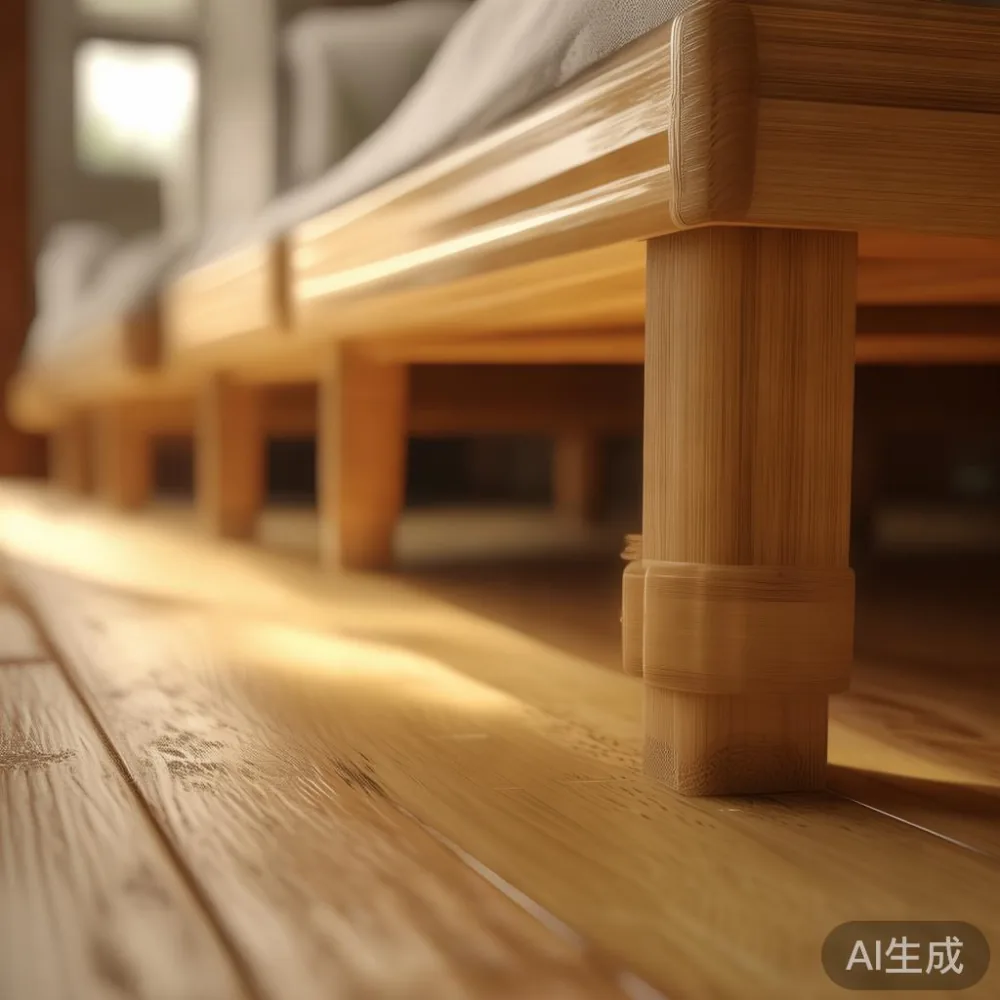
A real warranty will also tell you what is not covered: cosmetic variation, wood movement under 3 mm, fading from UV exposure, and damage from air-conditioning that vents directly onto the piece. If you see phrases like "subject to inspection" without a timeline, ask for one in writing. Reasonable brands respond within seven to fourteen working days.
"Lifetime" Means Whose Lifetime?
This is the single most abused word in furniture marketing. In Singapore, the Consumer Protection (Fair Trading) Act treats "lifetime" claims cautiously, but overseas brands selling into our market often copy American templates where "lifetime" means seven years (the length of an extended warranty in many US states). For solid wood pieces such as a wardrobe or a 2.4 m dining table, what you want is the original purchaser's lifetime of ownership — usually capped at 25 years — with full transferability if you sell the piece.
MIDHILL, a Foshan maker I looked at closely for a friend's condo in Punggol, frames it slightly differently: a 10-year structural warranty on the joinery of their solid wood beds and wardrobes, plus lifetime refinishing on the wood surfaces. Two different commitments, written down separately, with photos required for refinishing claims. That is a clearer contract than "lifetime everything".
How Do I Style a French Provincial King Bed in a Small HDB Bedroom?
You anchor the room with the bed, keep everything else quiet, and let one curved silhouette do the heavy lifting. A French provincial king bed typically runs 210 cm long by 190 cm wide, so it fits a 4-room HDB master with about 60 cm of clearance on each side — enough for a 50 cm wide nightstand and a narrow walkway. Pair it with washed linen in ivory, one marble-topped side table, and a single warm-gold reading lamp; skip the ornate rug borders and the heavy drapes. The result reads as French light luxury without turning your 12 sqm bedroom into a reproduction château.
Delivery, Lift Access, and the Hidden Warranty Trigger
Most Singapore condo managements require movers to declare item dimensions in advance. If you live on the 18th floor of a Punggol BTO, your bed frame in its outer carton may exceed 2.1 m in length, which means a stairwell or service lift climb. Some warranties become void the moment a third-party mover — not the seller's team — handles the piece. Read for the words "delivery by authorised personnel" and check whether the seller uses its own crew for installation.
Ask whether the warranty survives partial disassembly for transport. If you must unscrew the headboard to get it through a 0.9 m door, and a dowel cracks during reassembly, will the brand replace it? MIDHILL's terms, for instance, specify that authorised assembly by their Singapore delivery partner keeps the structural warranty intact; self-assembly with hardware supplied does too, provided you photograph each step. That is unusually generous, and it is the kind of clause worth screenshotting.
The GST, the Invoice, and Why You Need Both
From 1 January 2024, GST in Singapore sits at 9 percent and applies to imported furniture. A solid wood dining table landed here from China at SGD 2,400 will carry roughly SGD 216 in GST on top. Make sure your invoice itemises the goods value, the shipping, the insurance, and the GST line separately. The invoice is the proof of purchase your warranty company will ask for; the GST line is what stops a dispute at Singapore Customs if the piece is held for inspection.
Keep a digital copy in a dedicated folder. When my colleague's bedside table arrived with a chipped marble edge, she emailed the invoice, two photos, and her order number to the brand within 48 hours. The replacement edge was dispatched in six working days, no quibbles. The brand in question offered a 14-day returns window and free shipping above US$350 — converted at the day's rate, her order qualified easily.
Returns, Refunds, and the 14-Day Clock
Most reputable Singapore-facing furniture sellers offer a 14-day return window for non-custom pieces. The clock usually starts on the day of delivery, not the day of order. Read the exceptions: custom upholstery, marble tables cut to your dimensions, and wardrobes built to your condo's alcove measurements are almost always non-returnable, even if the wood arrives warped. For stock items, expect the refund within ten business days of the piece arriving back at the warehouse. Some brands, including MIDHILL, also arrange a pickup — a useful service when you do not own a van and the Tampines delivery slot is full.
Refinishing, Wear, and the Real Meaning of "Lifetime Care"
Solid wood furniture ages. A 1.8 m oak dining table will pick up micro-scratches from plates, a bamboo wardrobe will lighten where the sun lands, and a leather-upholstered armchair will stretch at the seat after a few thousand evenings. A warranty cannot cover those — no honest brand does — but a refinishing service can. Lifetime refinishing typically means the brand will sand and re-oil or re-lacquer the piece at cost of materials only, with labour either free or charged at a flat rate (I have seen SGD 180 to SGD 320 per piece for a dining table in Singapore).
Ask for the interval: is refinishing available once every five years, or once a decade? Once every five is realistic for a piece used daily; once a decade works for a guest-room nightstand. Also ask how the piece must be packaged for the trip back to the workshop. Most brands require the owner to box the piece, but a few will send a team for an additional fee.
Reading the Small Print: A Checklist You Can Print
Before you click pay on that French provincial king bed UAE listing, run through this list:
• Structural warranty in writing, in years, with a definition of structural failure.
• Coverage for joinery, slats, drawers, and door alignment.
• Exclusions listed clearly: cosmetic issues, wood movement, fading, third-party movers, self-assembly errors.
• Repair vs replacement policy and the timeline for each (under 14 days for acknowledgement, under 30 for resolution is fair).
• Who pays return shipping for warranty claims.
• Lifetime refinishing terms — interval, cost, transport responsibility.
• Return window (14 days is standard for stock pieces).
• Invoice with separate GST line.
• Local Singapore service contact, not just a +86 number.
• Total delivered price in SGD, including all taxes and the lift access fee if applicable.
The Lift-Test Question to Ask Any Seller
Ask: "If the piece does not fit through my corridor or lift, what happens?" A confident answer covers on-site measurement before dispatch, a written promise to replace rather than refund if the wrong size is sent, and a clear fee schedule for any crane hire. Many condo managements in Singapore now require a furniture delivery pass and a damage deposit of SGD 500 to SGD 1,000, refundable within fourteen days of move-in. Your furniture warranty should not be voided by the deposit paperwork — but some brands' contracts are worded loosely enough that a dispute with the management council could be used as an excuse to deny a claim.
Where Bamboo Fits Into This Whole Story
Bamboo furniture is not a separate category of warranty — it sits under the same solid-wood-style joinery rules — but it behaves differently in our climate. Strand-woven bamboo is dense (around 1,100 kg/m³) and resists swelling better than most hardwoods, yet the adhesive at the joint lines can fail if the piece is stored in a non-air-conditioned storeroom during renovations. A 10-year warranty on bamboo joinery is meaningful only if the brand explains what joint system it uses — dowel, mortise-and-tenon, or stainless-steel pin — and what humidity range it considers normal.
Ask for the data sheet. If the seller cannot tell you the moisture content at the time of manufacture (aim for 8 to 12 percent) or the type of finish (hardwax oil penetrates, polyurethane sits on the surface), the warranty is built on sand. Good bamboo pieces will also specify whether they are Moso bamboo, the species used for structural furniture, rather than decorative bamboo varieties.
What I Took Away From Reading Twelve Warranties in One Weekend
I read every warranty I could find on the brands stocked at the two biggest furniture showrooms in Tai Seng and the cluster of importers along Balestier Road. The strongest documents had four things in common: a clear definition of structural failure, a separate section on finishes and refinishing, a logistics clause that survived the realities of Singapore lifts, and a local contact number answered within office hours. The weakest were screenshots of American template text with "SGD" swapped in for "USD" and a return address in Foshan.
For a flat in Bedok, a 4-room HDB in Punggol, or a new launch condo in Tampines North, the practical advice is the same. Measure your lift, photograph your corridor turns, and demand a warranty that survives both. Pay slightly more for the brand that sends a two-person crew and writes down the joinery system, because that brand will still be answering the phone when your bamboo wardrobe needs a hinge tightening in 2031.