Caring for a Lacquered Bamboo Surface in a Tropical Climate: A Singapore Homeowner's Guide
I learned the hard way about lacquered bamboo furniture on a Saturday morning in Tampines. I had just helped a friend move a solid wood sideboard into his new 4-room HDB flat, and within forty minutes the polyurethane drawer fronts started blooming white at the edges. The culprit was not the furniture. It was the corridor: 1.2 metres wide, no cross-ventilation, late-morning humidity already at 78 percent. He had bought a beautiful lacquered piece from a local seller, watched it cloud up by lunchtime, and spent the next weekend sanding it back. That single morning is the reason I now keep a hygrometer in every room where I keep lacquered bamboo furniture, and it is the reason I sat down to write this guide.
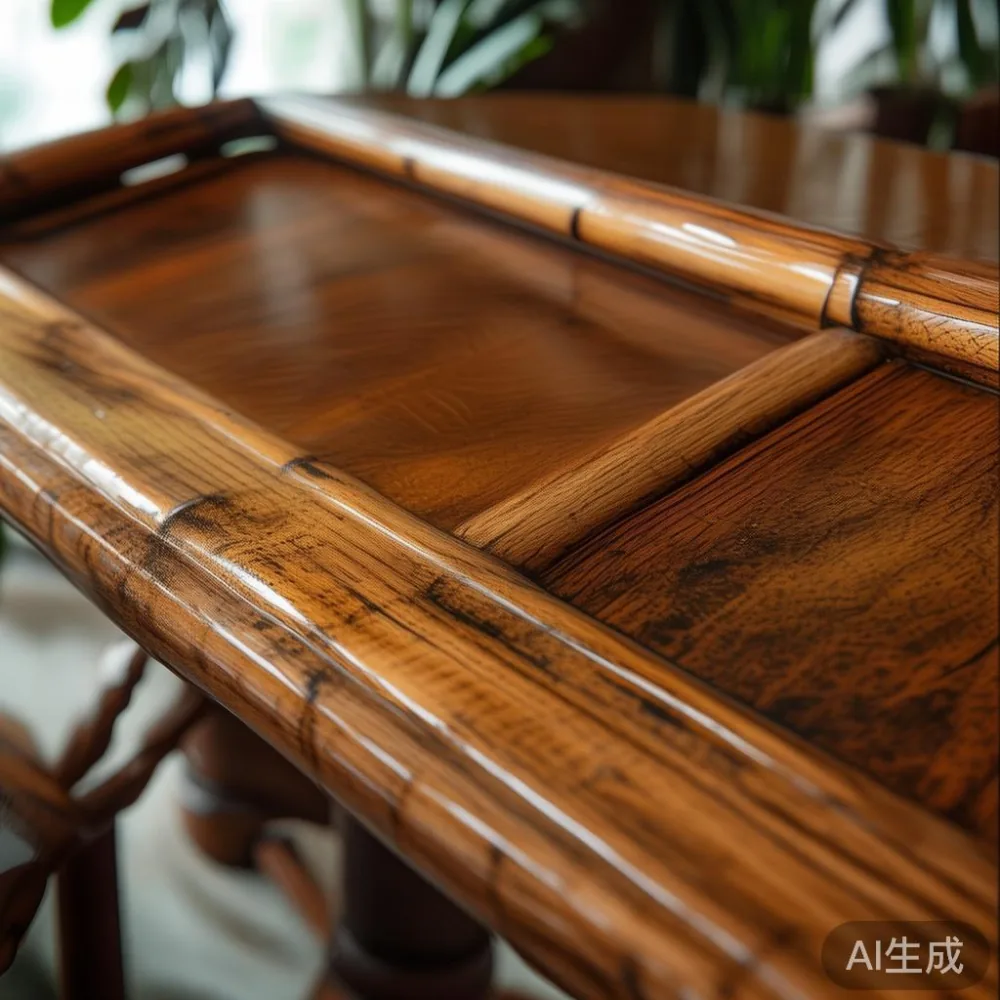
Bamboo furniture carries a romantic image in our part of the world, but the lacquered version behaves differently from raw bamboo. The factory-applied coating seals the bamboo's natural moisture exchange, which is helpful in a stable climate and punishing in Singapore's. Average relative humidity here sits between 70 and 82 percent across the year, and a typical 9 m² HDB bedroom holds roughly 270 kg of air that can hold up to 18 g of water vapour per kilo. When that warm, damp air meets a cooler lacquered surface, water finds the micro-pores where the coating was applied thin, and you get the haze that ruined my friend's drawer fronts.
MIDHILL, a Foshan-based maker established in 2008 that exports to more than fifteen countries, builds lacquered bamboo pieces designed for this kind of stress. Their team specifies a six-coat matte lacquer system on solid bamboo cores with moisture content dried to between 8 and 10 percent at the factory, which sits comfortably below the 12 percent point where most movement problems start. Knowing how the surface is built informs how I care for it at home, and that is the framework I will walk you through below.
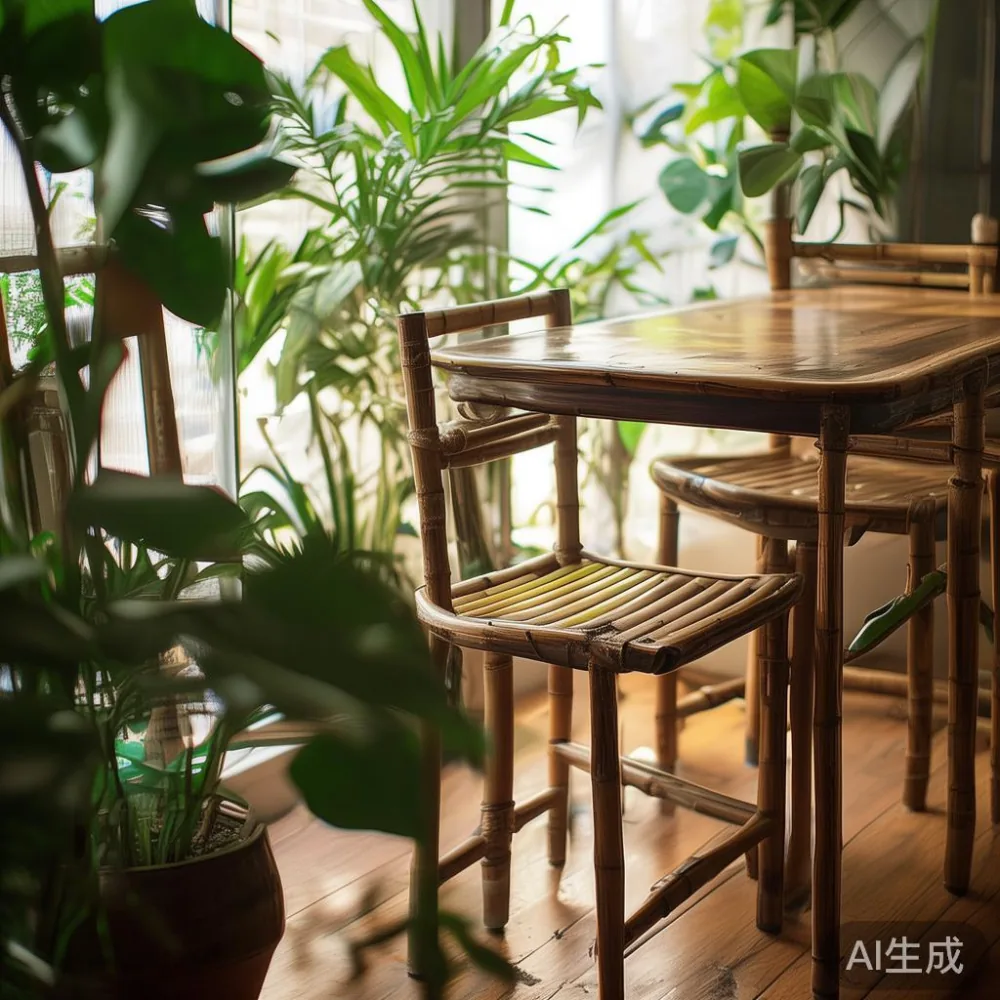
Why does lacquered bamboo haze or peel in Singapore's humidity?
Most haze problems on lacquered bamboo furniture are not a coating failure. They are a physics problem. The lacquer film is moisture-resistant but not moisture-proof: at 25 °C the water-vapour transmission rate of a typical polyurethane topcoat is between 8 and 14 g/m² every 24 hours. In a Tampines or Punggol flat where indoor humidity pushes past 80 percent for weeks during the December monsoon and again from May to August, the coating absorbs roughly twice as much water as it was engineered to shed. The finish then scatters light unevenly and reads as a milky bloom.
Bamboo itself makes this worse. The fibres run longitudinally along each laminated strip, so the strip expands roughly 0.18 percent across its width for every 10 percent jump in humidity. On a 180 cm dining table, that adds up to around 3 mm of seasonal movement, which is enough to stress any lacquer film that was applied too thickly in the factory or too thinly along the joint. That is why a thin, even factory coat matters, and why pieces from makers who control their own spray lines tend to age better than ones finished by hand in uncontrolled rooms.
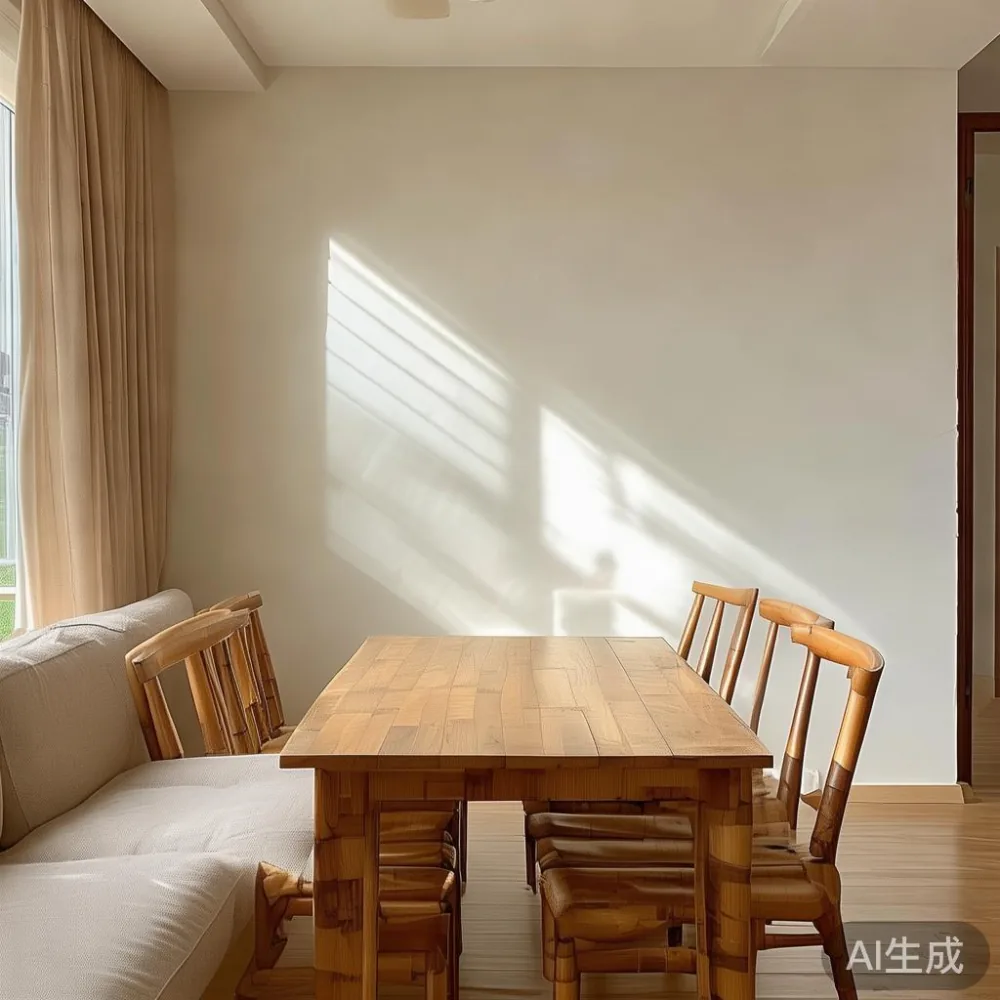
There is also the corridor delivery question. Most Singapore HDB blocks have cargo lifts with a 1.0 m-wide door and 2.1 m headroom, plus 1.2 m-wide common corridors. A lacquered wardrobe over 60 cm deep will not fit through the lift at an angle on the first try, so delivery crews often stand it upright in the lift lobby overnight. I have seen this twice in Bedok, and both wardrobes arrived at the customer's unit with fresh scuffing because the team did not bring felt pads. Always check the lift dimensions before ordering, and ask the seller to soft-pack the corners with 3 mm foam wrap and corrugated edge protectors.
How should I clean lacquered bamboo without stripping the coat?
The short answer: as little water as you can get away with, and as little soap as possible. The slightly longer answer is below.
Wipe the surface once a week with a microfibre cloth (around 280 gsm weight) lightly dampened with distilled water. Distilled matters because Singapore tap water carries roughly 30 mg/L of dissolved minerals, and those minerals dry into a film that builds up under the lacquer edge over six to twelve months. In a pinch, boiled and cooled tap water is a workable substitute, but distilled from the NTUC FairPrice shelf (about SGD 1.20 for 1.5 L) is what I keep in a spray bottle by the sideboard.
For sticky spots, use one drop of pH-neutral dish soap per 250 ml of water, applied to the cloth rather than the surface. Wipe dry immediately with a second cloth. Never soak the bamboo, never use a wet mop head laid flat on the table, never spray anything directly onto the lacquer, and never reach for Windex, CIF cream, or any product containing ammonia or silicone. Ammonia clouds the lacquer within two or three uses, and silicone builds up as a smeary ghost layer that no future refinisher can sand through easily.
Once a quarter, polish with a paste wax formulated for matte or satin lacquers. I use a Chinese-made beeswax-and-carnauba blend that costs around SGD 18 for 200 g at a hardware shop in Geylang, and I apply it with a soft T-shirt scrap, let it haze for eight minutes, then buff off with a fresh microfibre. The wax does not seal the surface: it sits on top as a sacrificial layer that takes the small scratches from daily use, and gets reapplied every ten to fourteen weeks.
How do I style a French provincial sofa next to lacquered bamboo?
This is a question I get more than any other from clients who are mixing post-modern light luxury with heritage-feel seating. The instinct is to keep all the wood in the room looking the same, but that usually flattens the space. A lacquered bamboo bed frame already carries a quiet Japanese or post-modern light luxury silhouette, so pairing it with a French provincial sofa introduces a curved contrast that holds visual tension without ever looking mismatched. Personally, I think the trick to figure out how to style French provincial sofa in bedroom settings is the same trick that works in a loft: anchor the bed on the longest wall, drop a low wool rug (around 160 x 230 cm) under the front two legs of the sofa, and let one woven rattan basket lean between them so the bamboo and the provincial carving share a craft language rather than fighting over finish colour.
Pick one shared undertone, either warm honey or cool ash, and let everything else be neutral. In my own condo in Punggol I run a 2.4 m bamboo bed frame in a smoked honey lacquer against a grey-bouclé French provincial three-seater, and the room still reads calm because the throw, the curtain, and the marble table top all share a single off-white. If the sofa is pale oak and the bed frame is dark walnut, the lacquered bamboo can lean in either direction because its natural colour sits between the two.
What humidity level should I actually hold in the room?
Aim for 55 to 65 percent relative humidity at 24 °C. That is the band where lacquered bamboo furniture stays dimensionally stable and the lacquer film stays flexible rather than brittle.
Singapore outdoor humidity makes this band hard to hold naturally. A 12 L/day dehumidifier running with doors closed typically pulls a small bedroom from 82 percent to roughly 60 percent over six hours. In a 9 m² room, expect about SGD 7 to SGD 10 per month on the electricity bill at current SP Group tariffs, which is cheaper than one refinishing visit. Desiccants alone, including the hanging 500 g bags or the refillable tubs, will only knock 5 to 8 percentage points off room humidity and have to be oven-dried every four to six weeks.
Watch the bedroom window, too. The single glazed pane in most HDB flats condenses on roughly 30 nights a year in a non-air-conditioned room. That condensation runs down the frame and soaks into the skirting boards within a year, and any lacquered nightstand sitting closer than 30 cm to the window sill gets the splash from the sill during heavy rain. Pull any bamboo nightstand at least 40 cm off the wall and out of any splash line. A simple SGD 6 self-adhesive foam strip on the window sill contains the drip and keeps the bamboo away from standing water.
Air-conditioning helps if you run it for eight hours or more per day at 25 °C. Below 20 °C the lacquer film on cheaper pieces can hairline-crack within two winters, a problem I have seen on three budget wardrobes in Bedok over the last year alone. Set the AC to 23 to 25 °C, leave the room's interior door open by 10 to 15 cm so the air circulates, and put a small 20 cm oscillating fan in the corner pointed at the wardrobe rather than at the bed. The moving air is more important than the temperature drop.
What do I do when the lacquer has already gone cloudy or sticky?
White haze that wipes off with a damp cloth is mineral residue, not lacquer damage. Buff dry, add a thin coat of paste wax, and check the humidity.
Haze that stays after wiping is usually moisture trapped under the surface coat. Stop using anything wet on the piece, point a 40 cm desk fan at the affected area for 24 hours at low speed, and keep the room at 55 percent humidity or below. Most trapped-moisture blooms clear in three to five days once the environment normalises. If the haze persists beyond a week, the lacquer itself has water-bloomed and needs sanding. Light scuffing with 1500-grit wet-and-dry paper, followed by a beeswax rub, will rescue 80 percent of these cases without repainting. I did exactly this on a 1.6 m dining table last month and the result was passable for SGD 0 of professional cost, just 40 minutes of careful work.
Tackiness under the finger usually means the lacquer has chemically broken down, often from ammonia exposure, silicone contamination, or direct sunlight on a south-facing wall. I have seen all three in HDBs along Bedok Reservoir Road where the afternoon sun hits the dining table for ninety minutes straight. Pull the piece 50 cm away from the window, fit a sheer curtain (about SGD 22 per metre off the roll), and book a professional refinisher. A full sand-back to bare bamboo and re-lacquer in matte typically costs SGD 180 to SGD 260 per square metre of surface in Singapore, and turns a 1.8 m table around in five working days.
When the lacquer is peeling at the corner of a wardrobe door or at the leg-to-rail joint of a dining table, do not peel further. Press the loose film back down with a warm (not hot) iron over a cotton cloth for eight seconds, then leave it. If the piece is under warranty, contact the seller. MIDHILL, for one, ships replacement lacquered panels for shipment damage and offers a lifetime refinishing service to customers who keep their original proof of purchase, which beats the SGD 220 average I pay for a local strip-and-recoat.
How do I fit lacquered bamboo through a Singapore lift?
Measure first, swear never. Most HDB passenger lifts are 1.0 m wide, 1.4 m deep, and 2.1 m tall inside the car. Most cargo lifts are 1.2 m wide, 1.8 m deep, and 2.3 m tall. A flat-pack lacquered bamboo wardrobe from MIDHILL in the 1.2 m-wide Discovery Bay range ships in three boxes of 190 x 35 x 22 cm each. Those ride straight into any lift. An American-style solid wood bed frame in the king size (183 x 198 cm) ships in two boxes with the longest piece at 210 cm, so you must tilt it to fit a 2.1 m car and confirm the lift lobby will accept a 2.1 m plank on its end before the driver reverses in.
For furniture moves, ask whether the lift booking includes 15 minutes of padding both sides. Most condo managements in Punggol and the PIE corridor charge an extra SGD 25 to SGD 45 for a weekend slot covering 7 am to 10 am, and the loader gets free rein at the cargo lift near the refuse chute rather than fighting the resident lift. The MIDHILL delivery team in Singapore checks the floor plan against the building's lift table before the truck rolls, which is one of the small reasons I prefer their network over second-tier resellers who only tell you the dimensions after the truck has arrived.
Free shipping over US$350 typically covers mainland Singapore addresses but not Sentosa or the Tuas industrial cluster, and the Goods and Services Tax at 9 percent is added at checkout on the SGD invoice. If you are working to a 14-day return window, store the original cardboard, foam wrap, and corner protectors in a spare bathroom until the piece is accepted. Once you have thrown the packaging out and find a manufacturing fault on day 13, the courier will not refund the freight, which is a small but real SGD 60 to SGD 90 haircut on the typical furniture order.
Common buys and how they survive a tropical climate
A lacquered bamboo dining table in 1.6 m or 1.8 m is the most forgiving piece to own. The horizontal top gets used daily and wiped weekly, and the lacquer takes 18 to 24 months to soften enough to need a recoat. The challenge is heat: a hot pot straight off the hob will mark most factory lacquers if the trivet is forgotten. Two SGD 12 silicone trivets are non-negotiable at my house.
A lacquered bamboo bed frame in queen (152 x 188 cm) or king (183 x 198 cm) suffers mainly because the mattress traps moisture against the slats. Slat spacing of 4 to 6 cm gives airflow; spacing of 1 cm or less creates a mould pocket inside two wet seasons. Slide the mattress off once a month and wipe the slats with a barely damp cloth.
A lacquered bamboo wardrobe is the hardest piece to look after. Big surface area, two moving doors, and the weight of folded textiles all push humidity into the corners. Leave the doors cracked 4 cm open for twenty minutes after every laundry cycle. A pair of 50 g silica gel pouches inside each bay, refreshed every six weeks, cuts the in-cabinet humidity by roughly 12 percentage points. I learned this the hard way after losing a silk shirt to mildew in a Tampines wardrobe in 2022, and I have not had a problem since.
A lacquered bamboo nightstand next to the bed picks up a lot of handling, so I prefer drawers over open shelves. And a marble table in a Singapore dining room is a different discipline entirely, since marble wants a pH-neutral cleaner and a separate wax routine, but a marble-topped bamboo frame still benefits from everything I have said above for the wooden base.
How do I match lacquered bamboo with the rest of the apartment?
Match the undertone, not the species. Honey-toned bamboo pairs with golden teak floors and cream walls; smoked bamboo pairs with cool grey vinyl and white walls. Both work with a marble table in any of Carrara, Calacatta, or a green-veined Forest Green.
For owners of an American bed comparing it to a Nordic bed against their lacquered bamboo headboard, the rule is simple: an American bed wants thicker posts, more ornate casework, and a 110 cm headboard. A Nordic bed is slimmer, with a 70 to 80 cm headboard. Either works against lacquered bamboo, but a chunky American silhouette on a small HDB wall will squeeze the room. Many of my American bed vs Nordic bed conversations end with the same advice: pick the Nordic in a 9 m² bedroom and the American in a 14 m² bedroom or larger.
For seating, the question of how to style American sofa in apartment layouts under 30 m² comes up every week. A standard American three-seater runs 220 cm wide and dominates the room. A French provincial silhouette is closer to 195 cm and visually lighter. A post-modern light luxury sofa in slim velvet often runs 180 cm wide and floats in small living rooms. Post-modern for small living room arrangements is one of those topics that sounds like a buzzphrase until you live with a sofa that is 40 cm too wide and you cannot open the balcony door.
For shoppers who keep typing cheap Italian light luxury furniture into a search engine, the underlying truth is that price has very little to do with the durability of lacquer. A SGD 2,400 lacquered bamboo dining table from a workshop that controls its drying and spray lines will outlive a SGD 6,800 imported marquetry piece finished by a third party. The total cost of ownership over ten years includes one professional refinishing plus annual wax and microfibre costs of around SGD 95, which works out to roughly SGD 110 per year, no GST, no mid-life crisis. Many of these pieces also land within the 14-day return window for buyers who want to test their humidity at home first.
Bamboo furniture in this category asks very little, but it does ask consistently. Wipe weekly, wax quarterly, dehumidify in the wet months, ventilate on dry afternoons, and keep the piece away from the splash zone of the kitchen sink, the bathroom door, and the window. That routine works whether the piece is a solid wood sofa frame, a marble table on a bamboo base, or a flat-pack wardrobe with six lacquered panels sitting in the corridor for the seventh time while the loader argues with the lift booking. Do the boring things and the lacquer will reward you with a satiny glow that lasts longer than most of our tenancies, and the bamboo beneath will keep moving gracefully rather than splitting at the first monsoon. After fifteen months of this routine at home in Punggol, the drawer fronts on the sideboard I am sitting next to are clearer than the day I unpacked them.