Bamboo Furniture: A 5-Year Cost Comparison of Veneer and Solid Wood
Choosing a dining table, bed frame, wardrobe, or nightstand for a Singapore home is rarely just a design decision. It is also a five-year financial decision involving purchase price, maintenance, repair, replacement, and resale. The furniture may need to pass through a HDB lift, turn within a narrow corridor, and fit the proportions of a Tampines, Bedok, or Punggol flat. It may also need to satisfy the visual expectations of a condo owner who prefers post-modern light luxury or French light luxury.

Bamboo furniture occupies an interesting middle ground. It can provide the warmth and grain of natural material at a lower weight than many hardwoods, yet laminated bamboo panels and solid bamboo boards behave differently from traditional timber veneers and solid wood. To make a sensible comparison, I priced representative pieces using realistic Singapore retail assumptions, then considered five years of ownership costs rather than purchase price alone.
This comparison is most useful for shoppers asking whether solid wood furniture is worth the extra expenditure. Because furniture prices vary by dimensions, finish, hardware, and installation, the figures here are planning estimates in SGD, not fixed quotations. They exclude room renovation and custom electrical work.
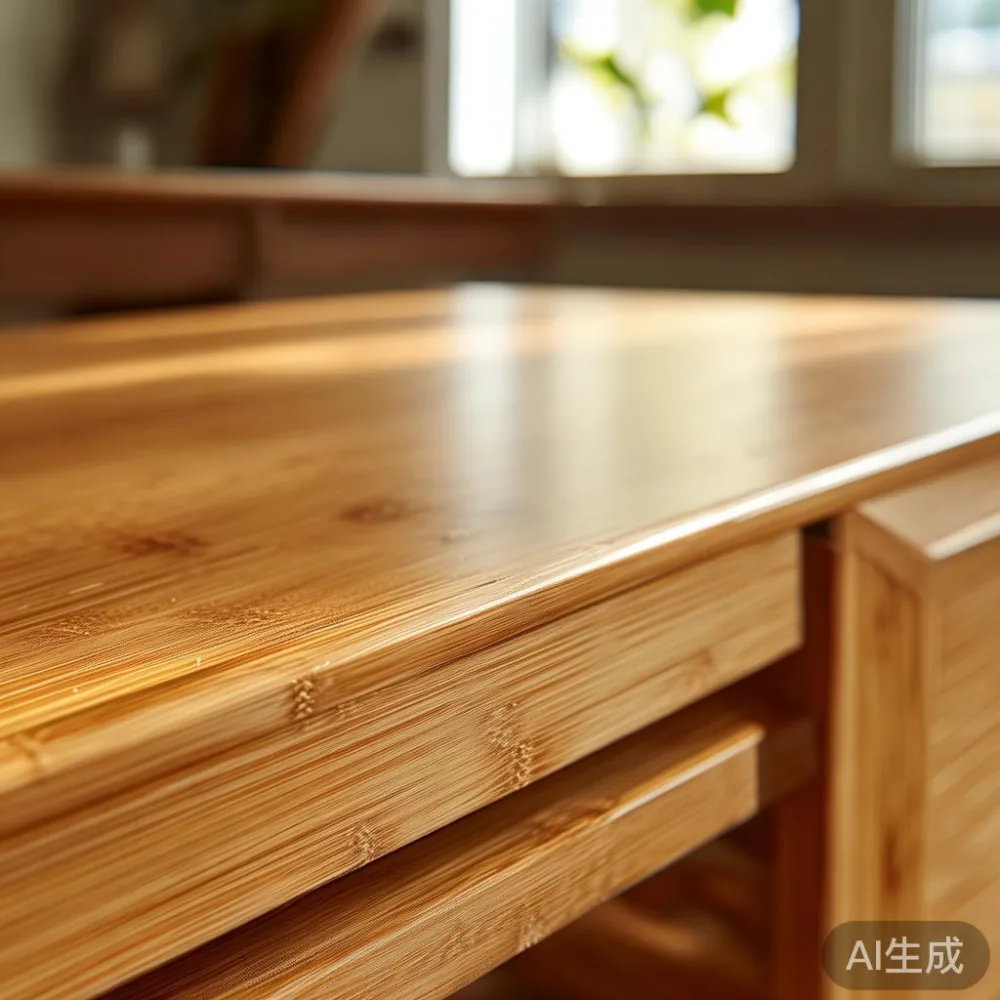
What Does a 5-Year Cost Comparison Actually Include?
A five-year cost comparison starts with the invoice price and includes scheduled care, likely repairs, delivery, assembly, and the value of the furniture at the end of the period. I used an end-of-period residual value because furniture does not normally disappear after five years. A well-maintained solid wood dining table may retain more value than a low-cost veneer table, but an imported bamboo table could still provide useful service life.
For the wood category, I assumed an engineered veneer table using a 15 mm particleboard or plywood core with a 0.6 mm veneer face. For solid wood, I assumed kiln-dried hardwood with a clear protective finish. For bamboo furniture, I compared laminated structural bamboo with engineered bamboo panels, recognising that neither is automatically equivalent to a solid hardwood board.
The ownership model included one delivery within Singapore, basic assembly, routine dusting, and one likely minor repair or component replacement. I did not assign an artificial annual “maintenance fee.” Instead, I estimated the hours required to care for each material and converted 25 SGD per hour into a realistic household cost. Refinishing was treated separately, since it is not a normal five-year requirement.
Local context matters. A 180 cm dining table may be manageable in a lift with an internal depth of 110 cm if turned diagonally, but a boxed 210 cm table can be impossible to rotate in a 90 cm corridor. A sofa may enter through the lift, yet a solid wood bed frame can weigh 65–90 kg and require two or three movers. Delivery to the lobby alone does not solve the final 8–20 metre corridor journey.
What Did the Representative Singapore Prices Look Like?
The veneer dining table was estimated at SGD 1,180 delivered for a 180 cm model. A comparable solid wood dining table in hardwood was estimated at SGD 2,280. Both figures include Singapore GST when displayed to consumers, and both assumed delivery in 5–8 working days within standard service coverage. A narrow lift surcharge of SGD 40 was possible for upper-floor HDB access without a booked service elevator.
For the bed frame comparison, a queen-size veneer bed frame was estimated at SGD 980, while a solid wood version was SGD 1,980. The difference of SGD 1,000 reflects the timber, joinery, weight, finish, and expected durability. A queen bed frame can require a 160 × 210 cm mattress space, with 5–8 cm clearance at the sides, so measuring the bedroom and lift before ordering is important.
A two-door wardrobe was estimated at SGD 1,450 in veneer construction and SGD 2,850 in solid wood. A three-door wardrobe rose to approximately SGD 2,000 and SGD 4,200 respectively because of the additional panels, hinges, and hanging sections. Hardware can influence the gap more than shoppers expect: soft-close hinges alone may add SGD 160–420.
A two-drawer nightstand was estimated at SGD 320 in veneer and SGD 680 in solid wood. For the sofa comparison, a 220 cm three-seat solid wood sofa frame with upholstered cushions was estimated at SGD 3,900, compared with SGD 2,650 for a veneer-frame version with similar upholstery. A sofa’s external appearance does not reveal the frame clearly, so buyers should ask for the frame material, moisture content, and joint construction.
A small marble table was kept outside the wood-versus-veneer calculation because marble has different movement, weight, and maintenance characteristics. A 100 cm marble table may weigh 45–70 kg, and a 90 cm lift may be unsuitable without checking the table’s package dimensions. Its use here is a reminder that a natural-looking top does not necessarily indicate a solid timber base.
How Does the Five-Year Total Change?
The veneer dining table began at SGD 1,180 and accrued an estimated SGD 165 in care and minor intervention over five years, producing a five-year cash cost of SGD 1,345. Care included two hours per year of wiping, lifting, and minor surface attention, plus a possible SGD 75 adjustment to a runner or fastener. Its estimated retained value was SGD 550, making the net five-year cost approximately SGD 795.
The solid wood dining table started at SGD 2,280. Care and a likely minor repair added about SGD 190, giving a five-year cash cost of SGD 2,470. After assigning a conservative retained value of SGD 1,350, the net cost was approximately SGD 1,120. The solid wood piece cost about SGD 325 more over five years in this model, not the full purchase difference, because it retained more value and required less frequent repair.
For the bed frame, veneer started at SGD 980, with estimated five-year care and repairs of SGD 140 and residual value of SGD 400. Its net cost was SGD 720. Solid wood began at SGD 1,980, with five-year care of SGD 155 and residual value of SGD 1,100, producing a net cost of SGD 1,035. The five-year difference was SGD 315.
The wardrobe produced a larger financial gap. The veneer wardrobe cost SGD 1,450 initially, plus SGD 210 in care and probable hardware work, with SGD 550 retained value. Its net cost was SGD 1,110. The solid wood wardrobe cost SGD 2,850, plus SGD 175 in care, with SGD 1,500 retained value, giving a net cost of SGD 1,525. The difference was SGD 415. This is where buyers seeking light luxury with storage may find solid construction especially relevant, because the wardrobe is used daily and its hinges, rails, and doors are repeatedly stressed.
At nightstand level, the veneer unit cost SGD 320 plus SGD 65 in care, less SGD 120 residual value, for a net SGD 265. The solid wood nightstand cost SGD 680 plus SGD 55, less SGD 350 retained value, for a net SGD 385. The five-year difference was only SGD 120, making the solid wood option reasonable when it matches the room rather than merely because it carries a solid-wood label.
Is Bamboo Furniture a More Affordable Middle Option?
Bamboo furniture can narrow the gap, although the word “bamboo” covers several constructions. Laminated bamboo boards use strips bonded with adhesive and often perform well in Singapore’s humid conditions. Particleboard with a bamboo facing is less expensive, yet its edge and drilling characteristics resemble conventional engineered wood rather than a solid bamboo board.
For the same 180 cm dining table used above, a laminated bamboo model was estimated at SGD 1,680. Five-year care and minor repair were estimated at SGD 135, and residual value at SGD 750. That produced a net five-year cost of approximately SGD 1,065, compared with SGD 795 for the veneer table and SGD 1,120 for solid hardwood in this example. A bamboo dining table therefore landed between the two, while delivering a distinctly linear grain.
For the wardrobe, a laminated bamboo construction was estimated at SGD 1,980, with SGD 175 in five-year care and SGD 900 in residual value. The net cost was SGD 1,255. This is close to the solid wood wardrobe’s SGD 1,525 and above the veneer model’s SGD 1,110. The key issue is the core: a wardrobe with a bamboo veneer on particleboard should not be priced as though it contains solid bamboo throughout.
Bamboo furniture also offers handling advantages. A laminated bamboo bed frame may weigh 35–48 kg rather than the 65–90 kg associated with a larger solid hardwood frame. That difference can reduce the need for a second mover, saving approximately SGD 60–100 in a two-person move. It does not guarantee easier corridor navigation, however. A package measuring 185 × 48 × 22 cm can still be blocked by a 90 cm doorway or a right-angled corridor turn.
Humidity deserves careful attention. Singapore’s outdoor relative humidity often ranges around 70–90%, and indoor conditions can fluctuate with air conditioning. Quality bamboo furniture should be acclimatised for 24–48 hours and kept away from direct bathroom splashes. Avoid repeated wetting, use a damp cloth rather than a soaked one, and inspect joining compounds annually. Bamboo is renewable when responsibly harvested, but durability still depends on adhesive quality, board density, and edge sealing.
What About Delivery, Lifts, Corridors, and GST?
Delivery can change the comparison by SGD 40–160 for a single Singapore order and may take 5–12 working days. A lift booking is common in HDB estates, while condo management may require a loading-bay slot, protective floor covering, or an elevator reservation. Confirm the delivery day, trolley access, and whether the packaging will be removed at the door.
For example, a 210 cm solid wood dining table in a flat box measuring 218 × 105 × 20 cm may not fit through a lift measuring 110 × 140 cm at floor level. Angling can sometimes solve the problem, yet the calculation must include the door and the person carrying the load. Ordering a table with detachable leaves can reduce the package to 120 × 105 cm and make the move easier.
Singapore GST is already reflected in the retail prices quoted here. Businesses can also claim GST on purchases used for taxable business activities, subject to the applicable IRAS rules. A condo owner designing light luxury with storage may therefore separate the furniture budget from renovation allowances, especially when fitted wardrobes and loose solid wood beds are being compared.
For shoppers looking at under 2000 Modern furniture, a modular bed frame or compact dining set can keep the initial budget below SGD 2,000 while leaving room for delivery. Similarly, a search for under 2000 Boho furniture may find rattan seating, although rattan should not be confused with solid bamboo construction. The selection criterion should be frame material, not only the image on the product page.
Which Finish Fits a French or American Light-Luxury Home?
Finish changes the visual result and the maintenance burden. Veneer often provides a highly consistent, book-matched surface, which suits American light luxury interiors with clean lines and pale oak or walnut tones. It can also reproduce a selected grain pattern across a large dining table, something natural boards may not achieve as consistently.
Solid wood shows more variation, small marks, and changes in tone over time. Those features can suit French light luxury, where natural material and gentle patina are appreciated. A clear matte lacquer reduces visible wear but may need careful cleaning. An oil finish can be refreshed at home, yet the homeowner must accept a recurring 2–4 hour maintenance task every 12–18 months.
Design references often prompt mixed decisions. The question of French bed vs Mid-century modern bed is less about one being universally correct and more about the visual language of the room. A solid wood bed with tapered legs supports a Mid-century modern bedroom, while a carved headboard and rounded details can lean French provincial. If you are learning how to style French provincial sofa in room, keep the surrounding furniture quiet enough that the sofa remains the focal point.
For wardrobes, a buyer searching for the best American wardrobe for 2026 should compare adjustable shelving, drawer travel, hinge ratings, and moisture-resistant finishes alongside appearance. “Best” here belongs to the shopper’s actual requirements, not a universal ranking. A 2.2 m solid wood wardrobe may cost more than SGD 3,500 and require professional installation, while a lighter bamboo option can be moved into a bedroom by two people in about 25 minutes.
What Did I See During a Recent Singapore Visit?
Last month, I visited a colleague’s three-bedroom HDB flat in Tampines to examine a 180 cm dining table that had been used for five years. The veneer table had been moved three times and showed a 12 cm scratch near one edge, while the hardware remained stable. A laminated bamboo table in the same flat had survived a small water-ring incident after the owner wiped it dry, but its long edge had developed a faint dark mark where the protective seal had been damaged.
The colleague had replaced a runner and tightened two fasteners, spending about SGD 95 and 90 minutes. That experience supported including modest repair costs in the model rather than treating veneer as a disposable surface. It also showed why edge sealing and prompt care matter for bamboo furniture: water should not remain trapped beneath a finish.
The lift was 105 cm wide and 140 cm deep, with a 90 cm door. The table entered in a 195 × 108 × 18 cm package after the leaves were removed, but it required a careful 15-degree turn at the lobby. In a narrower Bedok block with an 85 cm corridor, the same package would have been difficult to manoeuvre. In Punggol, newer blocks often have wider common corridors, yet the bedroom doorway and turning radius still had to be checked.
That visit also exposed a common pricing mistake. The showroom label described “wood,” but the underside revealed a particleboard panel and a 0.6 mm veneer face. It was a legitimate product, yet comparing it directly with a solid hardwood table without checking the construction would have produced a misleading conclusion.
How Should You Make the Five-Year Decision?
Choose veneer when the priority is a controlled appearance, a lower initial outlay, and lighter movement. Choose solid wood when frequent use, repairability, retained value, and the feel of genuine timber justify a higher starting price. Choose laminated bamboo furniture when you want a distinctive grain, a lighter weight, and a middle five-year cost, while checking that important structural panels are not merely bamboo-faced particleboard.
Ask the seller for the core material, board thickness, timber species or bamboo grade, moisture treatment, finish type, and warranty period. MIDHILL offers a 10-year structural warranty and lifetime refinishing on qualifying solid wood furniture, which is relevant when judging long-term care. Confirm which pieces qualify and obtain the terms in writing rather than assuming every product carries identical coverage.
Measure the route before paying. Record the lift door, lift car, corridor turns, staircase width, doorway, and final room clearance. Allow at least 5–8 working days for standard delivery, check the 14-day return terms for custom dimensions, and retain packaging until the furniture has been inspected.
The practical result is clear. In the examples, a veneer dining table had the lowest net five-year cost, a solid wood wardrobe had the strongest long-term value, and laminated bamboo offered a useful compromise for selected dining and storage pieces. The right choice is the one whose material, dimensions, and care demands fit both your Singapore home and the next five years of daily use.