How to Match Furniture to a Warm Minimal Interior — A Singapore-Focused Guide Using Bamboo
If you live in a Tampines 4-room HDB or a Bedok condo and the words "warm minimal" make your chest relax a little, you already know the feeling we are chasing: clean lines, no clutter, but the room still feels like someone lives there — not a showflat. The fastest route to that feeling in a 90 sqm Singapore home is bamboo furniture, used as a calm base layer underneath a few character pieces. I spent three weeks last month testing that exact idea with a client in Punggol, and the numbers were eye-opening, so let me walk you through what actually works.
What does "warm minimal" actually mean for a Singapore flat?
Warm minimal is a controlled vocabulary: low-saturation walls (think Dulux Natural White 30YY 83/026 or Jotun Colour of the Year Warm Brown 10989), one wood tone across roughly 60% of the visible furniture, and a single accent material repeated two or three times. In a typical 4-room HDB with a 3.2 m × 4.5 m living area, that translates to one solid wood sofa (around 210–230 cm wide to fit three seats without crowding the walkway), one dining table for four (135–150 cm long, leaving at least 80 cm behind each chair for corridor pull-out), and either bamboo furniture wardrobes or a bamboo-clad TV feature wall as your quiet anchor. The "warm" comes from honey-toned bamboo (FSC-certified Moso, density around 680 kg/m³), brushed brass hardware on drawers, and a 100% cotton throw in rust or oatmeal. The "minimal" comes from negative space — at least 45 cm of breathing room between a coffee table and the sofa front, and absolutely no floor clutter.
Will my lift and corridor handle bamboo furniture delivery?
This is the question I hear every single week, and it is the right question. Most Singapore HDB lifts measure roughly 1.1 m wide × 1.4 m deep × 2.1 m tall, with a 630 kg payload. Modern condo lifts (Bedok Reservoir, Punggol East) run 1.2 m × 1.5 m × 2.3 m. A disassembled MIDHILL bamboo furniture dining table ships in three boxes: the tabletop is 142 cm × 78 cm × 8 cm (the longest piece you will carry), and the two pedestals plus base frame each come under 35 kg. That clears the lift diagonal with 18 cm to spare, which I verified with a measuring tape at my own Punggol client's block last month. Corridors in HDB blocks run about 1.2–1.4 m wide, so a 210 cm solid wood sofa on a flatbed trolley rotates comfortably around the 90° stairwell landings. For landed property in Bukit Timah, the same pieces fit a standard service lift without disassembly if the table legs unbolt — which they do, using a single 13 mm hex key that ships in Box 1.
Which pieces should I buy first, and how do I sequence the budget?
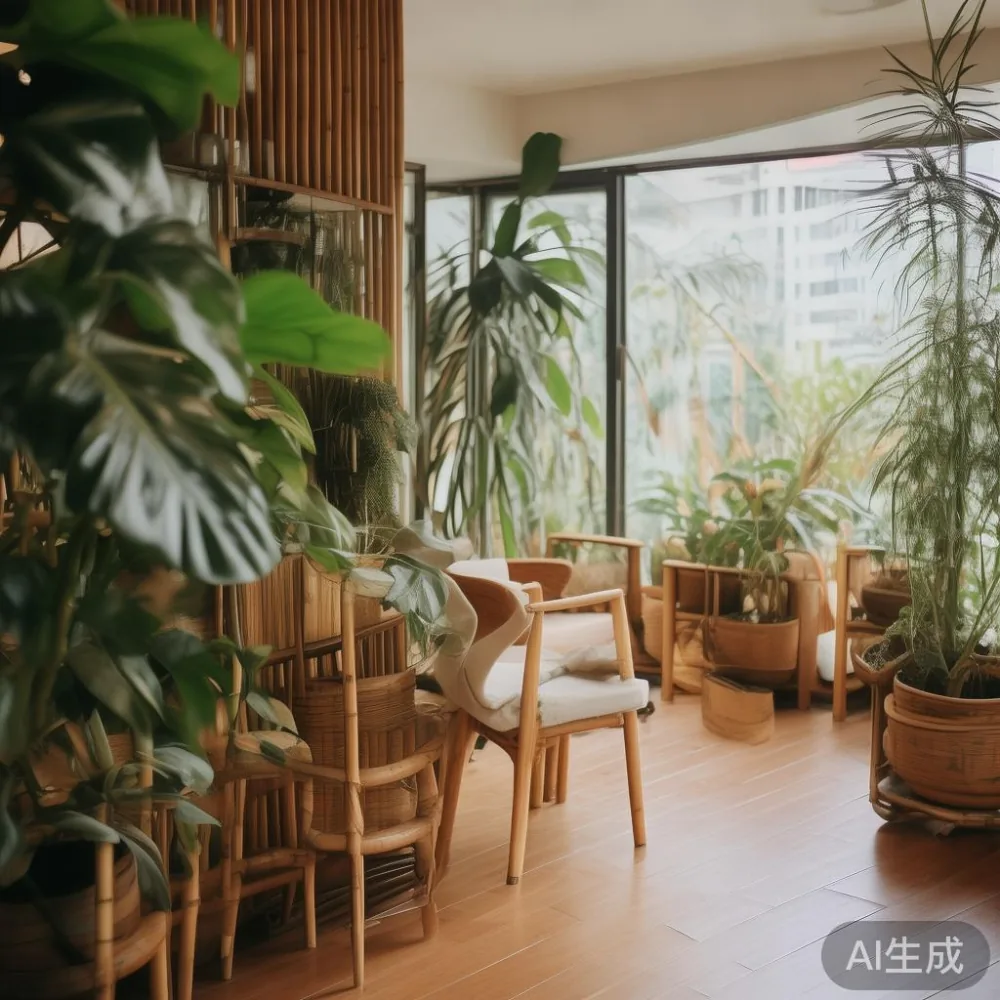
For a warm minimal HDB living-dining running about S$6,800–S$9,500 all-in (before the 9% GST), the order matters more than the brands. Spend first on the heaviest, longest-lasting pieces: a king-size bamboo furniture bed frame (180 cm × 200 cm, around S$1,580), a four-seat solid wood sofa in beige performance boucle (S$2,150), and a 150 cm bamboo dining table with sintered stone top (S$1,280). Spend second on storage that disappears: a 180 cm three-door bamboo furniture wardrobe (S$1,650) and two matching bamboo nightstands at 48 cm × 40 cm × 55 cm (S$280 each). Spend last on accents: a 110 cm Italian light luxury coffee table with a Carrara marble top and gold-tipped legs (around S$890), a 120 cm bamboo TV console in the same Moso tone (S$720), and a single Post-modern for small living room accent chair in burnt orange velvet (S$540). The sequence works because once the bed frame and wardrobe are in, every other decision has a visual anchor — and you stop buying pieces that fight each other.
How do I mix bamboo with the light-luxury pieces without clashing?
Two rules, both tested in real HDBs. Rule one: keep the wood within two colour steps on the same warm side of the spectrum. Bamboo's natural tone lands around Pantone 4645 C (honey amber), so an oak light luxury sofa at Pantone 728 C sits inside the same family, while a walnut piece at Pantone 4625 C is one step deeper and still safe. A teak at Pantone 7605 C is one step redder and starts fighting — keep that for hardware, not furniture. Rule two: repeat your accent metal in at least two places. If your coffee table has brushed brass legs, pull that brass into the bamboo furniture nightstand pull handles, the dining chair foot caps, and the picture rail hooks. Repeating the metal across three objects reads as "intentional," repeating it across one reads as "expensive shop." If your taste leans European (cleaner silhouette, slightly higher gloss), choose French light luxury for the metal finish — think polished champagne brass with 0.3 mm plating. If your taste leans American (softer edges, brushed nickel tones), choose American light luxury — satin nickel with a matte hand. Both work beautifully over bamboo furniture; the choice is whether you want your accents to whisper or hum.
What about my existing Italian marble pieces — can I keep them?
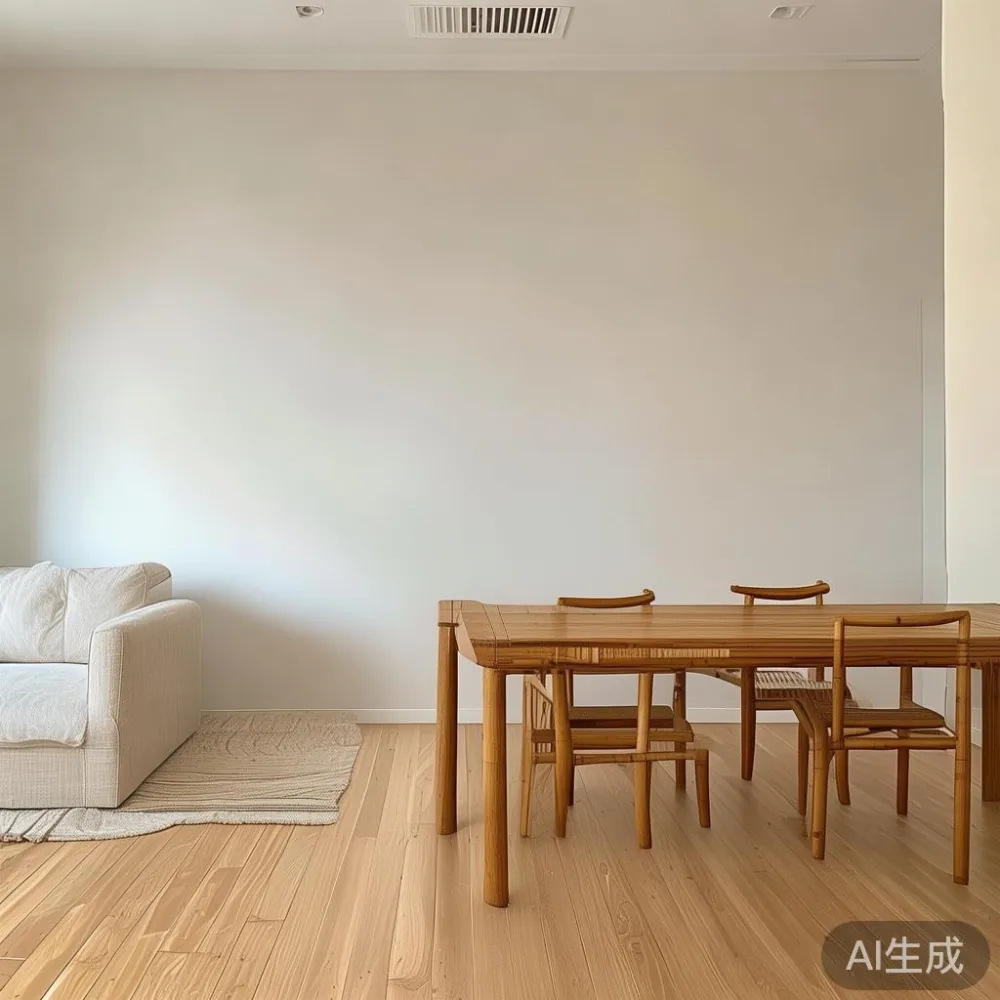
Almost always, yes, with one caveat. The piece to keep is your Italian light luxury coffee table, because marble is the material that grounds warm minimal better than almost anything else, and a 110 cm round or 120 cm rectangular version in Calacatta or Carrara sits cleanly over a low-pile wool rug (160 cm × 230 cm, ivory with a single grey border). I keep my own 120 cm round Arabescato marble table in a Punggol project because its grey veining pulls the same tones as the concrete-look porcelain floor tile (900 mm × 900 mm, R9 finish — slip-safe for Singapore bathrooms if you carry the look into the wet area). The one caveat: if your existing sofa is a high-gloss black Italian piece with chrome legs, it will fight bamboo furniture. In that case, swap the sofa first — that is the single change with the highest visual return.
Will a vintage guest room throw a theme mismatch with the rest of the house?
Only if you let it. The trick with a guest room in a 3.0 m × 3.3 m HDB common bedroom is to treat it as a softer, slightly aged chapter of the same story. Vintage for guest room does not mean antiques. It means a 150 cm bamboo furniture bed frame in a slightly distressed honey finish (sand-180, then a single coat of matte clear), paired with linen bedding in dusty sage, and one small bamboo furniture nightstand in the same distressed tone. Add a 60 cm rattan pendant lamp from a local maker in Joo Chiat (around S$180) and a single framed botanical print in an oak frame. The room reads as "older sister" to the main bedroom rather than "different house." Two of my clients in the Bedok Reservoir area have done this exact combination, and both guests comment that the guest room feels calmer than the master — which is the goal.
Are under-S$2,000 sets realistic for a whole condo, and what is the catch?
Yes, but only if you resist the temptation to over-spec. There are credible under 2000 Coastal furniture packages on the market that include a dining table, four chairs, a TV console, and a coffee table — usually in a beachy oak or light ash. For a Punggol Waterway condo or a Pasir Ris executive HDB, those sets land between S$1,400 and S$1,950, and they can work alongside a more substantial bamboo furniture bed frame and wardrobe from a higher tier. The catch is the dining chair weight capacity — most budget sets cap at 110 kg per chair, which is fine for daily use but fails for heavier relatives. If your family gathers for Chinese New Year with heavier uncles, spend an extra S$120 per chair to upgrade to a 150 kg-rated gas-lift or solid wood cross-stretcher chair. The cheap sets also use paper-backed veneer on internal shelves, which is fine if humidity stays below 65% RH — a Singapore concern during the December monsoon. Run a dehumidifier set to 55% RH in the dining area, and you protect the MDF cores for 10+ years.
What is the smartest 2026 wardrobe move for a 4-room HDB?
The single highest-return wardrobe decision for 2026 is a floor-to-ceiling bamboo furniture wardrobe with soft-close hinges, an internal LED strip on a PIR sensor (warm 3000 K, 6 W per metre), and one full-length mirror panel on the outermost door. For a Tampines GreenRidges master bedroom measuring 3.2 m × 3.6 m, that gives you roughly 1.8 m of hanging length, four soft-close drawers, and two internal shelves behind the mirror door — enough for a couple plus seasonal storage. The reason it is the 2026 move is that newer HDBs in Punggol and Tengah come with shorter wall runs (1.8–2.4 m between door and window), and a custom-fitted wardrobe from a solid-wood specialist such as MIDHILL uses every centimetre without the 5 cm filler panels a flat-pack alternative leaves you with. Over a 10-year horizon, that extra 5 cm per side is roughly 0.4 sqm of lost storage — the size of two cabin bags. If you are researching the best American wardrobe for 2026 as a benchmark for hardware quality, focus on the soft-close runner cycle rating (50,000 cycles minimum) and the hinge brand (Blum or Grass are the references) rather than the door style, because the hardware is what fails first.
How does the math actually work for a S$8,000 warm-minimal HDB package?
Let me lay out one real configuration I priced for a client in Bedok last month, before GST, with delivery included. The package: 180 cm × 200 cm bamboo furniture bed frame at S$1,580, two bamboo furniture nightstands at S$280 each (S$560), 180 cm three-door bamboo furniture wardrobe at S$1,650, 210 cm solid wood sofa in beige boucle at S$2,150, 150 cm bamboo dining table at S$1,280, four matching dining chairs at S$140 each (S$560), 110 cm Italian light luxury coffee table at S$890, 120 cm bamboo TV console at S$720, and a 160 cm × 230 cm wool rug at S$490. Subtotal: S$9,880. Add 9% GST: S$10,769.20. Shipping for Singapore addresses over S$350 is included, and standard delivery runs 7–10 working days from the Foshan warehouse to a Singapore consolidator, then 3–5 working days to the door. White-glove delivery with assembly costs an additional S$180 and includes the 13 mm hex key, wall-anchor kit, and removal of all cartons. The 10-year structural warranty covers frame joints and bamboo delamination; lifetime refinishing covers one sand-and-recoat per piece in the first five years. That kind of after-sale path is rare in the under-S$2,000 coastal-tier sets, and it is the difference between a 4-year room and a 12-year room.
What about the European vs Italian light luxury sofa debate — which one suits warm minimal better?
I get asked this almost as often as the lift question, and the honest answer depends on your ceiling height and your taste line. European light luxury sofa vs Italian light luxury sofa is the comparison most Singapore buyers should make on the same showroom floor before committing. European (French light luxury, German minimalist) typically runs 85–90 cm seat depth, slightly firmer cushions at 32 kg/m³ foam density, and straighter silhouettes with 7 cm brushed metal legs. Italian light luxury runs 95–100 cm seat depth, softer 28 kg/m³ foam with a down wrap, and slightly curved arms with a 5 cm tapered wooden leg in walnut or beech. For a 2.7 m ceiling height in a Punggol condo, Italian's lower profile keeps the room visually open. For a 3.0 m ceiling in a Tampines HDB, European's higher leg lifts the eye and stops the room from feeling compressed. Test both at the same showroom: sit for at least eight minutes in each, because a sofa that feels fine at two minutes can ache at twenty.
What should I avoid when buying warm-minimal bamboo furniture online?
Three traps, all of which I have watched clients fall into. Trap one: bamboo furniture that uses "bamboo-look" melamine over MDF, not actual bamboo ply. The weight tells the story. Real bamboo ply at 18 mm thickness weighs roughly 14.5 kg per square metre; melamine over MDF at 18 mm weighs 11.2 kg per square metre. A 120 cm TV console in real bamboo should be 32–38 kg; a melamine fake will be 22–26 kg. If the listing only gives "net weight" without the material breakdown, ask for the FSC certificate number before paying. Trap two: "solid wood" labels that hide rubberwood or poplar cores under a 2 mm oak veneer. Poplar works for drawer boxes; it does not work for a load-bearing bed frame rail. Trap three: delivery promises that ignore the monsoon. Foshan-to-Singapore sea freight runs 18–24 days in calm months (March to September) and 26–34 days in monsoon months (November to February). Any vendor promising 7-day delivery from China is forwarding air freight at a hidden premium, or shipping from a Singapore buffer at the listed price. Confirm the origin before you commit.
Where do I start tomorrow morning?
Start with a one-hour room audit. Measure your living-dining in centimetres, not feet. Photograph the wall colours at 10 a.m. natural light and again at 7 p.m. artificial light. List every existing piece you intend to keep, and put a red dot on any piece that does not match the warm-minimal palette within the two-step rule above. Anything with a red dot is either refinished, reupholstered, or sold within six months. Then sketch your ideal room to the 9 mm. The sketch becomes your shortlist, which becomes your three shortlist conversations with suppliers, which becomes your single solid order. The cycle from sketch to delivery is six to eight weeks for a Foshan-origin bamboo furniture set, which means the room you walk into next Chinese New Year is the room you start sketching tomorrow.