How Humidity in Southeast Asia Affects Solid Wood Furniture
Humidity is one of the most important forces shaping wooden furniture in Singapore. Warm, moisture-laden air can enter a board, make it swell, and then leave it slightly warped when the air dries. In a Tampines HDB flat, a Bedok condo, or a Punggol apartment, this movement is especially noticeable where furniture sits close to windows, air-conditioning units, bathrooms, and balconies.
Seasonal weather adds another layer. Singapore experiences roughly 2,340 mm of annual rainfall, while the western coast and other parts of Southeast Asia can be considerably wetter. Furniture is also carried through humid loading areas, narrow lift lobbies, and air-conditioned corridors before it reaches the home. Even a well-made solid wood sofa, bed frame, dining table, wardrobe, or nightstand needs sensible acclimatisation.
MIDHILL designs furniture for export to more than 15 countries, with production based in Foshan. Its 10-year structural warranty and lifetime refinishing service reflect a long-term approach to furniture care. The details below explain how moisture affects timber and bamboo, how to choose suitable pieces, and how to protect them in a Singapore interior.
What humidity does to solid wood in Singapore?
Wood is hygroscopic: it naturally absorbs and releases water vapour. The change is microscopic for a high-quality, well-seasoned board, but repeated cycles can create visible movement. A solid oak dining table may expand by 2–4 mm across its width as relative humidity rises. A longer 220 cm board can move by 4–6 mm, while a narrow 90 cm nightstand may shift by only 1–2 mm.
Singapore’s annual average relative humidity is generally around 75–85%. During wet periods it may remain above 85% for several hours, while interiors with active air-conditioning can fall below 60%. That contrast matters. A table moved from a humid corridor at 29°C into a bedroom at 23°C and 55% humidity can release enough moisture for its top to cup slightly.
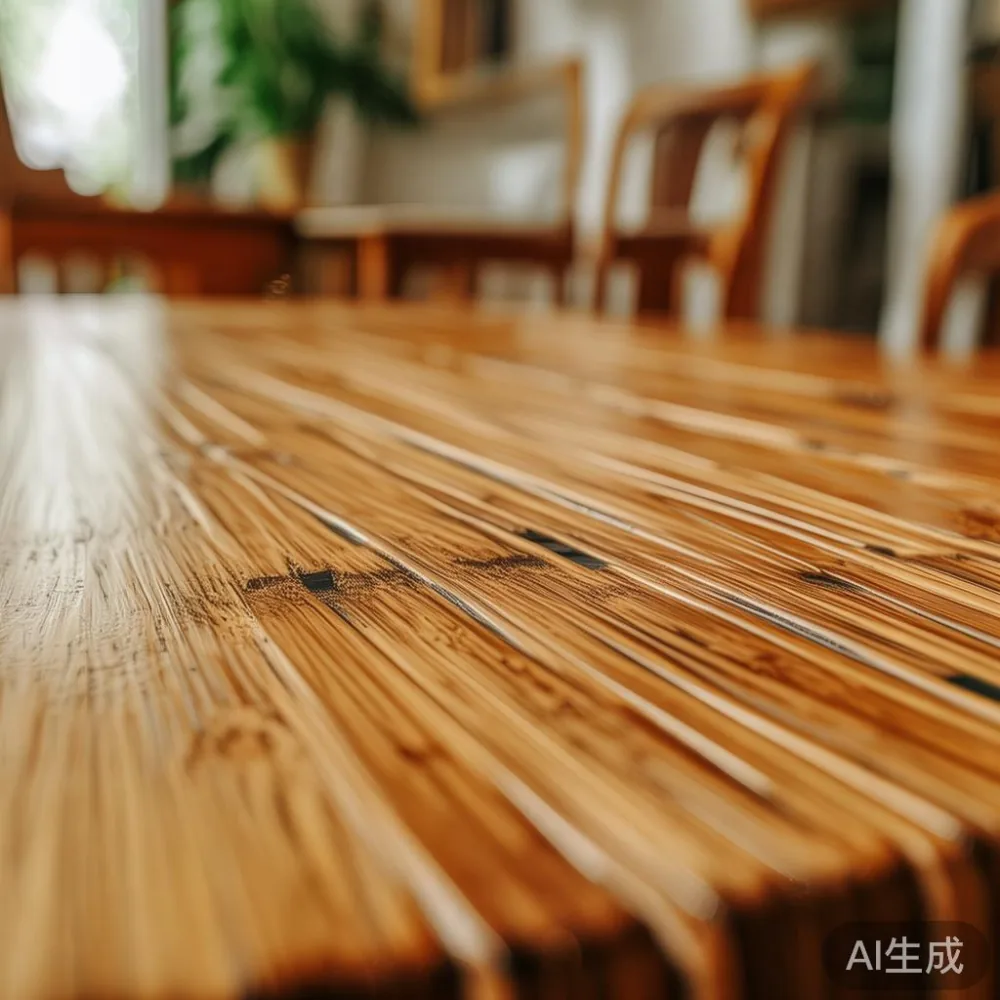
Typical signs include a faint bow in a door, a drawer that catches at one corner, or a tabletop that no longer sits perfectly flat. In solid wood, the movement follows the grain. In engineered wood, delamination, swelling at the edges, and loose veneer can also occur. Bamboo furniture has its own pattern because the material is a fast-growing grass with dense fibres rather than a large timber tree.
These effects are not automatically a manufacturing fault. A stable interior, appropriate ventilation, and regular care can limit movement. Frequent misting, damp cloths, and furniture placed directly against cooling walls create avoidable risk.
How does bamboo furniture respond to humid air?
Bamboo furniture can suit Southeast Asian homes because many bamboo products are dimensionally stable and visually suited to warm rooms. Laminated bamboo panels used for a solid wood sofa frame, bed frame, or dining table can perform predictably when protected from prolonged moisture. However, “bamboo” describes several constructions, and care requirements differ.
Solid bamboo strips expand across their width and only slightly along their length. Strand-woven bamboo compresses long fibres into panels that generally resist swelling, while laminated bamboo depends on the glue line and panel thickness. An uncoated bamboo dining table may pale unevenly after repeated contact with wet hands. Black-stained bamboo can show a damp-looking patch if water sits on the surface.
For Singapore, place bamboo furniture at least 30 cm from an open window, 60 cm from a bathroom doorway, and 45 cm from an air-conditioning vent where practical. Use coasters, trays, and felt pads. Wipe spills within 10 minutes, not hours later. Clean with a lightly damp cloth, then dry immediately with a clean cotton cloth.
Bamboo should not be treated as waterproof. A humid HDB void deck can expose pieces to wind-driven rain, and a condominium balcony may receive direct evening sun as well as moisture. Outdoor coverage should permit airflow rather than trapping a plastic sheet against the furniture.
Should I choose solid wood or bamboo for Singapore?
The better choice depends on the room, construction, and maintenance habits—not merely the material label. Solid wood offers visible grain, repairability, and the ability to refinish a scratched surface. Bamboo often brings a cleaner profile, lower weight, and a distinctive linear texture.
A solid wood bed frame works well in a bedroom maintained between 22–26°C and 45–65% relative humidity. A bamboo dining table is easier to reposition in a compact flat, where a 160 cm table may be needed for six place settings and 200 cm for eight. A solid wood sofa should have its frame, suspension, and cushions assessed separately: timber movement does not necessarily mean the upholstered body will distort.
For wardrobes, check whether doors are solid, framed, or fitted with flexible hinges. A quality wardrobe in a Punggol condo may be installed beside a bedroom wall where relative humidity is higher than in the living room. Allow a 20–30 mm gap at the top and 10–15 mm at the sides if the maker’s installation instructions require it. For a nightstand, solid wood with dovetail or mortise-and-tenon construction can tolerate seasonal movement better than a hollow decorative box.
Light-luxury design is compatible with both materials. French light luxury uses restrained profiles, curved edges, tactile upholstery, and pale woods. American light luxury emphasises generous proportions, natural fibres, and a relaxed appearance. Post-modern light luxury often combines clean geometry with warm timber, creating an understated contrast suited to modern HDB interiors.
In a search list, the phrase French for dining room may bring to mind pale oak, linen curtains, and simple place settings. The phrase light luxury for dining room points toward a balanced dining table, comfortable chairs, layered lighting, and durable finishes. If a marble table is included, keep it away from the humid dishwashing zone and use a stable support rather than placing it directly on a bamboo trolley.
How should solid wood furniture be delivered and installed?
Delivery is part of moisture management. Timber should remain wrapped until it has adapted to the room, but it also should not remain sealed in damp packaging. For a new installation in Singapore, leave protective packaging on for 24–48 hours when the piece came from a substantially cooler environment. In humid weather, ventilate the room and avoid direct air-conditioning airflow striking the boards for the first 3–5 days.
Before delivery, measure the lift door, lift car, corridor turns, stairs, and the furniture itself. A common HDB lift opening is around 90 cm wide and 210 cm high, while the car may measure roughly 130 cm by 140 cm. Condo service lifts can be larger, but a 220 cm dining table may still need to be tilted through the opening. Record wall, skirting, and handle clearances rather than estimating from the floor plan.
Protect floors with a 2–3 mm felt layer, cardboard runners, or purpose-made sliders. Never drag a 65–90 kg wardrobe across a tiled corridor. Carry it upright where required, use two people for pieces above 40 kg, and confirm whether the lift reservation fee applies. A new solid wood sofa should also be moved without removing structural parts merely to make a tight turn.
Singapore customers should check the delivered price before checkout because 9% GST applies to most furniture purchases. Confirm whether delivery is included, whether upper-floor carrying is charged, and whether assembly is included. MIDHILL offers free shipping for orders over US$350, but the threshold is stated in US dollars while Singapore prices should be displayed clearly in SGD.
What should I do when a wooden table starts to warp?
Begin by identifying the cause. If one side of the table feels damp and the other feels dry, adjust the room rather than sanding the piece immediately. Move it 45–60 cm away from a window or vent, maintain steady air-conditioning, and use a hygrometer placed near floor level. Readings should ideally remain within a 10–15% band over a 24-hour cycle.
For minor surface swelling, dry the table gently and monitor it for 7–14 days. Do not apply direct heat above 40°C, use a hairdryer, or pour oil over damp timber. Excess heat can dry the outer fibres while the core remains wet, creating cracks. A clean, dry cloth is safer after wiping away any standing water.
For a drawer that sticks, first check whether the base has moved and whether the runner is aligned. Unscrew the runner only if the manufacturer’s instructions allow it. Shift a 2–3 mm wooden shim at the high corner, then retighten evenly. Do not plane a drawer until the room’s humidity is stable for at least 14 days.
Solid wood can often be restored. MIDHILL’s lifetime refinishing service is relevant for scratches, dull finishes, and surface wear, although severe moisture damage should be assessed before cosmetic work begins. The 14-day return period also allows buyers to report a damaged or materially unsuitable piece promptly, subject to the stated return terms.
Which furniture style works in a compact Singapore apartment?
A compact apartment does not require sparse furniture; it requires correct scale and fewer hard-to-clean gaps. In a Tampines flat, a 150–180 cm dining table can seat four to six people while preserving a 75–90 cm circulation route. In a Bedok condo, a 200–220 cm table may suit an open dining zone, but it should not block the corridor between the private lift lobby and the main door.
For a solid wood sofa, check the seat depth against the available room length. Allow 75–90 cm behind the sofa for circulation and 40–60 cm between the sofa and dining table. A modular frame can be useful, but individual modules must still fit through the lift and corridor. Keep the sofa 20–30 cm from the wall for airflow where practical.
The phrase best Vintage sofa for 2026 can help define a target when looking for a design-led seat with a solid wood frame, but dimensions and climate suitability should be checked before appearance. An Italian light luxury accent chair can complete a living room with one patterned cushion and a slim floor lamp. An Italian light luxury dressing table can fit beside a bedroom wall, provided the top is at least 15 cm from a window and the room is not directly exposed to bathroom vapour.
Wardrobes need the most careful placement. The phrase how to style European light luxury wardrobe in apartment is a useful design prompt, yet an open wardrobe against an exterior wall should be fitted with a moisture-resistant back panel and 30–50 mm of ventilation space where the installation system permits. A closed wardrobe offers greater protection from dust and incidental humidity.
For a marble table, use a level base and avoid placing it beside a frequently opened balcony door. Marble is less vulnerable than timber to humidity, but water at its base can affect the support, floor, or adjacent wood cabinet.
How can I maintain furniture through Singapore’s four seasons?
Singapore’s climate is commonly discussed in four broad seasons, though the differences are less pronounced than in many countries. From December to February, monsoon rain can keep outdoor humidity high. From March to May, short thunderstorms and warm nights increase moisture. From June to August, the Southwest Monsoon brings heavier rain to some western areas. From September to November, the Inter-Monsoon period can still include humid afternoons and bright sun.
Rather than treating each month as a fixed humidity level, watch how the furniture behaves. Aim for 45–65% relative humidity in air-conditioned living spaces and prevent prolonged readings above 70%. Air movement matters more than a single reading. Use fans, open doors when outdoor air is drier, and avoid pointing vents directly at a bed frame or wardrobe.
Clean solid wood every 1–2 weeks with a soft, dry cloth. Follow the finish instructions: oiled wood may need an annual reapplication, while lacquered or waxed surfaces generally require no oil. Wipe bamboo in the grain direction and dry it immediately. Keep felt pads under every leg, and replace them when compressed.
A useful quarterly inspection takes about 15 minutes. Check under wardrobes, behind the nightstand, under the dining table, and at the back of the sofa. Look for condensation, insects, damp carpet, and blocked vents. Inspect silicone seals and balcony doors twice a year. Tighten furniture fittings only when a joint moves; repeated over-tightening can damage the timber.
What are the main humidity questions buyers should ask?
Ask the supplier how the timber was dried, how long it was acclimatised, and whether the finished piece includes solid wood, veneer, plywood, or bamboo panels. For a dining table, request the board dimensions and the expected movement across the width. For a bed frame or wardrobe, ask about joint construction, finish thickness, ventilation clearances, and installation support.
Also ask whether replacement parts are available after 5, 7, and 10 years, and how scratches should be reported. A 10-year structural warranty is useful, but the customer should still understand its exclusions and the evidence needed for a claim. Confirm the delivery lead time in working days, the exact SGD price including 9% GST, the delivery surcharge for upper floors, and the return arrangement.
For commercial or hospitality projects, monitor loading docks and storerooms. The Foshan Lingzhan furniture market is a useful reference point for comparing construction methods and finishes, because product sourcing here often involves discussing solid wood grades, joinery, moisture conditioning, and packaging for export.
The most reliable furniture choice for Southeast Asia is not a claim that one material is immune to humidity. It is a stable, well-made piece, fitted with appropriate ventilation and protected with a sensible maintenance routine. Solid wood furniture and bamboo furniture can both look refined in Singapore when dimensions, placement, and care respond to the climate rather than ignoring it.