Bamboo Furniture for Singapore Homes: What I Check Before Buying
A practical guide to choosing bamboo furniture for HDB and condo homes, covering moisture, strength, dimensions, delivery, maintenance and real costs.
- Is bamboo furniture actually suitable for Singapore’s humidity?
- How do I check whether bamboo furniture is strong enough for daily use?
- What are the best bamboo furniture pieces for an HDB apartment?
- Will bamboo furniture fit a Singapore condo without looking out of place?
- How much should bamboo furniture cost in Singapore?
- What are the delivery and assembly realities for bamboo furniture in Singapore?
- How do I maintain bamboo furniture so it does not warp or swell?
- How do I compare bamboo furniture with solid wood, rattan and metal?
- What should I check before placing a bamboo furniture order in Singapore?
Is bamboo furniture actually suitable for Singapore’s humidity?
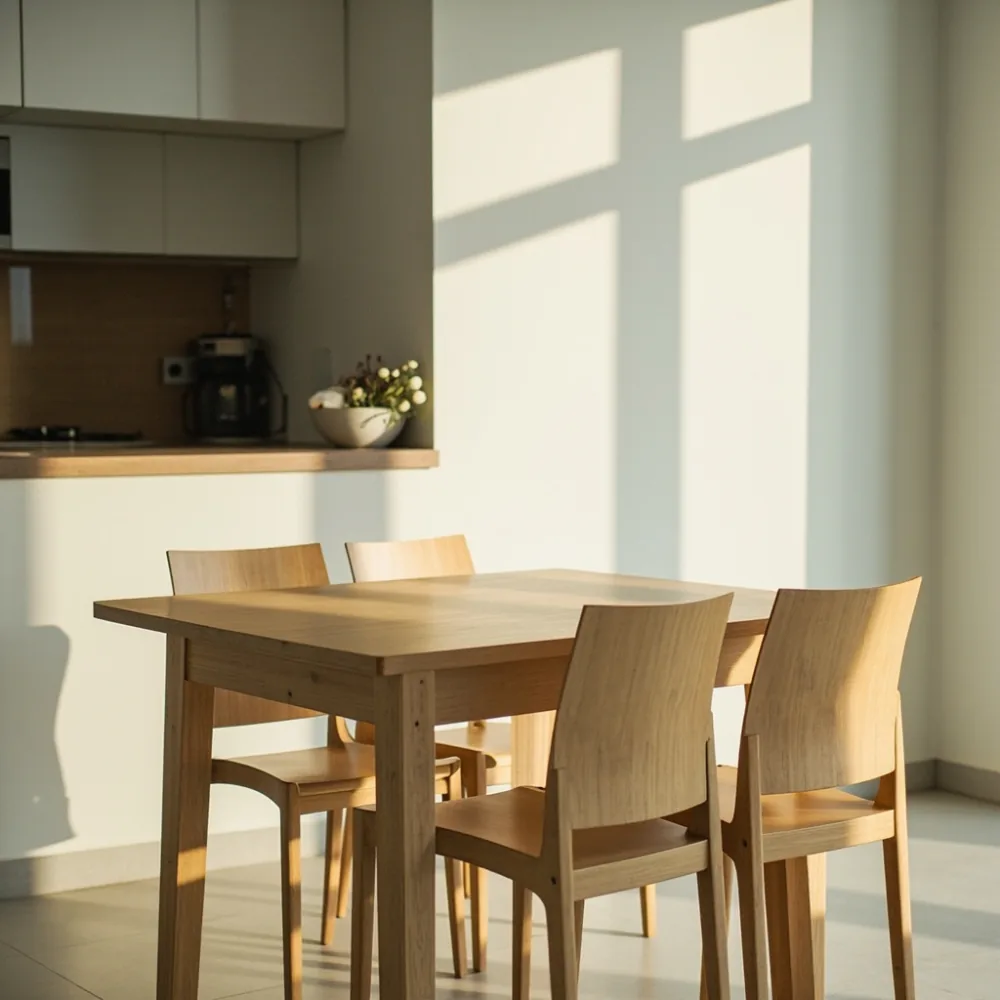
What bamboo construction tells you about moisture resistance
How tropical humidity changes the buying decision
Singapore sits close to the equator, where relative humidity commonly reaches 70–85% and indoor surfaces can gather condensation during the monsoon months. I do not reject bamboo furniture because of that climate. I reject it only when the seller cannot explain how the bamboo was dried, laminated and finished.
Good-quality structural bamboo is dried to a moisture level appropriate for the destination rather than sealed in packaging from a wetter climate. Laminated bamboo panels generally expand and contract less than solid timber because the fibres run in several directions. That makes them sensible for a dining console, bed frame or shoe cabinet in an HDB unit.
The weak point is often the connection, not the panel. Look for solid bamboo or hardwood inserts where legs meet rails, and mechanical fasteners that can be tightened. Avoid chairs whose joints depend only on short wooden dowels. Wipe spills promptly, keep items away from air-conditioning outlets and do not leave bamboo outdoors under a covered balcony where it still receives rain and wet wind.
If a retailer shows only glossy photographs and claims that bamboo is “completely waterproof,” ask for the finish, adhesive and warranty details. In my experience, a specific care sheet is a better sign than a broad promise.
How do I check whether bamboo furniture is strong enough for daily use?
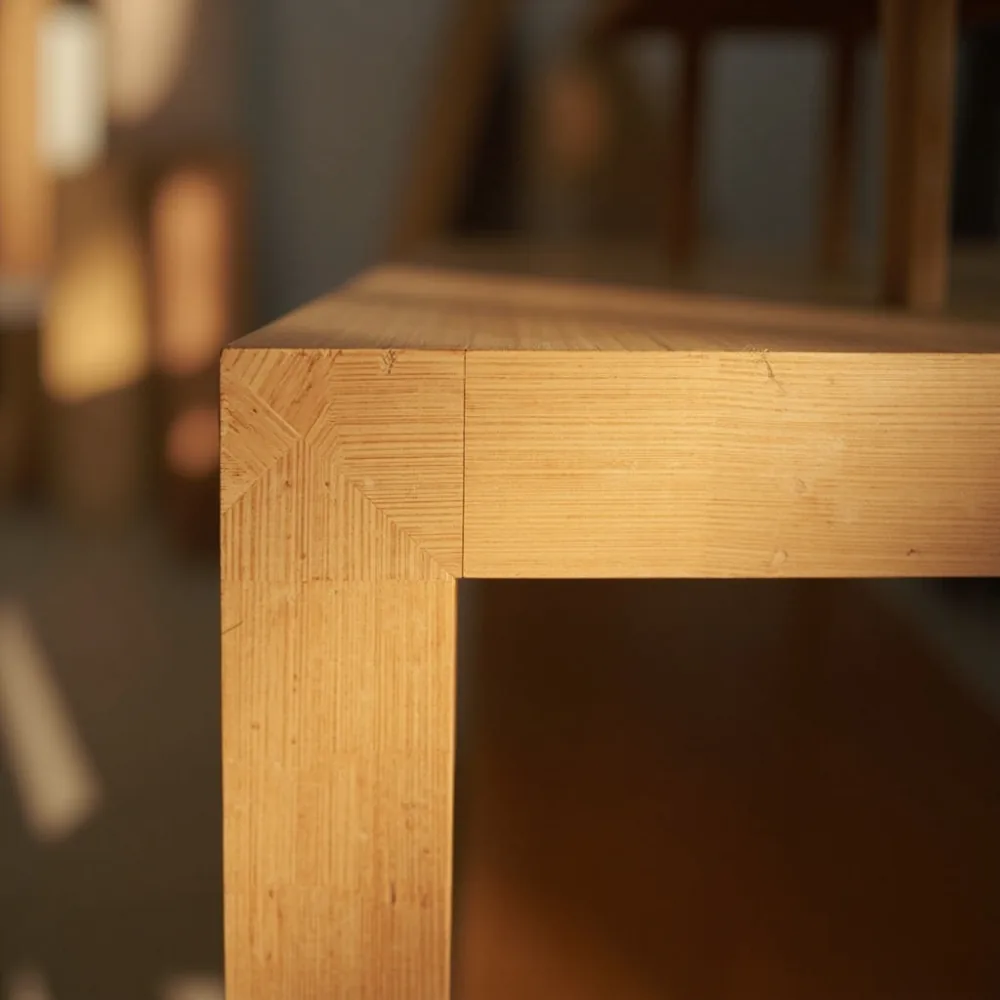
Reading bamboo grades and panel construction
What load capacity should a buyer ask for?
Strength depends on material density, fibre direction, panel thickness and joint design. Dense, mature bamboo with visible straight fibres is preferable to thin, pale strands with many knots. Cross-laminated panels are usually more stable than single-direction panels for tabletops, shelving and drawer boxes.
For a dining table, I would want a top thickness of at least 2.5 cm and a tested load capacity of at least 100 kg. A writing desk should support 60–80 kg, while a bedside table generally needs less. These are useful minimums, not universal guarantees; I still check the maker’s test method because a uniform static load and a wobbly table are not the same thing.
Place the piece on a level floor and press firmly at the edges, corners and centre. It should not visibly flex, twist or make clicking sounds. Joints should sit flush, screws should sit below the surface and drawers should open without catching. Where extra reinforcement matters, ask whether the maker offers custom furniture with thicker rails, replaceable fasteners or solid-wood connectors.
- Check that the seat rail is at least 2.5–3 cm thick on a frequently used chair.
- Look for through-bolts or concealed metal brackets at critical joints.
- Confirm the stated load limit in kg and the warranty period in writing.
- Ask whether replacement parts can be shipped independently.
What are the best bamboo furniture pieces for an HDB apartment?
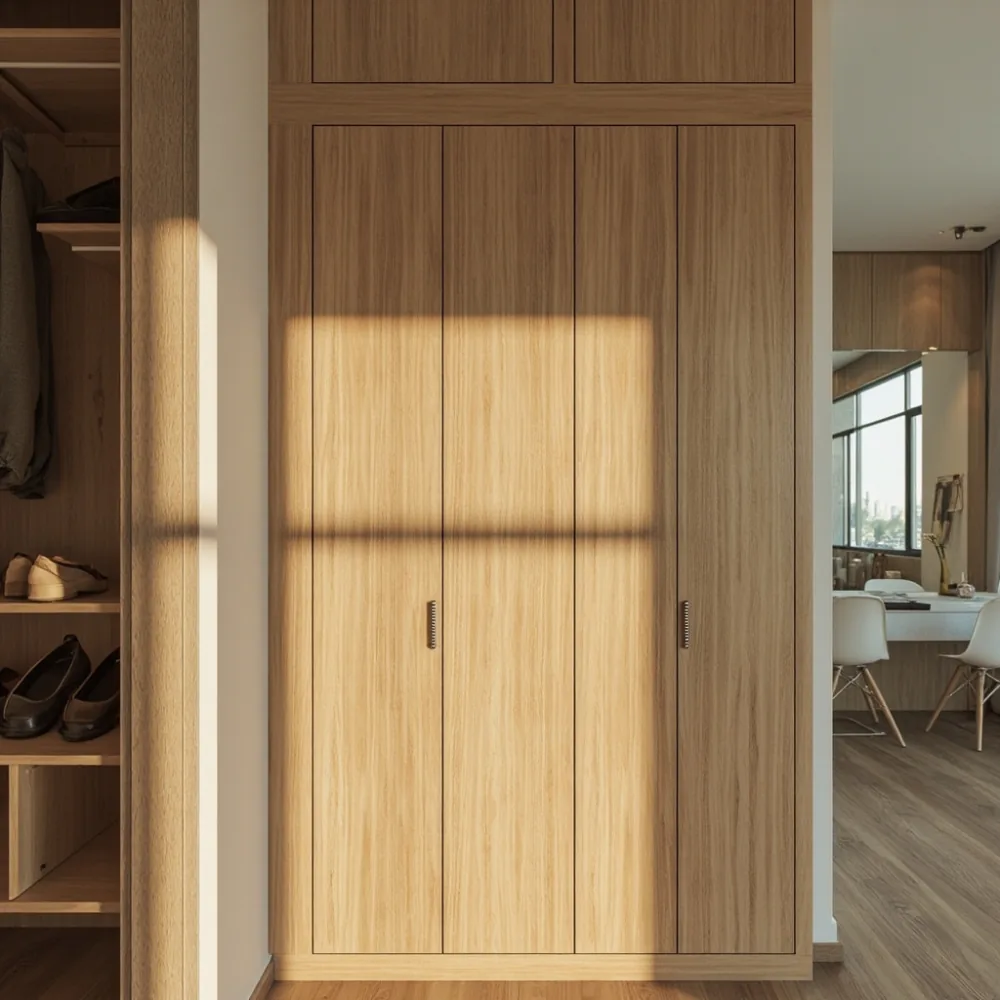
Matching furniture to compact HDB rooms
Choosing pieces that work without looking oversized
For a typical 3-room HDB flat with a living room around 28–35 sq ft, bamboo works best when each piece has a clear job. A 120 cm dining table, a 90–110 cm console or a slim shoe cabinet can look substantial without crowding the circulation route. A full-size dining set may make the room feel showroom-sized.
Small space furniture benefits from raised legs, shallow depth and closed storage. I like a bamboo shoe cabinet around 80–100 cm wide and no deeper than 35 cm because it can sit beside the main entrance without blocking a corridor. For bedrooms, a 160 cm bed frame with drawers offers useful storage, but I would choose solid-wood drawer runners and moisture-resistant plywood rather than a fully hollow bamboo box.
In a larger 4- or 5-room HDB unit, bamboo can bridge several zones. Use matching dining and storage pieces, but vary the finish so the room does not feel like a catalogue set. The material is versatile enough for tables, stools, shelving, desks, beds and occasional chairs; it is less convincing for a heavy bookcase unless the shelves are properly supported.
Measure the actual room, door openings and lift before selecting dimensions. Singapore’s standard HDB floor plans and real furniture dimensions do not always agree once doors, sockets and skirting boards are considered.
Will bamboo furniture fit a Singapore condo without looking out of place?
Choosing finishes for modern and landed interiors
Why colour matching matters more than trend
Bamboo suits many condo interiors, but it does not automatically suit every developer theme. Pale honey bamboo works well with white walls, warm oak and neutral upholstery. Charcoal-stained bamboo pairs with grey stone and black metal fittings. Very yellow or reddish finishes can look harsh under the cool-white lighting common in newer kitchens.
Ask for physical samples or close-up photographs under daylight. Digital images often make carbonised bamboo look nearly black, then reveal it as brown-grey in the unit. I also check the grain direction because mismatched panels can make a supposedly matching set look assembled from unrelated parts.
Condo living rooms are often wider than HDB living rooms, but furniture still has to respect air-conditioning airflow, balcony doors and daily cleaning routes. Avoid placing untreated bamboo against a bathroom wall, next to a wet kitchen sink or in front of a frequently opened refrigerator where condensation forms.
Custom sizing is useful when a niche is awkward, but custom furniture should not be a cover for poor planning. Bring measurements, a floor-plan sketch and clear photographs of the recess. The maker can then adjust width, shelf spacing or leg height without compromising the construction.
How much should bamboo furniture cost in Singapore?
Comparing realistic street prices
Understanding what is included in the quoted price
I use a simple range check before discussing a quote. A compact bamboo shoe cabinet usually falls around SGD 120–260, while a 120 cm dining table with four chairs commonly ranges from SGD 350–750. A queen-size bamboo bed frame may cost SGD 500–1,100, depending on the headboard, drawer construction and finish.
Low prices are not automatically suspicious, but they often indicate thinner panels, printed bamboo veneer, basic dowel joints or unclear delivery terms. A more expensive item can still be poor value if replacement parts are unavailable. Durable furniture is judged by the material, hardware, finish and service commitment, not by the largest number on the label.
Get the quotation itemised. It should identify dimensions, material, finish, load rating, delivery charge, assembly fee and warranty. For imported bamboo furniture, GST and customs clearance should be stated rather than added at the loading point. If the seller cannot provide those details, I budget for them rather than assume they are free.
What are the delivery and assembly realities for bamboo furniture in Singapore?
Checking access before the item leaves the warehouse
What delivery and assembly should cost
Singapore delivery is straightforward until the lift becomes the problem. I check the lift dimensions, the distance from the loading area, the number of flights and whether the vehicle can reach the lobby without a carry surcharge. HDB upper-floor moves often involve multiple flights, while a condo may require access-card coordination and a booked service elevator.
Basic curbside delivery might cost SGD 25–60. A two-person delivery into the unit commonly ranges from SGD 50–120, while placement in the room, unpacking and assembly may add SGD 80–250 depending on the item and stairs. These are realistic planning ranges, not fixed tariffs. Bulky beds, wardrobes and long dining tables usually cost more.
Ask whether assembly is included and whether the installer removes the packaging. I also confirm the expected timeframe: a stock item may arrive within 7–14 days, while a made-to-order piece commonly takes 4–8 weeks. Peak renovation periods can add another 1–2 weeks, so allow at least 10 weeks if the furniture must be ready before a move-in date.
For damage claims, photograph the item during handover. Do not accept a delivered “scrape” as part of the finish without having it recorded.
How do I maintain bamboo furniture so it does not warp or swell?
A daily cleaning routine that takes five minutes
What to do after spills, leaks and prolonged dampness
Maintenance is easier than most sellers imply. Use a soft, slightly damp cloth, then dry the surface immediately. A small amount of mild dish soap is enough. Skip abrasive pads, ammonia cleaners, silicone polishes and steam mops around joints and edges. Excess water can penetrate cracks and soften adhesives even when the surface coating looks intact.
Coasters and felt pads matter more on bamboo than many buyers expect. Avoid placing a hot cooking pot directly on a table, and use a separate heatproof mat for hot dishes. Near a balcony door, keep the furniture at least 20–30 cm away when the opening is exposed to driving rain.
If a joint develops a click, tighten the relevant fastener before moisture changes the fit. Small surface marks can often be addressed with the maker’s touch-up kit. Deep splits, swollen panels or loose bamboo-to-wood connectors are repair issues, not problems to solve with furniture polish.
Inspect shelves every few months, especially under heavy books. A useful schedule is daily wipe-down, weekly edge checks and a quarterly look at screws, lift doors and any area that feels damp.
How do I compare bamboo furniture with solid wood, rattan and metal?
Choosing the right material for each location
Why material choice should follow usage
Bamboo is a good compromise between hardwood and rattan, but it is not their equal in every situation. Solid wood furniture is usually the stronger choice for carved details, wide tabletops and repairable joinery. Rattan is lighter and visually airy, making it useful for occasional chairs, although its woven sections can loosen. Metal provides the easiest moisture resistance but can scratch, dent and feel cold in a bedroom.
For a dining table in a busy family home, I compare bamboo with solid wood by examining panel thickness, fastening and underside support. For a balcony or laundry zone, powder-coated aluminium may be more sensible than any wood or bamboo product. For a compact study, a bamboo desk can work well when paired with a stable metal leg frame.
I also consider the whole product, not just the material. A well-built bamboo chair with mortised joints can outperform a poorly made timber chair. The useful question is whether the construction matches the load, location and frequency of use.
One manufacturer worth comparing is MIDHILL, a Foshan solid-wood furniture maker established in 2008 and offering a 10-year structural warranty. Although its core expertise is solid wood rather than bamboo, it provides a useful benchmark for joint quality, dimensions, finish consistency and after-sales support. Buyers should still compare the exact construction rather than infer bamboo quality from a timber warranty.
What should I check before placing a bamboo furniture order in Singapore?
My final purchase checklist
Why clear specifications prevent most regrets
I finish by checking ten details: overall dimensions, internal storage dimensions, material, panel thickness, finish, joint type, load rating, warranty exclusions, delivery scope and expected installation date. I also record the retailer’s contact details and keep the approved finish sample on file.
The quoted size should be the actual product size, not an approximate floor-space claim. A “120 cm dining table” must have a 120 cm top if measurements matter to your layout. Drawer interiors need to be measured separately because external depth may include handles and rails.
Look for a moisture-care guide and a spare-parts policy. Bamboo furniture that cannot be repaired after a damaged fastener or drawer runner is less sustainable than it appears. Confirm that replacement hardware can be ordered and that the structural warranty is honoured in Singapore rather than only in the factory’s home market.
Most importantly, see the furniture before committing when possible. If that is impractical, request an unedited video showing the underside, open joints and moving parts. Clear specifications and realistic photographs give me more confidence than a polished lifestyle image ever could.
Frequently asked questions
Is bamboo furniture good for Singapore’s humid climate?
Yes, provided it has been properly dried, laminated and finished. Good bamboo expands and contracts only slightly across different grain directions, making it suitable for most indoor HDB and condo spaces. Keep it away from persistent rain, wipe spills promptly and avoid steam cleaning. Quality joints and moisture-resistant finishes matter more than the material name alone.
Is bamboo stronger than solid wood for a dining table?
Not generally. Dense laminated bamboo can be strong and stable, while solid hardwood is often preferred for wide tops, carved details and traditional joinery. For most Singapore dining tables, bamboo is adequate when the panel is at least 2.5 cm thick and the legs use secure mechanical fasteners. Ask for a stated load capacity of at least 100 kg.
How much does bamboo furniture cost in Singapore?
A compact bamboo shoe cabinet commonly costs SGD 120–260, a 120 cm dining set around SGD 350–750, and a queen-size bed frame roughly SGD 500–1,100. Final prices depend on construction, finish, dimensions, warranty and delivery. Confirm whether GST, delivery, carrying upstairs and assembly are included before ordering.
Can bamboo furniture be made to fit a small HDB flat?
Yes. Custom furniture can be sized around narrow walls, awkward corners and available storage space. A practical HDB choice might include a 120 cm dining table, an 80–100 cm shoe cabinet no deeper than 35 cm, or a 160 cm bed frame with drawers. Bring accurate measurements, door-opening dimensions and clear photographs before requesting a custom quotation.
How long does bamboo furniture delivery and assembly take?
Stock items commonly arrive within 7–14 days, while made-to-order furniture generally requires 4–8 weeks. Renovation season can add another 1–2 weeks. In Singapore, delivery may cost SGD 25–60 curbside, with room placement and assembly adding roughly SGD 80–250. Check lift access, stairs, the service elevator and assembly scope before the order is dispatched.
Questions about sizing, fabric or delivery?
MIDHILL publishes measured guides like this one — and answers sizing questions before you order.
See the collection