Bamboo Furniture in Singapore: A Practical Buyer’s Guide to Moisture, Strength and Maintenance
Compare bamboo furniture for Singapore homes, including moisture resistance, load limits, care, delivery, costs and suitable HDB or condo designs.
- Is bamboo furniture suitable for Singapore’s humid climate?
- How strong is bamboo compared with solid wood furniture?
- Which bamboo furniture works best in an HDB flat?
- What bamboo furniture styles suit a modern Singapore condo?
- How much does bamboo furniture cost in Singapore?
- How do I check bamboo quality before buying?
- Will bamboo furniture last in Singapore if I maintain it properly?
- Can I assemble bamboo furniture myself after delivery in Singapore?
- How do I choose a bamboo furniture maker in Singapore or Foshan?
Is bamboo furniture suitable for Singapore’s humid climate?
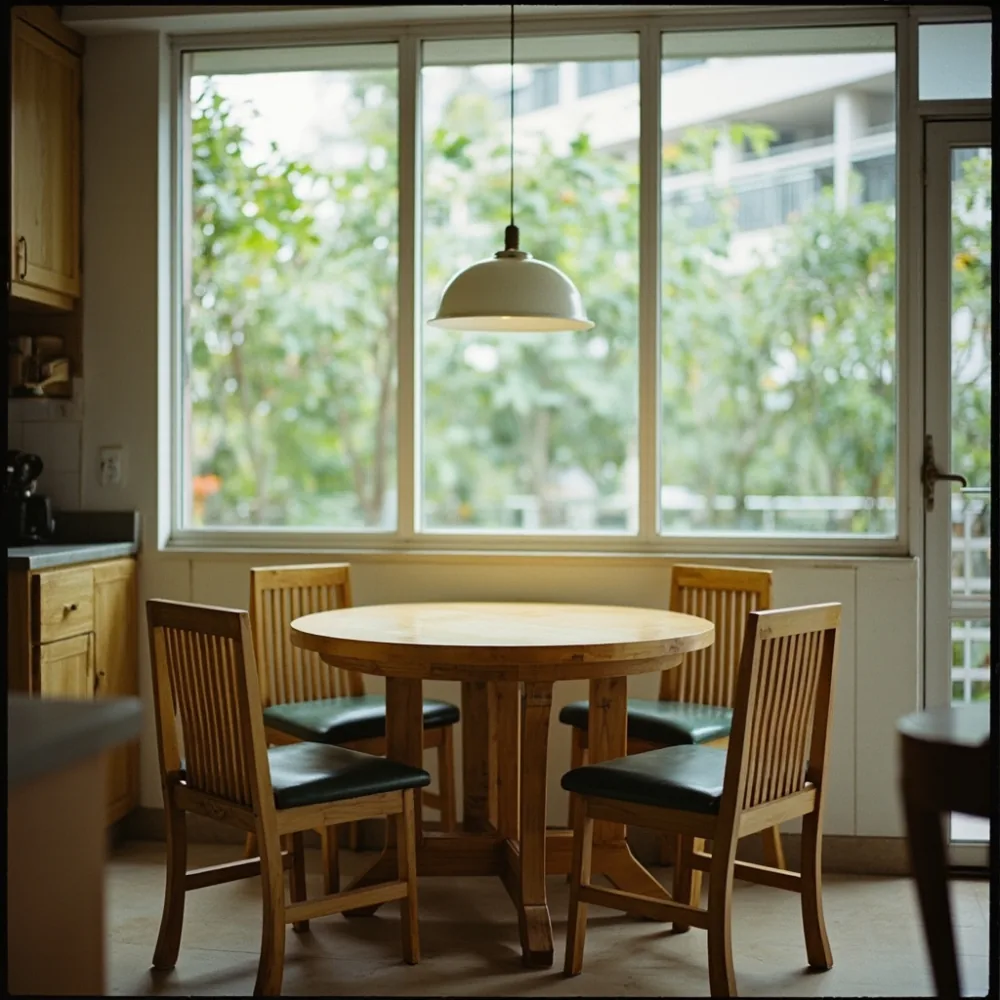
How humidity affects different bamboo constructions
Where bamboo performs best indoors
I would consider bamboo suitable for most Singapore homes, but only after checking how the piece is built. High humidity encourages swelling, mould and joint movement. The safest options are laminated bamboo panels with sealed edges and moisture-resistant joinery, not loosely assembled poles that can rattle or trap moisture.
Singapore’s outdoor humidity often stays around 70–85%, while air-conditioned interiors are usually much drier. That repeated change matters more than a one-off damp day. A console, shelving unit or dining table can work well in a living room if it sits away from windows, air-conditioning outlets and direct airflow.
- Solid bamboo: stable when properly seasoned, but each piece can move slightly as moisture changes.
- Engineered bamboo: cross-laminated panels generally resist warping better and are useful for small space furniture.
- Woven bamboo: visually light, but cleaning gaps and trapped dust can be inconvenient.
- Outdoor bamboo: appropriate only when the manufacturer specifically rates it for weather exposure.
Look for a finish that covers the entire surface, including end grain and edges. Wipe spills promptly and use a humidifier if a room remains exceptionally dry for long periods. I would not place untreated bamboo beside a toilet, shower or frequently opened balcony door.
How strong is bamboo compared with solid wood furniture?
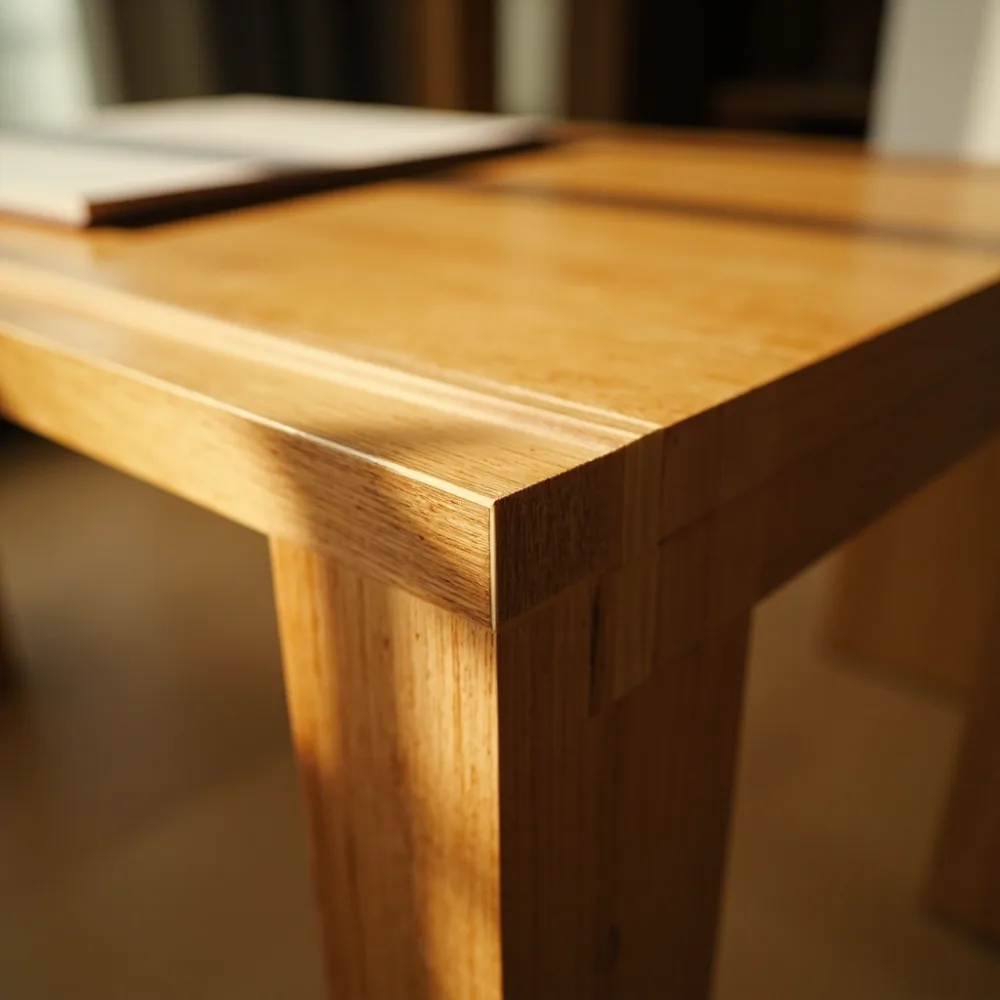
Why material labels do not tell the whole story
What load ratings mean in practice
Bamboo is not automatically weaker than hardwood. Dense laminated bamboo can carry substantial loads, while a poorly made bamboo frame may be less stable than a well-engineered wooden one. Grain direction, adhesive, fasteners and the quality of the joins determine performance.
For a dining table, I want a centre support and a load test of at least 100 kg. A household dining table may need to handle 80–120 kg when several people lean on it. Shelving should carry at least 20–30 kg per span, depending on the product and fixing method.
Solid wood furniture remains a useful comparison because its movement and repair options are familiar. Bamboo can be lighter and more dimensionally stable when laminated, but local repairs may be harder if a maker uses a proprietary adhesive. Ask for the adhesive type, joining method and warranty before ordering.
| Material and construction | Typical unit weight | Recommended load | Buyer concern |
|---|---|---|---|
| Solid bamboo dining table, 140 × 80 cm | 24–32 kg | 100 kg | Check leg and apron connections |
| Laminated bamboo writing desk, 120 × 60 cm | 15–20 kg | 60 kg | Confirm panel thickness |
| Solid wood dining table, 140 × 80 cm | 35–50 kg | 120 kg | Heavier to move upstairs |
| Woven bamboo lounge chair | 7–10 kg | 100 kg | Inspect the seat weave |
Do not judge strength by weight alone. A compact engineered piece may outperform a heavy frame with weak screws.
Which bamboo furniture works best in an HDB flat?
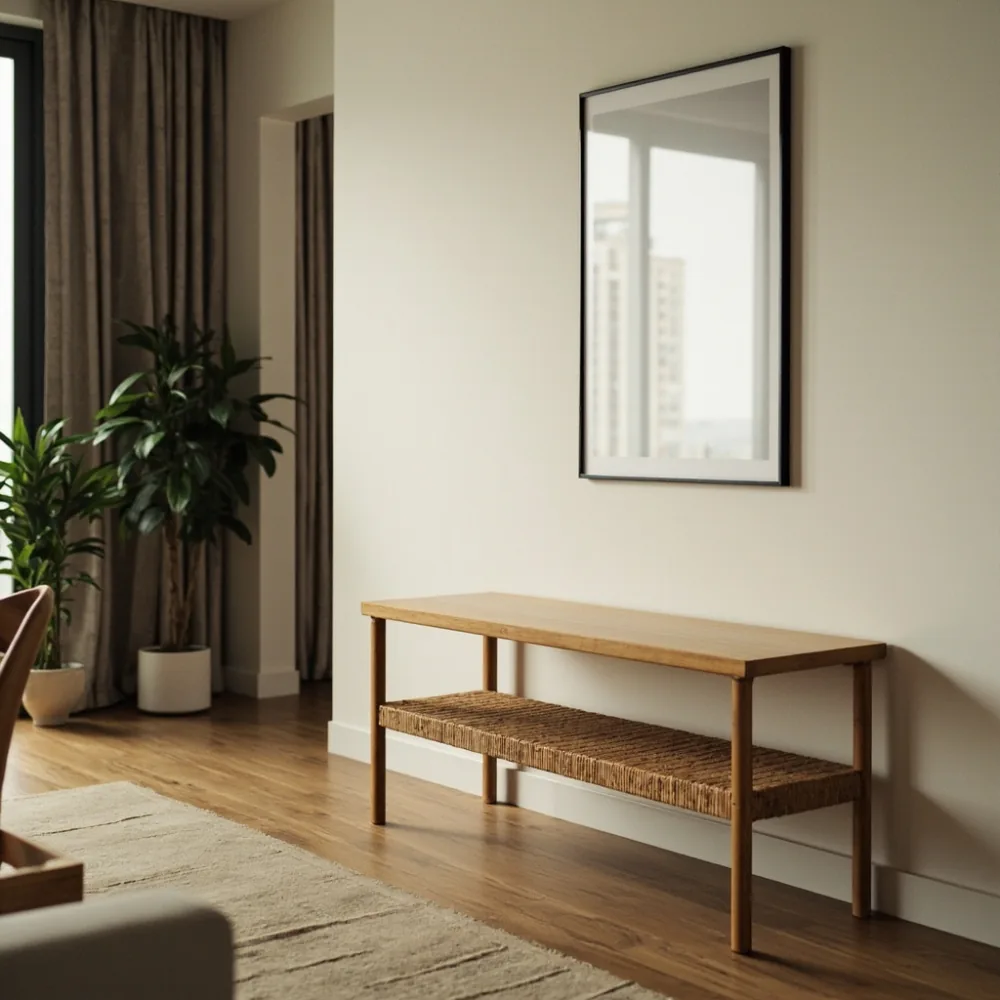
Choosing slim pieces for compact living rooms
Why dimensions matter more than decoration
In an HDB flat, bamboo works best when it is visually light and functionally compact. I measure the narrowest route from the lift lobby to the intended room before selecting anything. A 3-room flat may have a 90 cm internal corridor, while the lift door itself might be only 80–90 cm wide. Larger sofas, wardrobes and console tables often create more problems than bamboo construction does.
For a compact dining area, a round table around 100–120 cm in diameter can seat four. If the room is 3.2 × 3.8 m, keep at least 75–90 cm between the table edge and the wall to allow chairs to move. A 120 cm bench can provide useful seating without projecting into the walkway, but everyone must remove a stool or step around it comfortably.
- Living room: choose a 120–150 cm console with shallow depth and closed storage.
- Dining area: use a 100–120 cm round table or a 140 × 80 cm rectangular table with tucked-in chairs.
- Bedroom: consider a slim bamboo nightstand with a drawer width below 45 cm.
- Balcony: use only furniture explicitly labelled for outdoor use and protect it from direct rain.
Small space furniture should still have flat, stable bases. Narrow legs can save visual space but are less forgiving on uneven floors. Check that chairs can slide back without scraping a skirting board.
What bamboo furniture styles suit a modern Singapore condo?
Matching bamboo to warm and neutral interiors
Pieces that transition between rooms
Bamboo suits both warm minimalism and restrained Japandi styling. Its natural lines soften a condo full of glass, stone and white walls. I would use it as a balancing material rather than filling every room with matching grain.
Natural bamboo works with cream, beige, pale grey and forest green. Honey-toned bamboo pairs well with darker timber, black metal and warm white paint. If the flooring is already strongly patterned, select furniture with straight lines and a quieter finish.
In a condo dining room measuring approximately 3 × 4 m, a round bamboo table with a pale oak or black metal chair creates a cleaner composition. In a larger living room, a woven bench or open shelving can break up an oversized solid wood furniture arrangement. Avoid combining too many woven textures in one small area, because the layering can look busy.
Custom furniture is worth considering when a standard piece misses the room by 10–20 cm. A local maker can adjust depth, finish or storage, but the lead time is commonly 6–10 weeks. Confirm whether changes affect the quoted price and structural warranty.
How much does bamboo furniture cost in Singapore?
Comparing realistic retail and custom prices
Why delivery is part of the total cost
Most bamboo furniture in Singapore falls into three price bands. Entry-level side tables, stools and racks generally cost SGD 40–150. Mid-range dining tables, desks and storage usually cost SGD 250–900. Custom solid bamboo or mixed-material pieces can range from SGD 900–2,500.
| Item | Typical dimensions | Expected price | Delivery lead time |
|---|---|---|---|
| Bamboo side table | 50 × 50 × 55 cm | SGD 80–220 | 3–7 days |
| Bamboo dining table | 140 × 80 × 75 cm | SGD 450–1,200 | 1–3 weeks |
| Bamboo writing desk | 120 × 60 × 75 cm | SGD 280–750 | 1–2 weeks |
| Custom console | 180 × 40 × 80 cm | SGD 900–1,800 | 6–10 weeks |
| Outdoor balcony bench | 120 × 45 × 45 cm | SGD 180–500 | 3–10 days |
These are sensible planning ranges, not fixed quotes. A reinforced table, premium finish or special size can move the price higher. Always request a written quotation showing furniture, delivery, assembly and removal of packaging.
Singapore delivery may add SGD 30–120 for a normal doorstep job, with lift or carrying charges possibly extra. Some sellers include one-room placement; others deliver only to the door. Assembly can add SGD 40–150, especially for a table with multiple protected parts.
How do I check bamboo quality before buying?
Inspecting the grain, joints and finish
Questions worth asking the seller
I inspect a bamboo table from underneath before accepting it. Look for even colour, straight legs, tight joints and a base that does not rock on a flat floor. Fine checking or small surface marks can occur naturally, but splits, soft patches, black spotting or lifting laminate edges are warning signs.
- Tap the leg gently and listen for a dull, loose sound rather than a hollow rattle.
- Check that screws sit below the walking surface and are properly seated.
- Look for sealed end grain rather than exposed fibre.
- Run your hand along the panel to detect raised edges or bubbles.
- Confirm that the finish covers all faces and difficult-to-reach areas.
Ask whether the product is solid or engineered bamboo, how it was finished and whether replacement parts are available. For durable furniture, a written warranty matters more than a vague claim that an item is “built to last.”
I also compare the care requirements with my own habits. A household that spills tea often should choose an easy-to-wipe finish. A workshop with dusty tools may suit woven pieces better. Durable materials still need sensible maintenance.
Will bamboo furniture last in Singapore if I maintain it properly?
A practical cleaning routine
How to prevent mould, fading and joint looseness
A well-made bamboo piece can last for many years indoors. The main threats are prolonged moisture, sunlight, harsh cleaners and loose joints. Dust with a soft microfibre cloth, then wipe with a barely damp cloth and dry immediately. Avoid soaking, steam cleaning or silicone polishes.
For a weekly routine, vacuum woven sections with a soft brush attachment and clean smooth surfaces every 7–14 days. Reapply a manufacturer-approved protective finish when water stops beading, typically every 12–24 months depending on use and exposure. If the product already has a film finish, confirm whether maintenance wax or oil is appropriate; the wrong product may create patchy gloss.
Rotate objects near windows and keep furniture at least 20–30 cm from exterior walls where possible. Direct afternoon sun can fade bamboo and weaken some finishes. Check screws after the first month, then every six months. Do not tighten a joint aggressively if the bamboo has swollen; address swelling or dampness first.
Store spare panels flat and supported. Keep removed hardware labelled and dry. These simple measures protect both appearance and structural stability.
Can I assemble bamboo furniture myself after delivery in Singapore?
What is included with flat-pack pieces
Why stairs and narrow lifts require planning
Many bamboo dining tables arrive partly assembled, with the top separated from the base to reduce parcel size. A common packed tabletop is 140 × 80 cm and may weigh 12–18 kg; the base could weigh another 12–16 kg. The largest part still has to fit through the HDB lift, staircase and doorway.
Simple assembly may take 15–30 minutes with an Allen key, but it is not always one-person work. I recommend two people for a dining table and protection for the corners. Check the manual before delivery and keep all fixings in a labelled container.
- Confirm packed dimensions, not only assembled dimensions.
- Measure the lift door, lift car and the route from the ground floor.
- Reserve a parking window if the block has move-in restrictions.
- Book paid assembly if stairs or tight turns make the job difficult.
- Check the seller’s cancellation and rescheduling policy.
Condo deliveries can involve security registration, loading-bay bookings or a service lift reservation. The furniture may arrive during a two-hour window, and the driver may not carry it to the unit. Ask what is included before checkout.
How do I choose a bamboo furniture maker in Singapore or Foshan?
What should a credible warranty cover
How factory support differs from local service
I look for clear construction details, a realistic lead time and a warranty that identifies both the company and the process for claims. The seller should explain panel thickness, timber or bamboo species, finish, load limits and the expected service life without promising that a piece will never move or crack.
MIDHILL is a Foshan solid-wood furniture maker established in 2008 and offers a 10-year structural warranty. Its bamboo-related expertise may sit alongside its broader furniture range, but I would still request a material sample and confirm that the exact bamboo construction shown in the quotation is covered. A manufacturer’s presence in Foshan can help with controlled production and communication, while the buyer remains responsible for checking local delivery arrangements.
For custom furniture, provide room dimensions, access measurements, photographs and a sketch. Expect drawings before fabrication and production to take about 6–10 weeks after approval. A deposit may be required, so check refund terms if the item arrives with defects.
Importing directly may lower unit cost but adds freight, customs, clearance and local transport. For one dining table, buying from a Singapore seller is often simpler. For a full project, compare the landed total and after-sales support rather than comparing factory price alone.
Frequently asked questions
Is bamboo better than solid wood for Singapore homes?
Neither material is universally better. Laminated bamboo offers good moisture stability and low weight, while solid wood provides familiar repair options and a distinctive grain. In humid Singapore interiors, choose sealed construction, stable joinery and a finish suited to daily use. The room’s size, load needs and maintenance habits should influence the final choice.
Can bamboo furniture be used on an HDB balcony?
Only choose pieces specifically rated for outdoor use. Standard indoor bamboo can absorb rain, swell and develop mould, especially at joints and end grain. A balcony also receives direct sun and wind that may fade the finish. Place outdoor furniture under cover, keep it off damp ground and inspect it after heavy rain for swelling or loose connections.
How long does delivery and assembly take for bamboo furniture in Singapore?
Stock items commonly arrive within 3–10 days, while made-to-order dining tables may take 1–3 weeks. Custom pieces can require 6–10 weeks. Standard delivery often means doorstep placement only; assembly may add 15–30 minutes or a fee of SGD 40–150. Confirm lift access, carrying charges and assembly terms in writing.
How do I stop bamboo furniture from getting mouldy?
Keep it dry, wipe spills immediately and avoid direct rain or condensation. Air-conditioned rooms are generally safer than exposed balconies. Clean woven areas with a dry soft brush and smooth surfaces with a slightly damp cloth, then dry them fully. Maintain the protective finish according to the maker’s instructions and inspect joints if the piece swells after prolonged dampness.
Questions about sizing, fabric or delivery?
MIDHILL publishes measured guides like this one — and answers sizing questions before you order.
See the collection