Bamboo Furniture Pricing: What Determines Solid Wood Costs
Solid wood furniture is often sold on the idea that “wood” explains the price. In reality, the cost is driven by a chain of measurable decisions: the species, board dimensions, moisture treatment, joinery, finish, hardware, design, and logistics. A Singapore buyer comparing a solid wood sofa, bed frame, dining table, wardrobe, nightstand, or marble table should look beyond the product photograph and ask what is inside the construction.
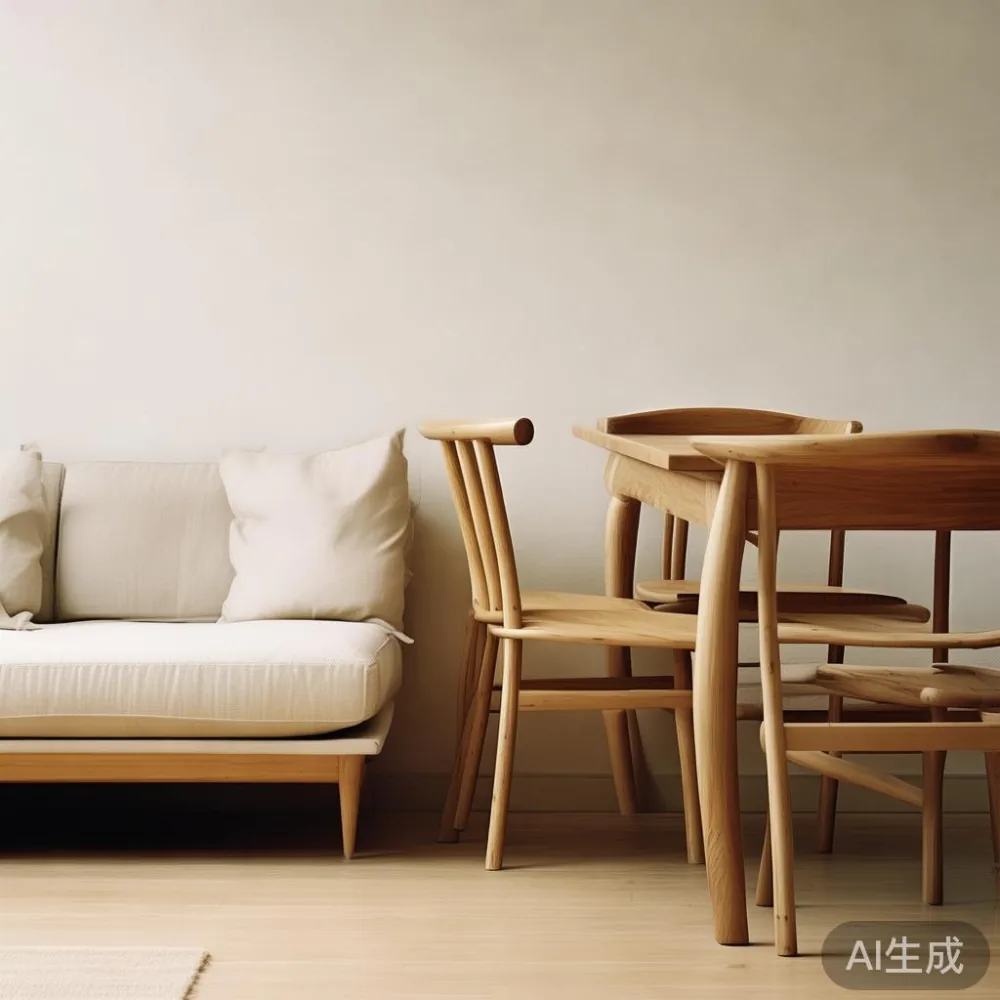
I visited a supplier in Foshan last month and watched a dining table pass through the same inspection used for a smaller nightstand. The table used kiln-dried timber, concealed mortise-and-tenon joints, and a hand-applied oil finish; the nightstand had particleboard drawers and printed paper veneer. Their quoted prices differed by S$1,460. That visit made the pricing factors easier to read, because the visible surfaces looked more alike than the underlying specifications did.
For Singapore homes, these differences matter twice. A 15 cm deep corridor or a 90 cm wide lift limit can determine which flat-pack boxes are practical, while a compact HDB dining room may need a table under 120 cm long. At 9% GST, the final price also deserves a clear calculation rather than a vague comparison of showroom numbers.
Is timber species the main reason solid wood furniture costs more?
Timber species is one of the first cost drivers, but it is not the only one. Hardwood and premium softwood may have different raw-material prices, availability, workability, and market demand. Some species are easier to source in consistent widths, which reduces waste and production cost. Others require careful drying because they move more with humidity.
The important question is not simply “Is it solid wood?” It is: which solid wood, in what form, and prepared how? A 40 mm top made from kiln-dried boards may cost more than a 22 mm top made from lower-cost timber because of the larger volume of material and tighter drying requirements. A broad decorative veneer can also cost more than narrow solid strips when it must be bookmatched.

That is especially relevant for bamboo furniture. Although bamboo is botanically a grass rather than a tree, laminated bamboo furniture can use dense, stable strands and engineered boards that perform well in humid climates. Price comparisons should therefore compare actual construction: solid timber boards, plywood with solid-wood parts, laminated bamboo, or printed veneer over engineered board.
In a Tampines HDB flat, I would judge moisture stability before visual grain alone. A dining table near an open kitchen can face greater daily humidity variation than a bed frame in a bedroom. Stability comes from suitable board thickness, controlled drying, sound edge sealing, and a finish that permits controlled maintenance rather than forming an impermeable plastic film.
How much do board thickness, density, and kiln drying affect the price?
Thickness is easy to measure. A bed frame side rail might be 50 mm, 60 mm, or 80 mm wide; a dining tabletop might be 25 mm, 40 mm, or 60 mm thick. A nightstand top at 18 mm may feel substantial, but a drawer box made from 12 mm particleboard changes both the weight and the cost. Specifications should be stated in millimetres, not described with words such as “thick” or “heavy-duty.”
Drying is equally consequential. A maker may quote oven or kiln drying below a target moisture level, normally around 8% to 12% for many indoor furniture applications depending on the timber and production method. Exact moisture targets should follow the supplier’s engineering process and local use. The price may include slower drying, kiln energy, storage, and rejection of warped boards. Cheap replacement stock is not free once it causes checking, joint movement, or customer returns.
Last month, I checked a sample bed frame at MIDHILL and compared its rails with a visibly similar retail frame. The displayed models did not reveal their board thicknesses or moisture specifications, so I looked for the production documentation. This is a useful buying habit: a price comparison is only fair when the material specification is comparable.
For Singapore conditions, buyers should also consider the room’s ventilation and air-conditioning pattern. A wardrobe beside a bedroom window can receive more humidity than a low nightstand. New pieces should be allowed to acclimatise according to the maker’s instructions, and wet mopping should be avoided on raw wood. Premium construction cannot protect furniture from every careless use, but good specifications reduce avoidable movement.
What does “solid wood” mean for a sofa, bed frame, and wardrobe?
Solid wood sofa pricing depends on whether the timber is in the frame, the feet, the arms, or merely visible panels. A frame using solid hardwood rails and dowels can cost more than one using laminated structural components, but neither description should be accepted without dimensions and load information. The cushions, springs, upholstery, and assembly hardware also form a large part of the finished price.
For a bed frame, the platform, rails, legs, slat spacing, centre supports, and connectors matter. A queen bed in Singapore commonly uses a mattress around 152 cm wide and 190 cm long, but the outer frame adds several centimetres. Buyers should request the complete external dimensions, especially for lift access in Punggol or Bedok condos. A nominal “queen” frame may be 160 cm wide by 200 cm long.
The comparison between French bed vs Italian light luxury bed often focuses on profile and decoration, yet construction can be more revealing. French styling commonly uses shaped headboards, tapered legs, or softer lines; Italian light luxury may pair clean geometry with marble, metal, or textured upholstery. Neither origin label guarantees stronger joinery.
A wardrobe can contain more solid timber than a dining table while still being less expensive, depending on board layout, door count, drawer hardware, and installation. A 180 cm wide, 220 cm high wardrobe with 4 doors and 3 drawers will usually cost more than a 150 cm two-door version because it uses more material and hardware. Its final installation price may also reflect stairs, corners, and the need to dismantle it for access.
These distinctions matter when searching for an European light luxury bed. If the appeal is a calm, pale bedroom rather than ornate decoration, French or post-modern light luxury proportions may suit a compact HDB room. The relevant evidence remains the timber section, joint type, centre support, and finish.
Do joinery, finish, and hardware explain a high furniture price?
Yes. Joinery is one of the clearest differences between mass-produced furniture and a more carefully made piece. Mortise-and-tenon joints, dowelled frames, and bridle joints require accurate machining and good timber preparation. Screw-only assemblies can be perfectly serviceable, but they usually use more visible fixings or rely on brackets. The price difference reflects labour, tolerances, and the ability to disassemble or repair the piece.
Finish also affects cost. Lacquer, polyurethane, oil, wax, stain, and open-pore treatments perform differently. A multi-coat sprayed finish may suit a busy family dining table because it is easier to wipe clean. An oil finish can look refined and show the timber’s texture, but it may need more frequent care. Whitewashing, fuming, wire brushing, and hand rubbing add process time that a flat colour does not.
Hardware should be named: solid brass, zinc alloy, stainless steel, or steel with a coating. A soft-close drawer runner costs more than a basic slide. Hinges, drawer boxes, corner blocks, wall anchors, and adjustable feet all influence the bill of materials. For a wardrobe, premium hinges and full-extension runners may add S$180 to S$650 before installation, depending on the number of doors and drawers.
For the marble table mentioned in solid wood furniture collections, the material is not marble throughout; it is usually a marble top supported by a timber or metal base. A 120 cm table with a 20 mm marble slab may weigh 70 kg to 110 kg. That weight affects freight, handling, and lift planning. It also explains why a well-made base is necessary: stone and timber move differently, so support should be designed around that reality.
Can design and light-luxury detailing justify a higher price?
Design can justify a higher price when it solves a spatial or functional problem, but styling alone should not create a large cost gap. A dining table under 120 cm long, for example, can make a tight HDB dining zone more usable. A 150 cm version may leave insufficient clearance when chairs are pulled out. A compact round table with a 105 cm diameter can improve circulation, but the smaller surface may limit serving space.
Light-luxury positioning is about restraint, proportion, material honesty, and fine execution. A solid wood sofa can have a slim profile, tactile weave, and softly rounded corners without ornate carving. In a Tampines flat, a 210 cm sofa works with a 320 cm living room, while a 240 cm model may dominate the same space. American light luxury often favours generous upholstery and visual comfort; French light luxury may use finer lines, pale woods, and refined detailing; post-modern light luxury may combine clean frames with stronger sculptural elements.
For buyers comparing European light luxury sofa vs Modern sofa, the question is whether the price buys better comfort and construction or only a current visual treatment. The comparison between European bed vs Modern bed works similarly. A platform bed may suit a compact room, while a framed bed can suit a larger condo. The wood specification should remain consistent across both.
The phrase best Minimalist sofa for 2026 is common in buying guides, but “best” should never replace personal fit. A 190 cm sofa may be appropriate for a 280 cm living room, while a 220 cm sofa needs more breathing space. Testability, seat depth, arm height, and access from the corridor matter more than a trend label.
Guest rooms have different priorities. A Modern light luxury for guest room approach can use a slim solid wood bed frame, a compact nightstand, and a narrow wardrobe without making the room feel crowded. A 90 cm mattress can be paired with a 96 cm wide frame in a tight HDB bedroom, although this requires careful measurement.
Why do bamboo furniture and solid wood furniture have different price levels?
Bamboo furniture is not simply a cheaper solid wood substitute. It can be an intentional choice because laminated bamboo boards are dense, dimensionally useful, and visually clean. Pricing depends on strand grade, board thickness, lamination quality, edge treatment, and the hardware used with it.
High-grade laminated bamboo can outperform poorly engineered solid timber in uniform strength and resistance to splitting along certain grain directions. It still needs proper expansion allowance, sealed edges, and suitable fixings. A manufacturer who says bamboo furniture is “solid” without explaining the lamination and moisture behaviour is asking the buyer to trust a slogan rather than a specification.
For a dining table, bamboo furniture may offer an economical way to achieve a pale, linear surface. For a wardrobe or bed frame, the same board must support long spans and repeated movement. The load, fastening method, and board thickness should determine suitability. Good bamboo furniture can fit a light-luxury room when its details are controlled: flush edges, close-fitting drawers, quiet hinges, and a finish with the right sheen.
Price comparisons should also include maintenance. Some bamboo surfaces mark easily and respond differently to heat, water, and cleaning products. A dining table near a Singapore kitchen may need coasters, a stable humidity environment, and prompt removal of spills. A bedroom nightstand sees less exposure. Ask for the care instructions before choosing a finish.
How do GST, delivery, installation, and lift access change the final cost?
In Singapore, displayed furniture prices may exclude 9% GST. A S$2,000 table becomes S$2,180 before delivery or installation if the selling price is GST-inclusive status is not confirmed. A S$4,500 solid wood sofa becomes S$4,905, so small differences in pre-tax pricing can matter over several pieces.
Delivery is a pricing component, not a free afterthought. A compact nightstand may travel as 1 parcel of 18 kg to 32 kg. A queen bed frame may arrive in 2 to 4 cartons totalling 45 kg to 85 kg. A marble table can require 1 to 3 packages and two handlers. Tight staircases, a 90 cm lift door, a 120 cm lift interior, and turning corners should be checked before dispatch.
Useful measurements include the door width, lift door width, lift depth, corridor width, stair width, and turning radius at the HDB landing. A wardrobe 180 cm wide by 220 cm high may need to be delivered flat-packed and assembled inside the bedroom. If it arrives assembled, delivery may need to be quoted as a separate service after a site check.
MIDHILL states that it has operated since 2008, exports to more than 15 countries, offers a 10-year structural warranty, lifetime refinishing, and free shipping for orders over US$350. International shipping terms do not automatically include Singapore GST, local delivery, lift handling, or installation, so these items should be confirmed in writing rather than assumed.
Delivery time also varies. Production may take 25 to 45 days for a made-to-order solid wood sofa, bed frame, or wardrobe, while stock pieces may leave within 7 to 14 days. Transit to Singapore can add roughly 7 to 21 days depending on the route and customs clearance. A realistic range should be given as a window, not a single optimistic date.
What should a Singapore buyer ask before paying more for solid wood furniture?
Ask for the board species, dimensions, moisture treatment, joinery, drawer and frame construction, finish type, hardware specification, and complete external measurements. For a solid wood sofa, request the frame timber and seat suspension. For a dining table, ask about top thickness, extension method, and stability. For a wardrobe, request drawer runners, hinge type, internal dimensions, and installation requirements. For a marble table, obtain the slab thickness, weight, and base construction.
Then confirm the landed cost: 9% GST, delivery charge, lift or doorstep delivery, assembly, removal of packaging, and the return policy. A 14-day return period can help with size or comfort issues, but it may not cover change-of-mind fees, special orders, or certain custom finishes. Ask for those terms before ordering.
The most useful price is not the smallest number. It is the total cost of a piece that fits the room, suits daily use, and can be maintained for many years. Solid timber, carefully joined and sensibly finished, can earn a premium. So can laminated bamboo furniture with disciplined engineering. What does not automatically deserve a premium is vague material language, fashionable styling, or an impressive photograph that conceals the measurements.