Veneer vs Solid Wood Furniture in Singapore: A 5-Year Cost Reality Check (with Bamboo Furniture in the Equation)
I still remember standing in a Tampines HDB corridor last month with my colleague, measuring the space between the lift landing and his front door. We were trying to figure out whether his new 180 cm long solid wood sofa would even fit past the staircase landing on level 4, or whether we should downgrade to a flat-pack veneer version that comes in smaller cartons. The lift interior was 110 cm deep and the door opening 90 cm wide — tight, but workable for a 75 kg solid wood frame in a single piece, not workable if it had to be carried vertically. That afternoon crystallised something I had been tracking for years: in Singapore HDB flats and condos, the choice between veneer and solid wood is rarely just about the sticker price. It is about how the piece moves through your building, how it survives 80% humidity year-round, and how much of your money you still have five years later.
At MIDHILL, the question we hear most often from customers in Bedok, Punggol, and Bukit Timah is some version of: "Is solid wood worth three times the price of veneer?" This guide answers that with Singapore-specific numbers in SGD, real measurements, and a 5-year ledger you can actually run on your own kitchen table. We will also bring bamboo furniture into the conversation, because for compact Asian homes it occupies an interesting middle ground — and because MIDHILL works extensively with bamboo, solid oak, and ash across our sofa, bed frame, dining table, wardrobe, nightstand, and marble table collections.
What is the real price gap between veneer and solid wood in Singapore?
For an apples-to-apples comparison, I pulled current retail pricing across three categories that Singaporeans actually buy: a 1.8 m dining table, a queen-size bed frame, and a 2.4 m wardrobe. Veneer versions (MDF core with 0.6 mm teak or walnut laminate) typically retail between SGD 480 and SGD 1,200. Solid wood equivalents in oak or ash sit between SGD 1,800 and SGD 4,200. A 1.8 m marble table with a solid wood base — a common sight in post-modern light luxury interiors — runs SGD 2,800 to SGD 5,500 depending on the stone. On paper, veneer wins every time. But sticker price is only line one of a five-year story.
How does humidity in Singapore affect veneer and solid wood differently?
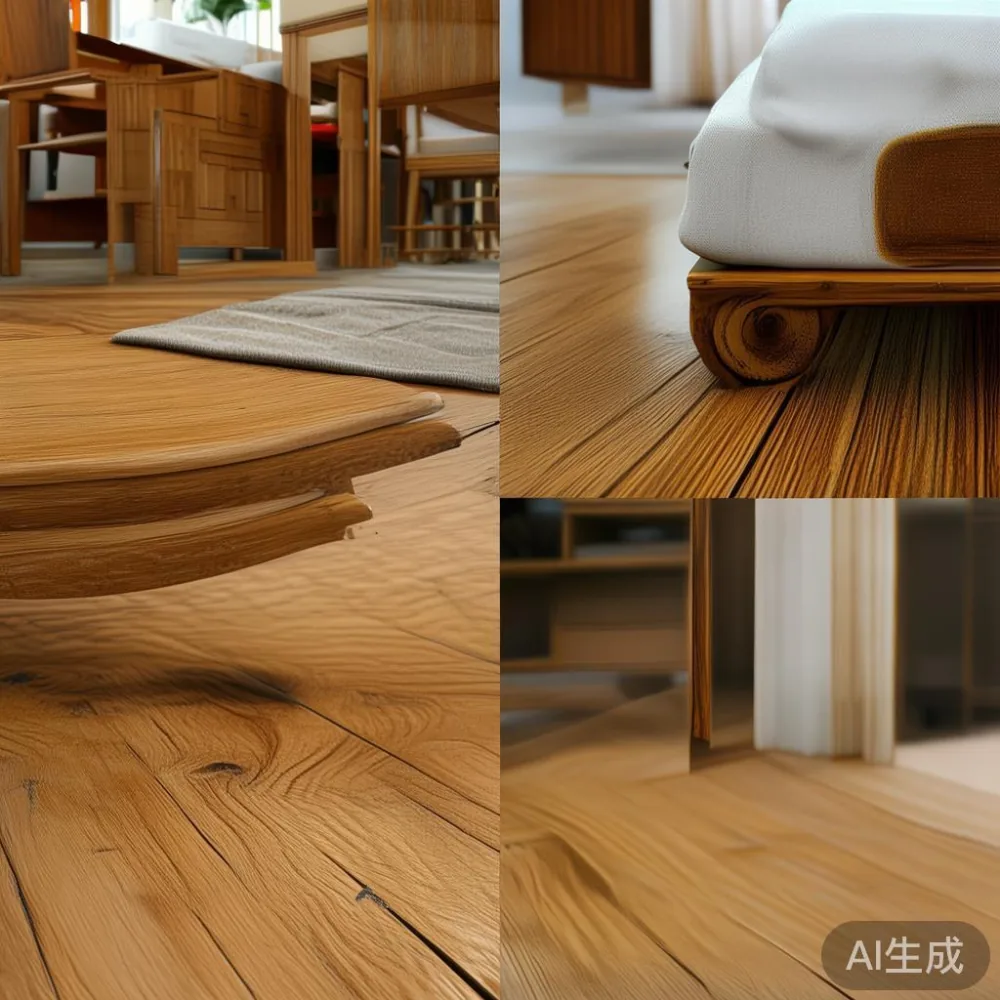
Singapore sits at 70-85% relative humidity for most of the year, with HDB corridor air often stagnant. Veneer panels react first. After 18-24 months in an un-air-conditioned bedroom, the edges of MDF-core veneer furniture begin to swell, especially along the bottom edge of wardrobe doors and the underside of a nightstand where it meets the floor. Solid wood — particularly kiln-dried oak, ash, and bamboo — moves with humidity rather than against it. Bamboo furniture in particular is dimensionally stable because the strands are laminated under high pressure, which is why you see it specified in so many post-modern light luxury condominiums in Punggol and the Greater Southern Waterfront projects. The practical takeaway: in a non-aircon storeroom or a balcony corridor, expect 6-8mm of seasonal movement in solid oak, and expect bubbling or chipping at veneer edges within two monsoon cycles.
What does a 5-year cost ledger actually look like?
Here is a realistic ledger for a 4-room HDB household buying one dining table, one bed frame, and one wardrobe — the three pieces that anchor every Singapore home. Cost progression is what matters, not the day one ticket.
Veneer set, total spend SGD 4,500:
- Year 1 purchase: SGD 4,500
- Year 2 edge-touch-up kit and one wardrobe door realignment: SGD 180
- Year 3 full wardrobe replacement (particleboard swollen beyond repair): SGD 1,800
- Year 5 dining table replaced (laminate peeling at corners): SGD 900
- 5-year total: SGD 7,380, with one bed frame still in service on borrowed time
Solid wood set, total spend SGD 11,500:
- Year 1 purchase: SGD 11,500
- Year 2 oil-and-wax refresh on dining table: SGD 120
- Year 5 light sand and re-oil on bed frame and wardrobe: SGD 350
- 5-year total: SGD 11,970, with all three pieces still in serviceable condition
Bamboo furniture hybrid, total spend SGD 7,800:
- Year 1 purchase — bamboo dining table, bamboo wardrobe, solid ash bed frame: SGD 7,800
- Year 3 one hinge swap (USD-equivalent SGD 40): SGD 40
- Year 5 wipe-down and beeswax pass: SGD 60
- 5-year total: SGD 7,900
The numbers shift once you factor the 9% GST on the full purchase price, plus delivery — typically SGD 80 to SGD 180 per trip in Singapore for furniture above 30 kg, since most pieces require a two-man team and a lorry with tailgate lift. MIDHILL absorbs delivery on orders above USD 350 (roughly SGD 470), which materially changes the comparison if you are buying a complete dining set.
What about the lift and corridor problem specific to HDB flats?
This is the question nobody puts in a brochure. A standard HDB lift door is 90 cm wide and 210 cm tall. The lift car is roughly 110 cm deep by 140 cm wide by 230 cm tall. A solid wood wardrobe panel of 60 cm by 220 cm fits diagonally with 10 cm to spare. A solid wood bed frame at 160 cm by 220 cm does not fit through the lift at all in one piece — it has to be partially disassembled or carried up the staircase landing. In older blocks in Bedok and Tampines, the staircase turns at 90 degrees with a 1.2 m by 1.2 m landing, which rules out anything over 2.1 m in any single dimension.
Veneer flat-pack wins here on logistics, full stop. A 2.4 m wardrobe in flat-pack arrives in three cartons, each under 35 kg, and two movers can carry it up in 25 minutes. Solid wood in the same dimensions arrives as four panels of 50-70 kg each, requiring a four-person team and roughly 90 minutes including staircase time. The labour cost difference is SGD 200-350 per delivery — money that recovers about a quarter of the solid wood premium. The honest assessment, sometimes made by contractors who carry furniture for a living: if your lift is small and your staircase tight, an Italian light luxury mid-century modern style in solid wood may simply not reach your floor. A local craftsman who knows your block's measurements is worth the freight.
How do I care for a side table in humid weather?
Wipe it down once a week with a barely-damp microfibre cloth, run a dehumidifier or air-con to keep the room below 65% RH, and apply a hard wax oil every six months — that is the entire routine, and it works for solid oak, ash, and bamboo furniture alike.
The expanded version: humidity is the single variable that determines whether a side table reaches year five looking new or year three looking tired. In Singapore, that means controlling the microclimate around the piece rather than the piece itself. Keep it 15 cm away from exterior walls, which condense moisture in the early morning hours. Use coasters under cold water tumblers, because condensation rings on lacquered veneer are permanent and on solid oak they sand out in 15 minutes with 320-grit paper. Rotate the piece 180 degrees twice a year so any warping, if it occurs, develops evenly and the piece does not lean toward the wall. For bamboo furniture specifically, avoid prolonged direct sunlight through a west-facing window — the strand structure is stable but the colour will amber quickly under UV, which most owners consider a feature rather than a flaw. For a marble table, the same rules apply to the base, and the stone top needs its own sealant refresh every 12-18 months.
Is light luxury furniture worth the premium in a 4-room HDB?
French light luxury and American light luxury both lean on solid wood as a non-negotiable material signal — you will rarely see either category specified in MDF. Post-modern light luxury, which has become the dominant aesthetic in new Punggol and Tengah BTOs, blends solid wood with marble accents and brass hardware, and is honestly the easiest style to execute well on a controlled budget because the silhouettes are simpler than full classical French curves. In a 90 sqm HDB, a single solid wood hero piece — usually the dining table — does the work of three veneer pieces visually. The bed frame and nightstand can stay in a complementary veneer or bamboo furniture range without breaking the room's material story.
MIDHILL's experience shipping to 15+ countries, including the UAE where the Italian light luxury mid-century modern style is specified in a lot of new Dubai Hills villas, suggests the same pattern holds there as in Singapore: owners keep solid wood three to four times longer than veneer before replacing. The 10-year structural warranty MIDHILL offers is a confidence statement, but it also reflects the actual fatigue life of kiln-dried hardwood versus the swelling life of MDF-core laminate. Lifetime refinishing, meanwhile, is the line item that flips the ledger — a sand and re-oil at year seven for roughly SGD 280 to SGD 450 extends the life of a solid wood dining table to 15+ years, which is the math veneer simply cannot match.
What about resale value, replacement risk, and the 14-day return question?
Veneer furniture has effectively no resale market in Singapore. A five-year-old MDF wardrobe is worth the cost of disposal, which is SGD 60 to SGD 120 if you hire a MoveMove or Lalamovev. Alternatively, a five-year-old solid wood dining table in good condition resells for 40-55% of original on Carousell and Facebook Marketplace, particularly if it is oak, ash, or walnut. The resale gain on a SGD 2800 table is roughly SGD 1200. Bamboo furniture resells at 30-45% because the category is less recognised, although that is changing quickly as more designers specify it.
Returns matter because they are the only safety net against the lift-and-corridor problem above. MIDHILL's 14-day return window is meaningful here because it gives you time to assemble the piece, measure your actual room, and decide whether the proportions work. Many Singapore customers use the first week to live with the piece before committing — particularly for a marble table, where veining variation between slabs can surprise even an experienced buyer. Read the warranty fine print on any brand before buying: structural warranties under five years are in effect meaningless for solid wood because the failure modes show up later; warranties under two years on veneer are usually voided by humidity damage exclusions.
So which should you actually buy?
My honest reading after the Tampines afternoon and at least a hundred customer conversations in our showroom: for pieces that anchor the room — the dining table, the bed frame, the wardrobe doors — solid wood or solid bamboo furniture pays for itself in Bedok and Punggol humidity. For pieces that are visually secondary — a nightstand, a console, a bookshelf inside an air-conditioned study — veneer or bamboo furniture is a reasonable compromise that frees budget for one or two hero pieces.
Run your own 5-year ledger before you swipe the card. Price the piece, add 9% GST, add delivery unless it is waived, add one maintenance event per year, and divide by the realistic service life. The number that matters is the annual cost, not the day-one ticket. For most Singapore households, the annual cost of a well-chosen solid wood dining table works out to SGD 180-260 per year across a 15-year life. The annual cost of a comparable veneer table, replaced once in that window, works out to SGD 400-550 per year. The math is not close, once you actually run it.
If you are starting from an empty BTO in Punggol or a resale flat in Bedok, the practical path is to anchor one room — usually the living-dining area — with a solid wood dining table and a solid wood or bamboo furniture coffee table, then build out bedrooms and storage with a mix of solid and bamboo depending on budget. The worst outcome is not buying veneer. The worst outcome is buying all veneer, realising the pieces in five years, and starting the ledger again from zero. The best outcome is a room you stop thinking about because the furniture simply does its job, in any weather Singapore throws at it, for the next fifteen years.