How to Match Bamboo Furniture to a Warm Minimal Interior (Without Making Your HDB Feel Cold or Empty)
I moved into a 4-room BTO in Punggol last March, and the first thing I noticed after the floor tiles went down was how flat the space felt. Beige walls, white ceiling, two ceiling fans, a long corridor running from the front door past the common bathroom, the kitchen, and finally into the bedrooms. The light was decent — afternoon sun streams past the HDB block opposite — but the rooms themselves read like a brochure. My solution, after a lot of trial and error, was bamboo furniture. Not a lot of it. Just enough.
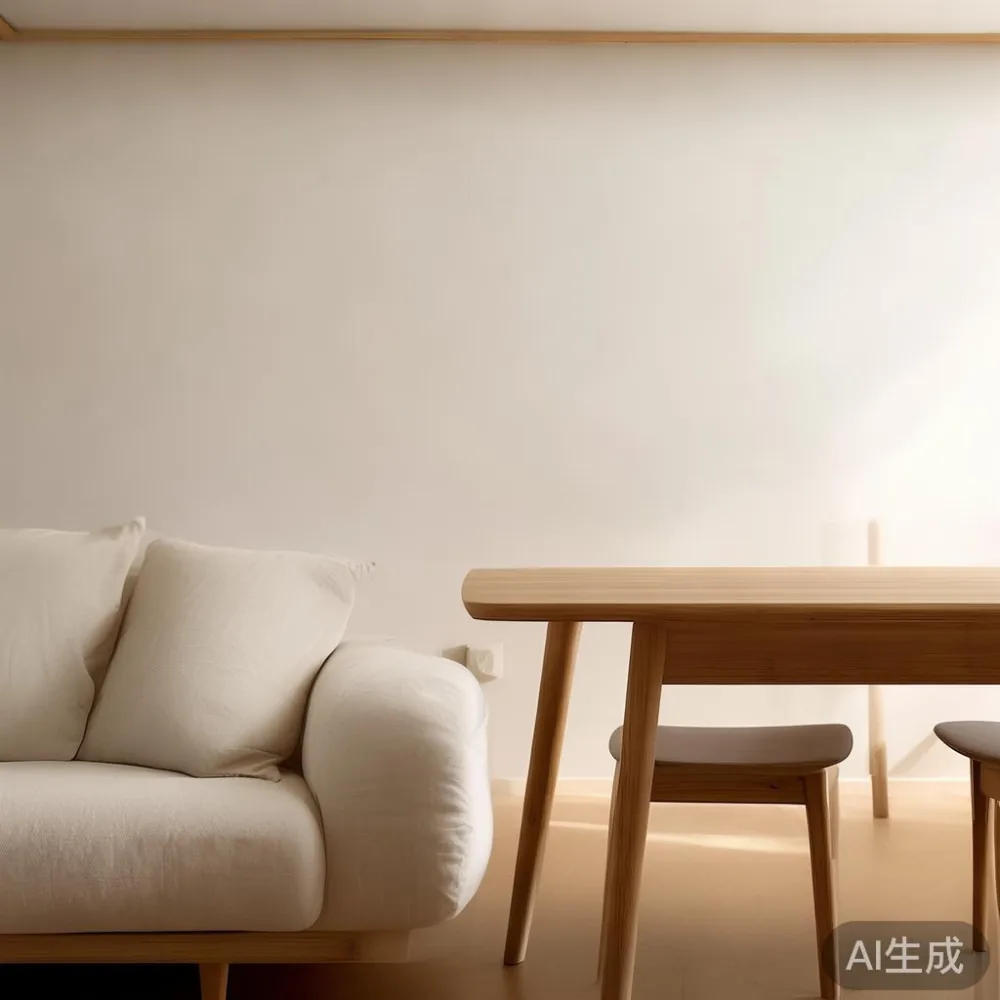
If you live in a Singapore HDB flat or a 99-year condo in Tampines or Bedok, you already know the geometry of the problem. Compact rooms of about 9 to 12 sqm for the master bedroom, narrow corridor widths of roughly 1.1 m, lifts that dictate a packed sofa dimension of about 2 m, and very few original architectural details to anchor the room. You need furniture that adds warmth without bulk, that fills proportion correctly, and that will still look right after three years of afternoon sun and weekly kopi spills.
This guide is written for that specific situation. Every measurement, every price band, every delivery detail comes from what actually works in Singapore homes, including GST, lift access, and the realities of corridor moving.
Why Warm Minimal Works So Well in a Compact Singapore Home
Warm minimalism is not the same as cold Scandinavian minimalism. Cold minimalism runs on white oak, pale grey boucle, brushed steel. It looks crisp in a Jurong East penthouse with 3.6 m ceilings but it can read sterile in a HDB bedroom where the window is 1.5 m wide and the afternoon light is filtered through tinted glass. Warm minimalism keeps the same restrained palette — few pieces, clean lines, generous negative space — but swaps pale for honey, ash, and tan. It is the Japanese idea of ma (negative space) executed with the colour temperature of a French countryside kitchen.
The visual lift comes from three sources. First, light wood grain, which catches and refracts daylight so a 10 sqm room feels closer to 12 sqm. Second, tactile fabrics — washed linen, cotton velvet, brushed cotton — that soften the geometry of a rectangular bedroom. Third, one or two pieces with weight: a solid wood dining table 1.6 m long, a marble side table, a substantial bed frame. In Singapore's humid climate, that third point matters. A room full of slim pieces feels restless; one grounded piece gives the eye somewhere to rest.
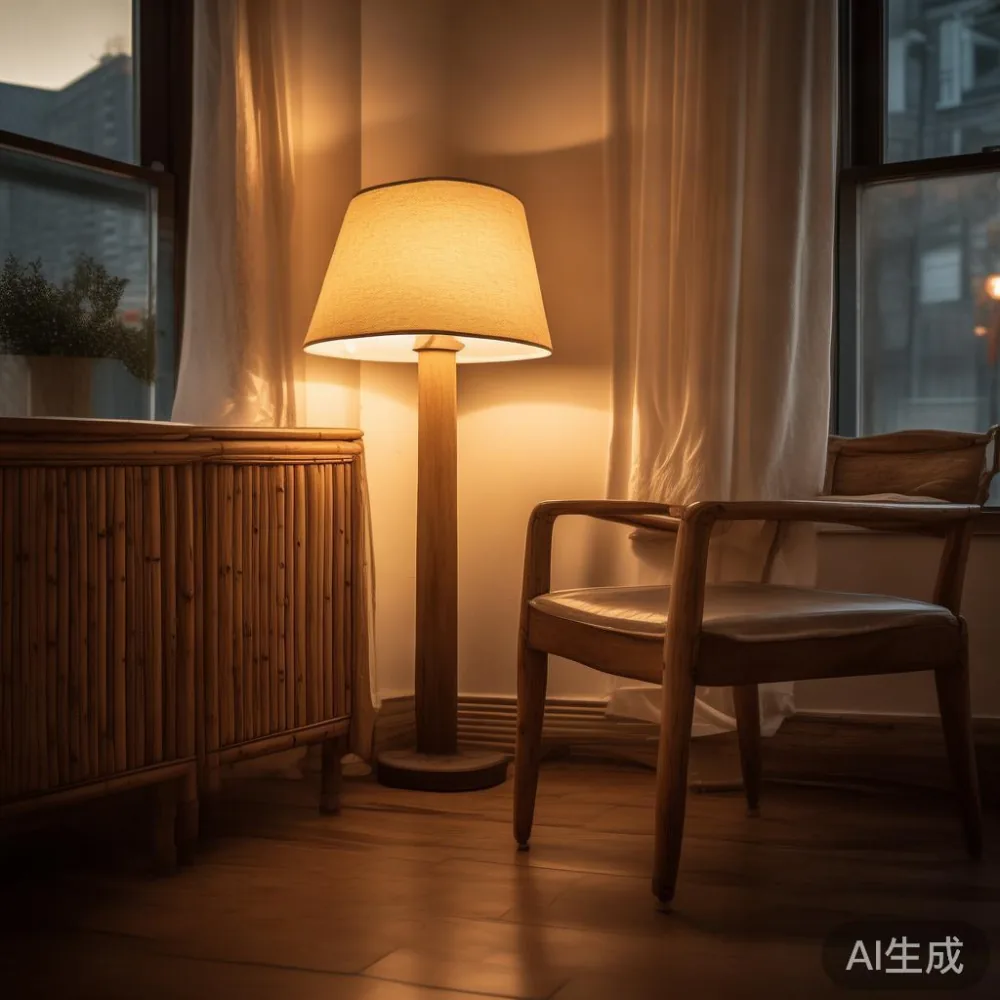
For reference, a typical MIDHILL solid wood bed frame in king size runs about 1.8 m x 2 m, weighs 55 to 70 kg depending on the headboard, and uses kiln-dried ash or rubberwood with mortise-and-tenon joinery. The kind of piece that disappears visually but feels present when you sit on it.
What Exactly Counts as Bamboo Furniture?
Bamboo furniture is a category that Singapore shoppers often confuse with rattan or with "wood-look" laminate. Real bamboo furniture is made from the bamboo culm, the hollow pole, which is either laminated into thick boards under high pressure (called strand-woven bamboo) or sliced into veneers and glued onto an engineered core. The result has a tighter, more linear grain than oak or ash, and a colour that sits between honey and amber when oil-finished.
The advantages for HDB living are concrete:
- Weight: A bamboo dining chair weighs about 3.2 to 3.8 kg, roughly 35% lighter than an equivalent solid oak chair. When the lift breaks down and you have to carry it up four flights via the emergency staircase, you notice.
- Moisture behaviour: Strand-woven bamboo has a dimensional stability of about 0.05% movement across humidity changes, compared with 0.20% for unsealed rubberwood. In a Singapore bedroom that swings between 24°C at 2 am with the fan on and 30°C at 4 pm with the windows closed, that stability matters for joints and panels.
- Price: Bamboo furniture usually lands 15 to 30% below comparable solid teak or solid ash pieces. A bamboo dining table that seats six starts at roughly S$1,180 in Singapore retail, against S$1,650 for the same shape in solid ash.
- Finishing: Bamboo takes oil, wax, and water-based lacquer cleanly. You can refinish a bamboo nightstand in a Tampines condo in about 90 minutes with one tin of hard wax oil, a sanding block, and a lint-free cloth.
There is one caution. Bamboo furniture with a paper-thin laminate skin over MDF core will peel at the edges within 18 months in a non-air-conditioned bedroom. Look for pieces labelled solid bamboo or strand-woven bamboo, and ask the seller for the density figure. Furniture-grade strand-woven bamboo typically reads between 1,100 and 1,200 kg/m³. Anything below 700 kg/m³ is decorative.
Is American Country Nightstand Furniture Worth It?
Yes — if your warm minimal interior includes a king or queen bed and you want one piece of furniture that does the heavy lifting visually, an American country style nightstand in solid wood is one of the strongest choices you can make, because the proportions are already calibrated for the bedside role and the hardware reads warm rather than cold.
American country nightstand furniture traditionally uses solid pine or solid ash with a slightly distressed or hand-planed surface, shaker-style or simple turned legs, and drawer pulls in either antique brass or oil-rubbed bronze. Translated into a HDB setting, you typically want a height of about 55 to 62 cm (so it lines up with the top of a 55 cm mattress), a depth of 38 to 42 cm (so it does not protrude past the side of a standard queen bed), and one drawer plus one open shelf. The drawer holds books, charging cables, and a tablet; the open shelf takes a woven basket for the visual texture.
The price band in Singapore for a solid ash American country nightstand from a regional workshop runs about S$420 to S$650 per piece, with delivery around S$30 if the order crosses S$350. For two pieces, a typical couple spends S$880 to S$1,350 all-in, GST included.
What you are paying for, beyond the wood, is joinery. A drawer that rides on wooden runners rather than metal ball-bearing slides feels quieter and tends to outlast the metal slides in humid conditions. A side panel glued with hide glue can be re-glued after 15 years; one glued with PVA cannot. These are small details that decide whether the nightstand becomes a fixture or a replacement.
One thing to skip: sliding doors. HDB bedrooms already have limited airflow. A nightstand with a hinged door or open shelf breathes; one with a sliding door traps moisture and smells faintly of wood after a wet afternoon. Open shelf is the right call for Singapore.
Building the Warm Minimal Bedroom Around a Solid Wood Bed Frame
The bed frame is the single most expensive furniture decision in a HDB bedroom, and the one that anchors every other piece. For warm minimal, the spec that works in 9 to 12 sqm rooms is a low-profile platform bed frame with a headboard no taller than 95 cm, a clearance under the side rail of about 18 cm (so robot vacuums can pass), and slats at 6 to 8 cm spacing for mattress breathance.
In the Singapore retail market, a solid wood bed frame in queen size lands between S$1,450 and S$2,200 for kiln-dried ash, and S$2,200 to S$3,400 for kiln-dried teak. A bamboo bed frame in king size runs S$1,180 to S$1,650. My own setup — a queen ash platform bed with a 90 cm headboard — cost S$1,680, with free delivery because the order cleared S$350. The base weight is 48 kg, which two people can carry up a HDB corridor without scraping the walls if you tilt it 30° and lead with the foot end.
The headboard material matters more than people realise. A French provincial headboard for rental properties — that is, a headboard in the French provincial style sized and priced for the rental market rather than the landed-property market — is built around a 95 to 105 cm silhouette, gently curved at the crown, usually upholstered in a neutral linen or cotton velvet. In a HDB bedroom, it adds about 4 to 5 cm of visual depth to the wall and reads as one of the few decorative elements in the room. It works because French provincial is, at its core, warm minimalism with ornament: restrained curves, no carvings, just proportion and fabric.
Two things to verify before you commit:
- Slat centres. Measure the gap between slats. If you sleep on a pocket-sprung mattress, slats wider than 8 cm apart will cause the springs to settle unevenly over 18 months.
- Joinery at the side rail. Bolted side rails are fine for rental tenants who expect to move every two to three years. A mortise-and-tenon side rail is better if you plan to keep the frame through 10 years and two children.
Living Room: Solid Wood Sofa, Marble Table, and the Light-Luxury Frame
Living rooms are where most warm minimal interiors drift off course. People buy a sleek pale-grey sofa, add a marble coffee table, two slim floor lamps, and end up with a room that is technically minimalist but emotionally cold. The fix is the light-luxury layer.
Light luxury as a style comes in three regional accents that matter for furniture buyers in Singapore:
- French light luxury (léger luxe): restrained curves, cabriole legs shortened by 30 to 40%, brushed brass hardware, marble tops kept under 12 mm so the silhouette stays slim. A French light luxury solid wood sofa in a 2.2 m three-seater runs about S$3,400 to S$4,800 in Singapore retail.
- American light luxury: deeper seats (60 to 65 cm), roll arms squared off at the top, tufted back panels kept shallow (2 cm instead of the traditional 5 cm), performance fabric in oat or fawn. The American cousin of the French piece, with about 10 to 15% more seat depth.
- Post-modern light luxury: geometric silhouettes, occasional asymmetry, a single marble side table with a hexagonal or pentagonal top, brass frame. The accent piece category. A post-modern marble side table in 45 cm height runs S$480 to S$720.
The composition that works in a Tampines or Bedok condo living room of about 18 to 22 sqm is this: one solid wood sofa (2 m to 2.2 m wide for a three-seater, to clear the corridor and the lift), one marble coffee table at 110 cm x 60 cm, one slim floor lamp in brushed brass at 150 cm, one accent chair in washed linen, and nothing else. Total spend ranges from S$4,800 to S$7,200 depending on fabric grade and marble origin.
For sofas specifically, the HDB constraint is lift and corridor. The internal lift car in most Singapore HDB blocks measures 1.1 m wide x 1.4 m deep x 2.1 m tall, and the corridor access at each floor turns through a 1.5 m radius. A 2.4 m sofa will not fit. A 2.2 m sofa will fit if the back is removable. Confirm the back is detachable before you pay a deposit, because a non-removable back is the most common reason for a failed delivery in Punggol and Sengkang.
Wardrobes, Dining Tables, and the Working Pieces
The wardrobe is the largest piece of furniture in any HDB bedroom, and the most commonly over-built. A 3-door sliding wardrobe for a 12 sqm bedroom typically measures 240 cm wide x 220 cm high x 58 cm deep. The depth question is non-negotiable: less than 55 cm and you cannot hang shirts on standard hangers without the door brushing the fabric. More than 62 cm and the wardrobe starts to crowd the corridor space outside the bedroom door.
Bamboo wardrobes in this size range weigh about 78 to 92 kg, against 110 to 130 kg for a comparable solid teak wardrobe. For a rental tenant in a Bedok condo who expects to disassemble the wardrobe at the end of the tenancy, that weight difference is the difference between a two-person and a three-person move.
Dining tables for the warm minimal interior sit between S$1,180 (bamboo, 1.4 m, four-seater) and S$2,800 (solid ash, 1.8 m, six-seater). The 1.6 m table is the sweet spot for a Singapore four-person household: it seats six at a squeeze and four comfortably, and it fits through a standard HDB kitchen door of about 76 cm width if the legs detach.
Marble dining tables are a separate question. A 1.4 m marble dining table with an MDF core and a marble veneer (about 12 to 15 mm thick) starts around S$2,400. A solid marble top of 25 to 30 mm on a solid wood base starts around S$4,800 and weighs 95 to 130 kg, which is two-person carry at best and three-person carry realistically. For HDB living, the veneered marble is the practical choice.
How to Get the Colours Right Without Painting the Walls
The fastest way to convert a cold minimal interior into a warm minimal one is to leave the walls alone and change the furniture colour palette. Most HDB flats ship with a neutral off-white or warm-white wall, and that already does 70% of the warm colour work for you.
The palette that reads warm minimal in Singapore afternoon light:
- Walls: leave as the developer default (usually 08YY 73/028 or similar warm white).
- Bed frame and wardrobe: ash, light bamboo, or honey-toned rubberwood. Avoid orange-stained mahogany and avoid grey-stained oak.
- Fabric: oat, fawn, clay, sage, stone. Skip pure white, which reads cold.
- Metal hardware: brushed brass or oil-rubbed bronze. Skip polished chrome and skip matte black.
- Marble: cream or warm grey with soft veining. Avoid blue-grey or pure white Carrara, which push the room cold.
My own bedroom after the swap: same beige walls, same white ceiling, same window. I added a queen ash bed frame at S$1,680, two American country nightstands at S$520 each, a bamboo wardrobe at S$2,180, and washed linen bedding in oat. Total about S$4,900 for the bedroom, GST included. The room reads warmer, calmer, and about 15% larger than it did with the flat-pack pale-grey set I had before.
Maintenance, Warranty, and the Long Game
Furniture in Singapore takes more abuse than furniture in most other markets. Humidity averages 78 to 82% year-round, afternoon UV through west-facing windows is intense, and the daily wipe-down with a damp cloth introduces small amounts of moisture to the joints. Buying for the long game means paying attention to warranty terms and refinishing options.
For solid wood pieces, a 10-year structural warranty is the industry standard among regional manufacturers who kiln-dry their own timber. Lifetime refinishing, meaning the manufacturer will sand and re-oil the piece at their workshop for a service fee (typically S$120 to S$280 per piece depending on size), is offered by a small number of makers. MIDHILL is one of them. For bamboo furniture, the same 10-year structural coverage and lifetime refinishing policy applies in most cases, because strand-woven bamboo behaves like a dense hardwood once finished.
For routine care, a microfibre cloth once a week, a damp (not wet) cloth once a month, and a re-oil of visible surfaces every 18 to 24 months is enough. Avoid silicone-based polishes, which build up a waxy film that attracts dust in Singapore's humidity.
Delivery and returns also matter in Singapore, where most shoppers want to see the piece in person before committing. Look for retailers offering free delivery above a threshold such as S$350, a 14-day return window for stock items, and white-glove delivery that includes carrying up to the unit and removal of packaging. The realistic timeline for a custom solid wood piece is 21 to 35 working days from order, and 5 to 10 working days for a stock piece.
Putting It All Together for Your Singapore Home
Start with the bed frame. It is the largest, the most expensive, and the one piece that sets the proportion of everything else. From there, the nightstands, the wardrobe, the sofa, the dining table, and the marble accent pieces fall into a clearer pattern. Keep the palette to two wood tones, two fabric tones, and one metal finish. Resist the urge to fill corners. A warm minimal interior with one empty corner reads as designed; one filled with a slim floor lamp reads as cluttered.
If you want a starting point that checks every box above, the MIDHILL range of solid wood bed frames, bamboo wardrobes, and American country nightstand pieces covers the warm minimal palette end to end, with delivery to all Singapore addresses and the warranty terms that matter for the long term. The pieces themselves are made in Foshan, shipped flat-packed or fully assembled depending on access, and arrive with care instructions specific to Singapore's humidity.
Your home does not need more furniture. It needs the right furniture, in the right wood, with the right finish, in the right quantity. That is the whole game.