Solid Wood vs Veneer Over 5 Years: A Singapore Cost Breakdown
A customer in Tampines asked me last month why her six-year-old dining table looked tired while her mother's thirty-year-old teak piece still looked alive. The answer sat in two words: solid wood versus veneer. After visiting her HDB flat and measuring the corridor width (about 1.2 m, just enough for a 1.4 m sideboard delivery), I sat down to write the comparison nobody on YouTube does properly. Five years of real Singapore ownership, real SGD figures, and real trade-offs on a bed frame, a dining table, a wardrobe, and a marble-accented nightstand. If you are weighing a solid wood sofa against a veneer version for your BTO or resale flat, this should save you a few thousand dollars and at least one regret.
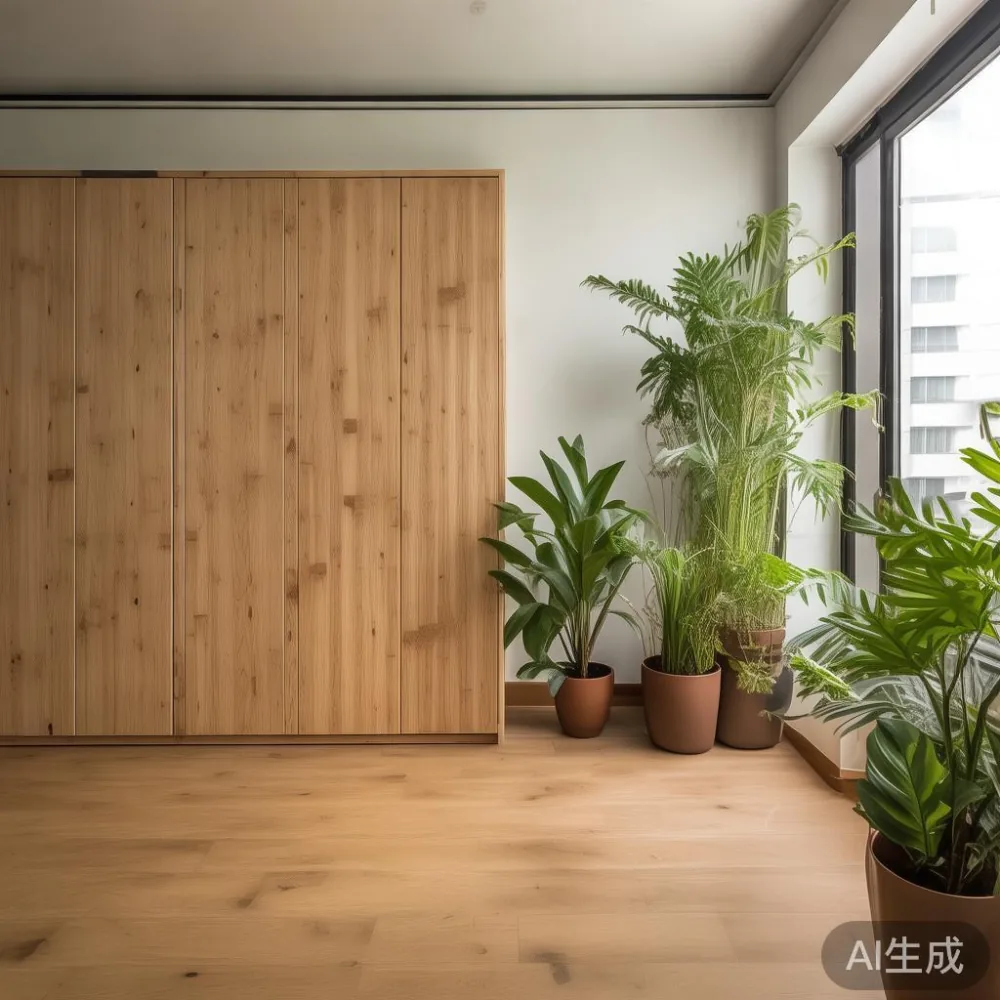
What does "solid wood" actually mean in a Singapore furniture shop?
Solid wood furniture is built from single pieces of timber — oak, ash, walnut, sometimes rubberwood for budget lines. Bamboo furniture, by the way, is technically a grass, not a wood, but in the Singapore market it is shelved right next to solid wood bedroom sets and often chosen for the same reason: density, moisture tolerance, and a clean post-modern light luxury silhouette. A genuine solid wood bed frame at MIDHILL uses mortise-and-tenon or dovetail joinery, not staples. The panels you see on a wardrobe are the same material inside and out, which means a scratched edge still looks like wood — it just looks like older wood.
Veneer furniture is a different animal. A thin slice of real hardwood (often 0.5 to 0.8 mm) is glued onto engineered boards such as MDF, particleboard, or plywood. From the front, the grain looks convincing. From the side, after one or two chips, you see the grey core. Most Singapore condos at 1,200 sq ft or larger hold perhaps four to six major pieces of furniture: a sofa, a dining table, a bed frame, two wardrobes, maybe a console. Each one is a five-year decision, so the material choice matters more than the showroom lighting suggests.
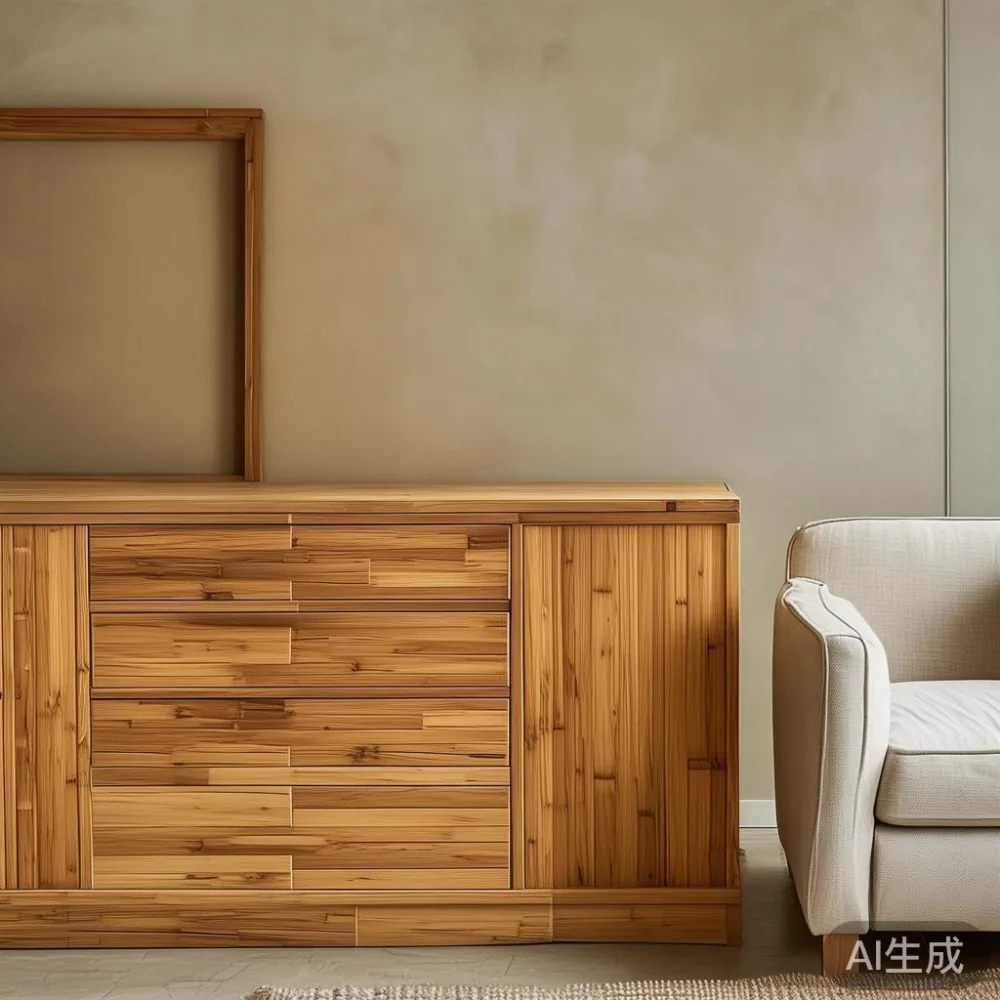
Is Post-modern sectional sofa furniture worth it?
Yes — but only when the frame inside the cushions is solid wood, not when the visible "wood" leg is a 6 mm veneer wrapped over MDF. Post-modern sectional sofa furniture carries its price on the cushioning, the module system, and the silhouette; the frame is the part most buyers forget to check. In Singapore, a Post-modern sectional sofa with a kiln-dried solid ash frame typically retails between SGD 2,800 and SGD 4,200 for a three-seater configuration, while a veneer-framed equivalent lands at SGD 1,800 to SGD 2,600. That SGD 1,000 to SGD 1,600 gap is the whole debate in miniature.
I tested a Post-modern sectional sofa at MIDHILL's showroom last April — sat on it for thirty minutes, lifted the rear cushion cover, and ran a fingernail along the inner frame rail. The grain was continuous; the surface was dry and a little resinous, not papery. The same test on a competitor's veneer sample lifted at the edge like sellotape. Over five years, that single material choice tends to be the difference between a sofa you re-cover in Year 4 and a sofa you hand down in Year 12.
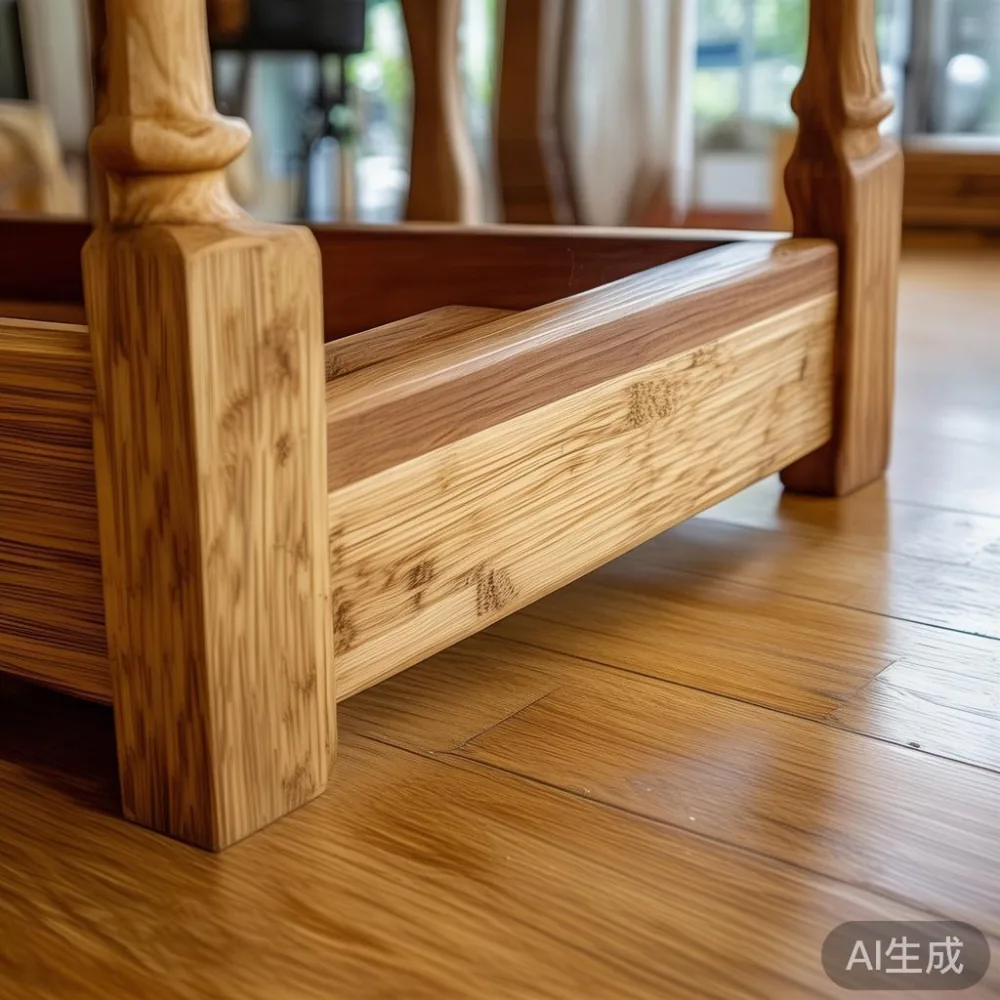
How do five-year costs actually stack up in SGD?
Let's run the numbers a Singaporean buyer would actually pay, assuming you furnish a 4-room HDB in Bedok and replace one item every five years. Prices include 9% GST and standard delivery above the US$350 free-shipping threshold (around SGD 480).
Dining table (seats 6): Solid oak, 1.8 m, kiln-dried, SGD 1,900 purchase. Veneer over MDF, same dimensions, SGD 950. Refinishing (sanding, re-oiling) on the solid table at Year 3: SGD 220. Veneer edge repair after the lift team knocks the corner during Move-in Day: SGD 180 — and it never looks the same again. Five-year total: solid SGD 2,120, veneer SGD 1,130. The delta is SGD 990.
Bed frame (queen): A solid wood bed frame with slats runs SGD 1,400 to SGD 2,200 depending on timber. A popular American master bed japan inspired headboard with veneer panels runs SGD 750 to SGD 1,100. Solid bed frames rarely need repair inside ten years; veneer headboards chip where phones and books hit them nightly. Five-year total: solid SGD 1,800 with one set of replacement slats (SGD 80), veneer SGD 850 plus one re-veneering at SGD 280. Delta SGD 490.
Wardrobe (2.4 m sliding, 3 doors): This is where corridor widths in Punggol BTOs (often 1.1 m) force flat-pack. Solid wardrobe SGD 2,400, delivered partially assembled. Veneer/MDF SGD 1,100. The hidden cost: hardware. Hinges and runners carry about 60 kg of door weight; on a 90 kg solid door they wear out sooner than on a 50 kg veneer door. Budget SGD 120 for hinge replacement on solid at Year 4, SGD 40 for veneer. Five-year total: solid SGD 2,520, veneer SGD 1,140. Delta SGD 1,380 — the largest gap in the room.
Solid wood sofa (3-seater with chaise, French light luxury line): Solid ash frame, linen-blend upholstery, SGD 2,600. Veneer-framed equivalent, SGD 1,500. Reupholstery on solid at Year 5: SGD 600. Veneer frame typically cannot be reupholstered cleanly because the staples pull through the MDF. Five-year total: solid SGD 3,200, veneer SGD 1,500 if you only repair, SGD 2,200 if you replace. Delta SGD 1,000 to SGD 1,700.
Nightstand with marble inlay and a bamboo furniture accent shelf: Solid SGD 520, veneer SGD 240. Marble is sealed and stable on either frame; it is the substrate that fails. Five-year total: solid SGD 520, veneer SGD 320 after one repair. Delta SGD 200.
Add it up for the five core pieces. Veneer path: roughly SGD 4,940 over five years, assuming one wardrobe hinge tune and one nightstand chip fix. Solid path: SGD 10,160 over the same period, including one re-cover on the sofa, one set of bed slats, one wardrobe hinge replacement, and a dining table refinish. The headline gap is SGD 5,220 — about SGD 1,044 a year, or SGD 87 a month, for furniture that still works at the ten-year mark rather than the five-year mark.
Why does a Bedok corridor width change the math?
Singapore logistics quietly punish heavy furniture. HDB lift doors are usually 0.9 m wide, and the cab depth is around 1.5 m. A flat-pack veneer wardrobe in 2.4 m panels fits that footprint easily. A fully assembled solid wardrobe, which can weigh 110 to 140 kg, often will not. Movers in Tampines quote SGD 80 to SGD 160 per trip depending on floor; a second trip because the wardrobe would not fit in the lift is not a hypothetical — my colleague in the Bedok branch dealt with two of those calls in March alone. That is another SGD 160 not on the price tag.
Foshan makers like MIDHILL have responded by designing corridor-friendly widths (max 0.95 m for assembled wardrobes) and by offering partial-knockdown solid ranges that re-join with hidden cam locks. The frames stay solid wood; the panel-by-panel delivery fits a 1.1 m corridor. If you measure before you order — and you absolutely should — the lift-size penalty largely disappears.
What does "light luxury" actually buy you?
French light luxury (sometimes called French modern light luxury) leans on pale oak, slim brass handles, and slightly curved silhouettes. American light luxury tends to mean lower profiles, bigger cushions, and darker walnut. Post-modern light luxury is the harder category to pin down — it borrows geometry from the 1970s, neutral palettes from Scandinavia, and brass accents from both. In a Punggol EC or a Bishan condo at 1,300 sq ft, the styling gap between a SGD 950 veneer dining table and a SGD 1,900 solid one is actually smaller than the price gap suggests, because the veneer version often mimics the solid silhouette well. The real gap appears at Year 3, when sunlight from the east-facing window fades the printed veneer unevenly while the solid piece simply darkens.
For a marble table in an open-concept living room — say, a 1.4 m sintered-stone top on a solid ash base at SGD 1,400 versus a printed marble-look laminate on a veneer base at SGD 680 — the decision turns on one question: will you redecorate before Year 5? If yes, laminate pays off. If no, the solid base holds the next stone top you buy, and the SGD 720 you saved evaporates anyway.
Can veneer ever be the smarter five-year choice?
Honestly, yes — in three specific cases. First, rental tenants who need the security deposit back in two years and cannot drill into walls for a built-in. Second, study desks or TV consoles in kid's rooms, where replacement every four to five years is the plan. Third, pieces where weight matters — a lift-up storage bed in a maisonette, for instance, where adding 35 kg of solid timber is a daily annoyance. In all three cases the comparison flips: veneer SGD 900 saved over five years is a real number, and the aesthetic life of laminate has improved enough that the loss is mostly theoretical.
Outside those three cases, the structural warranty that comes with a properly kiln-dried solid wood piece — ten years on the frames at MIDHILL, lifetime refinishing on dining tables and wardrobes — is the part that compounds. A veneer warranty covers the surface, not the substrate. Once moisture finds the MDF core in Singapore's 80% humidity mornings, the warranty does little.
What should you check before signing for either?
Run this quick audit before you pay the 9% GST and the delivery fee. Ask for the kiln-dried certificate on any solid oak, ash, or walnut. Run a fingernail on an unfinished edge — solid will dent cleanly and not flake. Ask whether the wardrobe back panel is 18 mm solid or 9 mm MDF; the difference is 4 kg per panel and a lot of sag over a decade. On a Post-modern sectional sofa, lift the rear cushion cover and inspect the frame, because that is the area a seller's photo will never show. For a dining table, ask whether the leaves are solid or veneered over a plywood core; many mid-range tables mix the two and only disclose it on the spec sheet.
Two more Singapore-specific notes. Ask whether the seller ships fully assembled or knock-down — for a 4-room HDB in Punggol with a 1.2 m lift door, a 1.8 m assembled solid table will not fit, and that is a SGD 180 redo on your delivery slot. And ask about after-sales: lifetime refinishing on dining tables is rare; ten-year structural warranties are rarer still. When a Foshan exporter like MIDHILL stands behind frames for a decade and refinishes surfaces for life, the cost spreadsheet reads differently than the showroom price tag suggests.
The Tampines customer I mentioned at the start bought a solid oak dining table two weeks after our conversation. She chose a 1.6 m version that fits her 1.1 m lift, a refinishing plan at Year 4, and a wardrobe on the knock-down solid line. Her five-year cost will land around SGD 6,800 instead of SGD 4,200 on full veneer. She told me she is okay with the premium because she does not want her daughter to ask the same question in 2031.