Caring for Lacquered Bamboo Furniture in a Tropical Climate
I learned the hard way last March, when a humid spell rolled through Tampines and my own bedroom set developed a faint, cloudy bloom along the wardrobe doors. I had assumed lacquer meant "set it and forget it." It does not. In a Singapore home, where relative humidity holds at 75–85% for most of the year and afternoon thunderstorms push moisture readings past 90%, lacquered bamboo furniture asks for a small, steady routine rather than the occasional rescue mission. This guide pulls together what works on the ground in HDB flats, condos in Punggol, and the occasional landed terrace in Bukit Timah — places where air-conditioning cycles, corridor humidity, and GST 9%-aware budgets all shape the way you actually care for your pieces.

Why does lacquer behave differently in Singapore's climate?
Lacquer is a cured film, not a solid block of wood. When the air around it holds a lot of water — and a Tampines three-room on the 9th floor can sit at 78% RH on a still afternoon — the film absorbs a little of that moisture, expands microscopically, and then releases it when the air-conditioner cuts in at night. That slow, daily expansion is what eventually clouds the finish, dulls the sheen, and, in the worst patches near a kitchen or bathroom door, lifts the lacquer at the edges of a solid wood dining table. Bamboo, used in lighter bamboo furniture pieces from dining chairs to nightstands, behaves much like maple or beech: dense, dimensionally jumpy, and quick to telegraph any neglect.
Two local factors make this worse. First, the air itself: the National Environment Agency's monthly climate readings show Singapore's mean monthly relative humidity never drops below 73%, even in February. Second, the way we move air. A ceiling fan pointed straight at a lacquered headboard for eight hours a night dries one side faster than the other, and that asymmetry shows up as a tide line within a year.
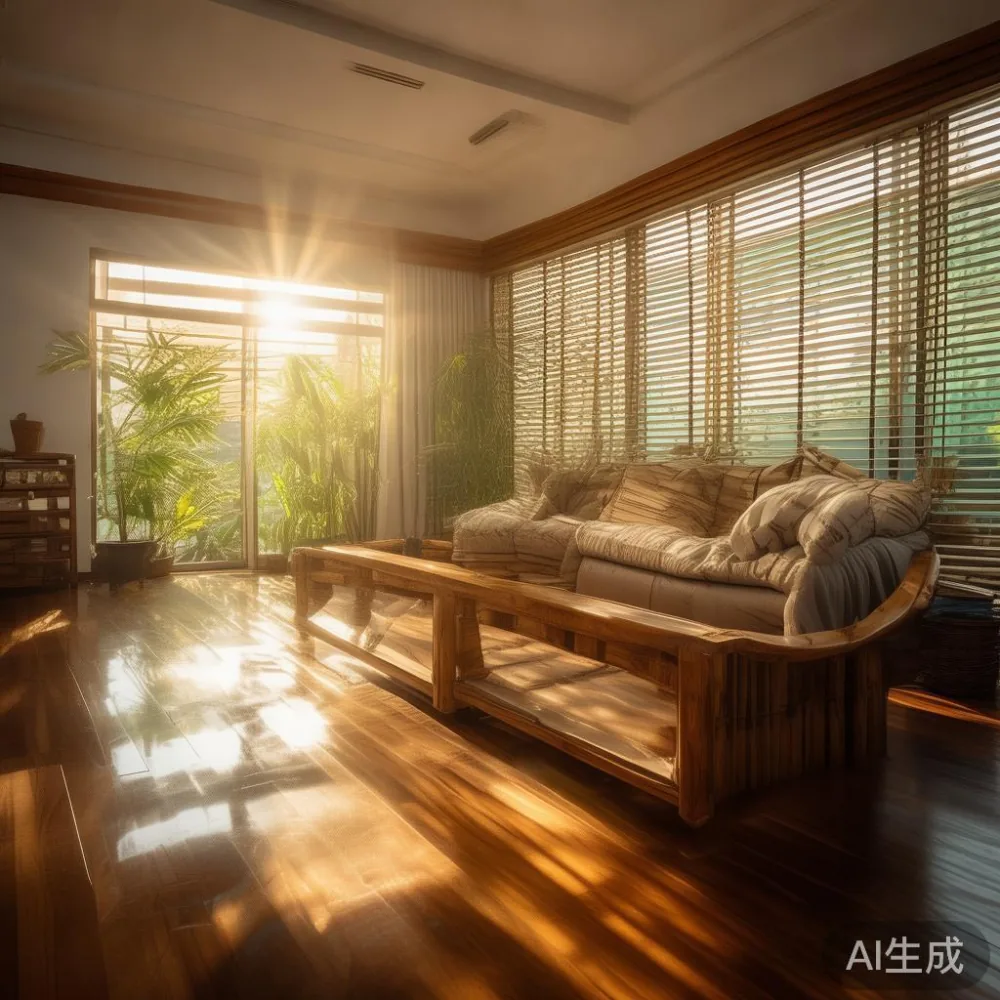
What daily habits actually protect a lacquered finish?
The cheapest insurance is a 30-second habit loop. Every morning, wipe the surface with a dry microfiber cloth (around SGD 4 for a four-pack at any neighbourhood FairPrice). Every evening, run the air-conditioner or a dehumidifier long enough to pull the room under 60% RH — most affordable 12-litre dehumidifiers in Singapore retail between SGD 169 and SGD 240. That single humidity target is more useful than any branded polish. Aim for 55–60% in the day, 50–55% at night, and the lacquer stays in its comfort zone.
Three habits do the most damage, and they are the three I had to break in my own flat. Wiping with a damp cloth and leaving the surface wet, rather than drying it within a minute. Spraying aerosol polishes that contain silicone — they look gorgeous for a week, then trap moisture under the film. And finally, placing a hot mug or a wet glass straight on a lacquered marble table or sideboard without a coaster. The ring you see the next morning is not a stain on the wood; it is the lacquer itself re-emulsifying from the heat or moisture, and once it has done that, you cannot buff it out at home.
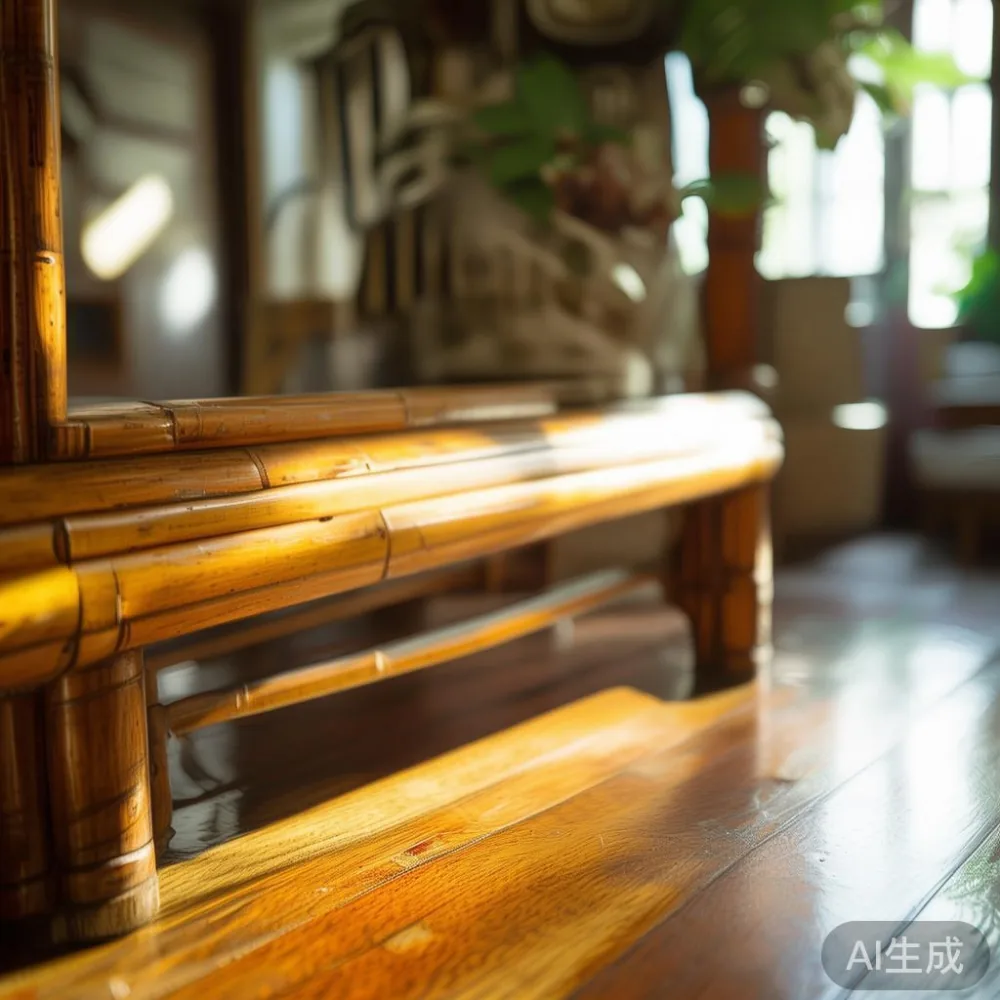
What is the difference between Post-modern accent chair and modern furniture?
A Post-modern accent chair is a single, sculptural piece — usually finished in a high-sheen lacquer, lacquered rattan, or a lacquered bamboo — designed to add a witty visual punctuation to an otherwise neutral room, while "modern furniture" refers to the broader design vocabulary of clean lines, functional forms, and minimal ornamentation that the Post-modern style was reacting against in the first place. In practical Singapore terms: if you buy a Post-modern accent chair from a Foshan workshop like MIDHILL, you are buying a one-off character piece, lacquered in 5 to 7 coats over a bamboo-and-oak substrate, and you care for it as you would a lacquered cabinet; if you buy a "modern" dining set, you are usually choosing a quieter, repeatable form language meant to disappear into a BTO or condo floor plan rather than to anchor it.
How should you clean lacquer without damaging it?
Stick to a four-step rotation and you will not need anything else. Step one: dry dust with a microfiber cloth, working with the grain, twice a week. Step two, once a month, dampen (do not soak) a soft cloth with a 1:10 solution of mild pH-neutral dish soap and filtered water — Singapore tap water at 60–80 ppm hardness leaves mineral spots if you let it sit. Wipe a 60 cm by 60 cm section, then immediately dry it with a second cloth. Step three, every three to four months, apply a small amount (about a 5-cent-coin dollop) of a hard-wax or paste wax formulated for lacquer — brands like Briwax or a local Tung oil variant retail between SGD 18 and SGD 35 for 200 ml — and buff it off within ten minutes. Step four, every two to three years, book a professional inspection if the piece is a structural item: a solid wood bed frame, a wardrobe over 180 cm tall, or a dining table that seats six or more.
What you avoid matters as much as what you do. Skip vinegar, skip ammonia-based cleaners, skip the green Scotch-Brite, skip any product that promises to "restore" a finish in one wipe. Lacquer is only 0.3 to 0.8 mm thick on a well-built bamboo furniture panel; an abrasive pad will eat through that thickness in three passes.
How does Foshan craftsmanship hold up after container shipping?
I visited a Foshan workshop last quarter, walking through the sanding room at 7:30 a.m. and watching three coats of conversion varnish go onto a batch of oak oak metal furniture dining chairs over an eight-hour shift. Each coat is sanded with 320-grit before the next goes on, and the final cure is a 72-hour room-temperature hang before crating. That hang time matters more than people realise. A piece that ships at day three of the cure will check, crack, or blush within six months in a Punggol condo; a piece that ships at day five behaves completely differently. This is one quiet reason a 10-year structural warranty from the maker is meaningful — it is hard to fake that kind of cure on the way out the door.
Container shipping itself is a separate stress. A 40-foot high-cube container running the Foshan–Singapore route swings through 5°C to 35°C temperature zones, and the air inside can reach 95% RH during the Vietnam Strait crossing. If a maker skips a moisture barrier or wraps pieces in non-breathable foam, the lacquer picks up that moisture and traps it. The better workshops, including MIDHILL on its export runs, line crates with 12 mm plywood, slip a silica-gel packet into every drawer of a wardrobe, and use corrugated cardboard spacers between lacquered faces so nothing touches. When the container arrives at a Tuas warehouse, pieces are typically offloaded and air-conditioned for 48 hours before delivery — and that is the right order of operations for Singapore too. Leave the piece in its crate in your living room, run the dehumidifier, and only unwrap once the panel feels cool and dry to the touch.
How do HDB and condo logistics affect placement and care?
Singapore buildings impose real constraints that change how you live with a piece of furniture. A typical HDB corridor in a Tampines or Bedok block is 1.2 m wide, a passenger lift car is roughly 1.5 m by 1.8 m with a 1.1 m door, and a three-room flat door is 0.9 m wide. A 1.8 m lacquered wardrobe in flat-pack form (a 190 cm by 60 cm by 25 cm carton weighing 38 kg) is just within that envelope; an assembled 1.8 m wardrobe at 92 kg is not. Most Singapore buyers, in my observation, end up with flat-pack bamboo furniture and a handyman — typically SGD 80 to SGD 120 for a wardrobe, SGD 60 to SGD 90 for a solid wood bed frame — and that handyman often does the lacquer care badly in the first month by leaning panels against a corridor wall while working.
Where you place the piece inside the flat matters too. A lacquered wardrobe or dining table should sit at least 10 cm away from an external wall, even in a 12th-floor unit, because the temperature gradient across the wall is enough to set up a slow moisture pump. Avoid placing a lacquered nightstand or side table directly under a window that you open during a thunderstorm — that five-minute downdraft carries more moisture into the wood than a whole day of air-conditioning. If your only option is under a window, seal the window's edges with a clear silicone bead (a SGD 6 tube from any neighbourhood hardware shop) and you cut the problem in half.
What does a realistic long-term care plan cost in Singapore?
Working from real receipts, not aspirational ones. Microfiber cloths: SGD 4 every four months. pH-neutral soap: SGD 6 a bottle, lasting six months. Paste wax: SGD 25 every four months for a small flat, SGD 45 every four months for a four-bedder with a marble table, dining set, and wardrobe. Dehumidifier electricity: roughly 0.4 kWh per hour at Singapore's regulated tariff of around SGD 0.28 per kWh, running six hours a night, which lands at SGD 20–25 a month. A professional inspection once every three years runs SGD 180 to SGD 280 depending on the number of pieces. Add it up and you are looking at SGD 350 to SGD 480 a year to keep an entire flat of lacquered bamboo furniture in showroom condition.
Compare that against the alternative. A full re-lacquer of a single 1.8 m wardrobe in Singapore runs SGD 480 to SGD 720; a dining table refinish runs SGD 220 to SGD 380. If a piece came from a maker that offers lifetime refinishing — as MIDHILL does on its export lines, with the customer covering only the two-way freight from Singapore to the Foshan workshop, typically SGD 380 to SGD 540 for a single wardrobe — the math swings hard toward caring for the piece properly at home and treating refinishing as a once-in-a-decade option rather than a fix.
Which light-luxury style suits a Singapore interior best?
The three styles that travel well to HDB and condo floor plans are French light luxury, American light luxury, and post-modern light luxury. French light luxury leans on curved silhouettes, slim cabriole-style legs, and warm cream or champagne-toned lacquers over a bamboo-and-oak substrate — it photographs beautifully in a 90 sqm Punggol condo but asks for steady humidity control because the curves expose more surface area to ambient moisture. American light luxury is the most forgiving: thicker profiles, walnut or honey oak tones, and matte or low-sheen lacquers that hide micro-swelling for an extra year between waxings. Post-modern light luxury — the one you actually find in a Post-modern accent chair — uses high-sheen lacquer as a deliberate statement, often paired with brushed brass or oak oak metal furniture hardware, and it rewards the most disciplined care routine of the three.
Whatever style you choose, anchor the room with a hero piece — a marble table, a lacquered dining set, or a sculpted bed frame — and let the bamboo furniture do the supporting work in the form of nightstands, side chairs, and wardrobes. A solid wood sofa or bed frame in bamboo will outlast a particleboard equivalent by 12 to 15 years in this climate; pair it with a lacquered dining table that seats four to six, and you have a flat that holds its shape through every rainy season from now until the next lease renewal.
What should you do in the first 30 days after delivery?
The first month sets the pattern for the next decade. Day one: leave the piece in its crate, run the air-conditioner or dehumidifier to bring the room under 55% RH, and only unwrap once the carton feels cool. Day two: position the piece 10 cm off any wall, level it with the supplied shims, and avoid loading a wardrobe with clothes or a dining table with chairs for another 48 hours — the lacquer continues to off-gas and a heavy load can imprint into the film. Day three through seven: wipe with a dry microfiber once a day. Day seven: first wax application, using about a 10-cent-coin dollop for a nightstand, double that for a wardrobe. Day thirty: a final inspection, with a torch held at a low angle across the surface to spot any early bloom or orange-peel texture. If you see either, call the maker while the warranty window is wide open.
Two local tips that save real money. Free shipping over US$350 (about SGD 480) is common from Foshan workshops, but a Singapore-side white-glove delivery with assembly adds SGD 120 to SGD 220 to the bill — worth it for a 1.8 m wardrobe, not worth it for a single nightstand. And the 14-day return window matters: do not open the packaging beyond inspection on day one, and document every panel with phone photos before assembly. If a panel arrives with a lacquer flaw, that photo log is the difference between a smooth claim and a two-week email exchange.
When is the right time to call a professional?
Three signals tell you the home routine is no longer enough. The first is visible bloom — a cloudy, whitish haze that does not come off with a dry cloth and does not respond to wax. The second is checking at the joints, where hairline cracks appear along the seams of a wardrobe door or the apron of a dining table; in a Singapore flat this usually shows up in year four to six on a piece that has not had humidity control. The third is any failure of the lacquer film itself — peeling, flaking, or a tacky feel that should not be there on a properly cured surface. Any of these is worth a professional inspection at SGD 180 to SGD 280, because the cost of catching a problem early is one-third the cost of refinishing a whole piece.
For pieces bought from makers with lifetime refinishing, the call is even simpler: ship the piece back to the workshop, pay the freight, and receive a unit that has been stripped, sanded back to bare bamboo, and re-lacquered with the same five-to-seven-coat system it left with. A wardrobe is typically away for six to eight weeks; a dining table, four to six. It is a slower answer than a local refinisher, but it is also the only answer that restores the original factory cure rather than a field-applied patch. Pair that one-time professional step with the daily and monthly habits above, and a lacquered bamboo furniture set from a Foshan workshop will look, in year ten, very much like it did on the day it arrived at your door in Tampines, Bedok, or Punggol.