Working through Furniture Warranties in Singapore
A furniture warranty can look generous on screen and still leave you with an awkward bill. The difference usually sits in 4 details: who writes the promise, what counts as a defect, which parts are covered, and how the claim must be proved. For Singapore households, those details matter even more when the product must pass through a lift, corridor or HDB flat door.

Last month I visited a supplier in Foshan with a colleague to compare warranty wording across solid wood furniture, bamboo furniture and marble table samples. One brochure promised “10-year coverage”; the smaller print excluded joints, surface checking and certain movement-related issues. Another used clearer language, with separate periods for structure, finishes and components. Seeing the documents side by side changed how I read furniture warranties altogether.
This guide explains the clauses worth checking before payment, the measurements and costs worth recording, and the questions to ask a seller. MIDHILL has operated since 2008, exports to more than 15 countries, and offers a 10-year structural warranty and lifetime refinishing, but the same reading method applies to any retailer or maker.

What does a 10-year furniture warranty actually cover?
A “10-year warranty” may refer only to the structural frame, or it may include selected joints, hardware and finishes. Look for a definition such as “structural” beside the headline. A solid wood sofa, bed frame, dining table, wardrobe or nightstand can have several failure points, and each may be treated differently.
Check 6 items:
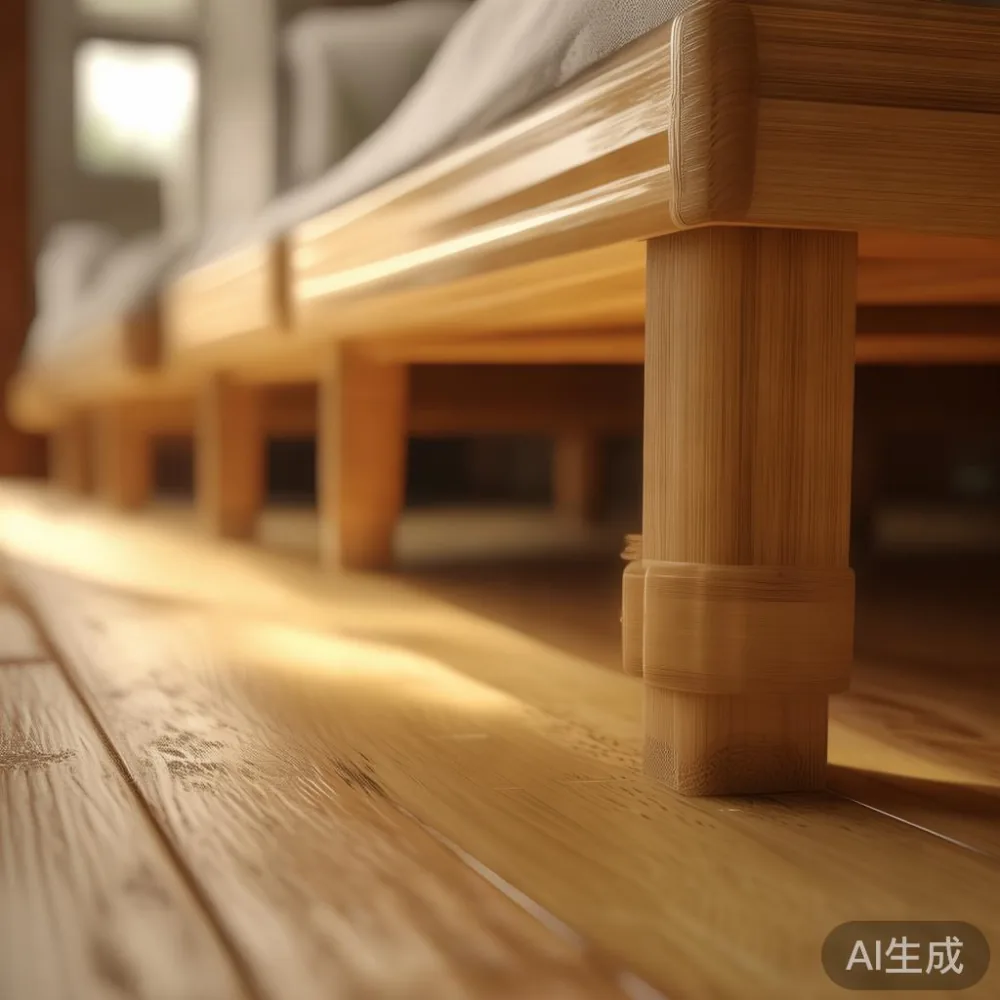
1. Structural parts: Ask whether the promise includes legs, rails, seat frames, bed slats, door panels, drawer boxes and load-bearing supports. Confirm that the 10 years run from purchase, delivery or the date shown on the receipt.
2. Workmanship: Loose joints, split joints, warped rails and defective connections may qualify, while ordinary movement may not. A warranty is not automatically a promise that every visible variation is a fault.
3. Finish: Lacquer, oil, paint and stain can peel, mark or change colour. Some documents cover manufacturing defects but not scratches, water rings, heat damage or fading near a window.
4. Components: Sofa cushions, mechanisms, wardrobe rails and drawer runners may have separate terms of 1 year, 3 years or 5 years. A 10-year frame term does not automatically mean 10 years for every component.
5. Accidental damage: A knocked door, a child’s pen mark or a chair tipping onto a dining table may be excluded. Find out whether accidental-damage cover can be added and what it costs per year.
6. Labour and transport: Replacement alone is not the same as replacement plus collection, repair labour and return delivery. Ask whether the company pays for a technician to visit, and whether Singapore GST, service-call fees or return freight are included.
For a dining table, test the stated load rather than relying on an adjective such as “heavy-duty”. Ask whether the figure applies evenly across the top or only at the centre. A 120 cm table rated for 80 kg may still flex near the ends. For a wardrobe, check the hanging rail, shelves and door alignment. For a bed frame, inspect centre support, side rails and the gap around a mattress that expands from 180 cm to 190 cm.
Is French provincial bed worth it?
The question “is French provincial bed worth it?” is partly about cost and partly about what you are buying. French provincial style often uses pale timber, curved details, upholstered touch points and a generous silhouette. A solid wood bed frame may cost from SGD 1,200 to SGD 3,500, depending on timber, size and detailing.
At that price, read the warranty with the same care as the design. Confirm whether carved details, shaped rails, bed slats and decorative finish are included. A French light luxury or American light luxury appearance can hide small construction variations, so photographs and written dimensions should be part of the order record.
For an HDB bedroom, measure the lift door, corridor turns and bedroom opening before choosing a large frame. A 180 cm queen bed may fit the room but fail at the corridor corner. Record the narrowest delivery route, allow at least 5 cm of extra clearance for packaging, and ask whether the frame arrives assembled or in modules. A knock-down bed frame can save space, though it may take 45-90 minutes to assemble.
How do I know if “lifetime refinishing” is useful?
Lifetime refinishing usually means the maker will offer a refinishing service during the product’s usable life. It does not necessarily mean unlimited free repairs. Check the definition of “lifetime”: is it the buyer’s lifetime, the product’s expected service life, or the period while the company can still supply matching material?
Ask for the service scope in writing. Does it include sanding, stain correction and 1 coat of finish, or 3 coats of a specified finish? What happens if a panel no longer matches because the room has been sun-exposed for 7 years? Is there a labour fee, a minimum order value, or a return freight charge?
For bamboo furniture, also ask whether the service applies to the finish only or to the bamboo substrate. Bamboo can respond differently to humidity and finish systems from hardwood. A furniture showroom may call a sample “bamboo” without stating whether the visible surface is laminated, woven or solid bamboo; the warranty should use the same material description.
For a marble table, lifetime refinishing may cover chip repair, staining or re-polishing, but not a fracture caused by an uneven base. Check whether a 5 kg care kit, 10 kg replacement slab or a new tabletop is included. Keep invoices and photos of installation because a table placed outside its recommended level may not qualify for the same service.
Which parts are usually excluded from warranty claims?
Exclusions are common, but their clarity varies. Look for terms covering natural variation, incorrect assembly, overloading, exposure, pests, pet damage and unauthorised repairs. “Misuse” can be broad, so ask the seller to distinguish a manufacturing defect from damage caused by placement or load.
Wood movement is a frequent example. Solid timber can expand and contract by roughly 2-6 mm across a 100 cm width as humidity changes. A dining table with a slight seasonal gap may not be defective if the movement is within the maker’s stated tolerance. Ask for that tolerance, plus the acceptable range for flatness over a 180 cm span.
Check exclusions for a solid wood sofa with a 100 kg load limit, a 120 kg weight limit or a family-use assumption. A 2-year-old child climbing on an arm may fall outside that promise. For an outdoor-style nightstand or balcony console, determine whether the warranty assumes indoor use only.
Also inspect how the item is treated after delivery. Keep the box, assembly instructions and serial number. Photograph the furniture within 48 hours, especially corners, joints, drawer runners and marble edges. If a wardrobe arrives with a 3 mm door alignment issue, capture it before the installer adjusts anything. A claim supported by dated images is easier to assess than a verbal description.
What should I ask before paying?
Ask for 7 written answers:
1. Is the warranty provided by the manufacturer, retailer or both, and which company handles claims in Singapore?
2. Does the 10-year term cover the frame only, or also joints, surfaces, hardware and components?
3. What are the start date, claim window and claim fee?
4. Who pays for labour, return transport and GST on replacement parts?
5. Which environmental conditions are excluded, and what load or humidity figures apply?
6. Can a repair be supplied outside Singapore if the original store has closed?
7. Can the terms be stored as a PDF or printed copy with the receipt?
Check delivery promises too. A seller may state 3-7 delivery days after dispatch, but a Singapore order can take 10-18 days when ocean freight, customs clearance or a scheduled lift booking is involved. Ask whether the promised period is for dispatch or arrival. A 14-day returns policy may begin on delivery, so record the date the carton enters the flat.
MIDHILL states free shipping over US$350, which can be useful for a cross-border purchase, but Singapore buyers should still confirm the delivered price in SGD, applicable GST, customs treatment and installation. Currency conversion is not a warranty term. A local repair contact can matter more than a headline number if a replacement needs to be installed in a Tampines, Bedok or Punggol condo.
How can I read a warranty without getting caught out?
Use a 4-column worksheet: covered item, covered period, exclusion and remedy. Fill it in for every major product. A solid wood dining table might have a 10-year structural term, a 1-year finish term and a 1-year hardware term. A marble table might have a 5-year structural term, while a cabinet handle has a 2-year term. This avoids assuming that one date applies to the whole order.
Next, check whether the item’s dimensions suit your route. For bamboo furniture, ask for panel thickness, package dimensions and weight. A 180 cm wardrobe may weigh 95 kg and arrive in 2 cartons; a lift rated for 1,000 kg still requires the cartons to fit through the 90 cm door. For a bed frame, compare packed length with the hallway turning radius. For a dining table, record tabletop thickness and whether it separates into 2 pieces for entry.
Style research should not outrun the contract. If you are comparing how to choose Japandi bed designs, or searching for the best Japanese sofa for 2026, check whether the low profile hides unsupported spans and whether the warranty identifies the frame beneath the cushions. The phrase how to style Japandi bed in apartment is useful, but a calm room cannot compensate for a rail that splits in year 3.
Search results may label a Mid-century modern coffee table as “solid wood” when the top is veneer over particleboard. Ask for the core material, veneer thickness, underside construction and moisture limit. Likewise, “marble” should be specified as natural marble, engineered stone or a marble-look surface. A marble table with a 20 mm slab and a reinforced base is a different risk from a 10 mm decorative top on a light metal stand.
What does a clear return and repair policy look like?
A clear policy gives you a process. It should state how to report a problem, what evidence is required, how quickly the seller responds, and whether repair, replacement or refund is available. A 14-day returns window should explain whether the furniture must be unused, whether assembly is permitted, and who pays return freight.
For a large wardrobe or bed frame, “unused” may mean the cartons cannot be opened, which is impractical during a delivery inspection. Ask whether a defect can be reported after assembly. For a solid wood sofa, check whether removing the cushion covers affects a return claim. For bamboo furniture, inspect for moisture marks, delamination and edge lifting before accepting the piece.
Keep a copy of the warranty, invoice, delivery notice and product serial number in 1 folder. Photograph each item at delivery and again after assembly. Record room humidity if the seller specifies a range, and do not place a marble table beside a bathroom door where splashing is likely.
Finally, separate warranty quality from marketing language. French light luxury, American light luxury and post-modern light luxury describe visual direction; they do not specify structural performance. Post-modern light luxury styling can make a 160 cm dining table look compact, but the order sheet still needs to show the actual size, load, material and finish.
A useful warranty is specific, transferable and supported by a repair process. Look for years, parts, limits, exclusions and remedies in plain language. If the seller cannot answer those questions in writing, treat the headline as a starting point rather than a promise. That approach can protect both a SGD 280 nightstand and a SGD 4,000 wardrobe before the first delivery day arrives.