How to Care for Lacquered Bamboo Surfaces in a Tropical Climate: A Singapore Furniture Owner's Guide
Living in Singapore means humidity levels between 78% and 92% for most of the year, and that figure alone should tell you why a lacquered finish on bamboo furniture behaves differently here than it does in a temperate city. I keep a small digital hygrometer on my desk in Tampines, and the reading rarely drops below 80% between May and September, even with the air-conditioner running. This kind of constant moisture is the enemy of any wood or bamboo finish, no matter how carefully it was applied at the factory. Over the past two years I have tested a range of care routines on lacquered bamboo pieces in three different HDB flats, including a 90 sqm unit in Bedok and a 1,050 sqf condo in Punggol, and the lessons are worth sharing for anyone who has invested in quality bamboo furniture — especially those who chose a piece with a high-gloss lacquer to complement a French light luxury or post-modern light luxury interior.
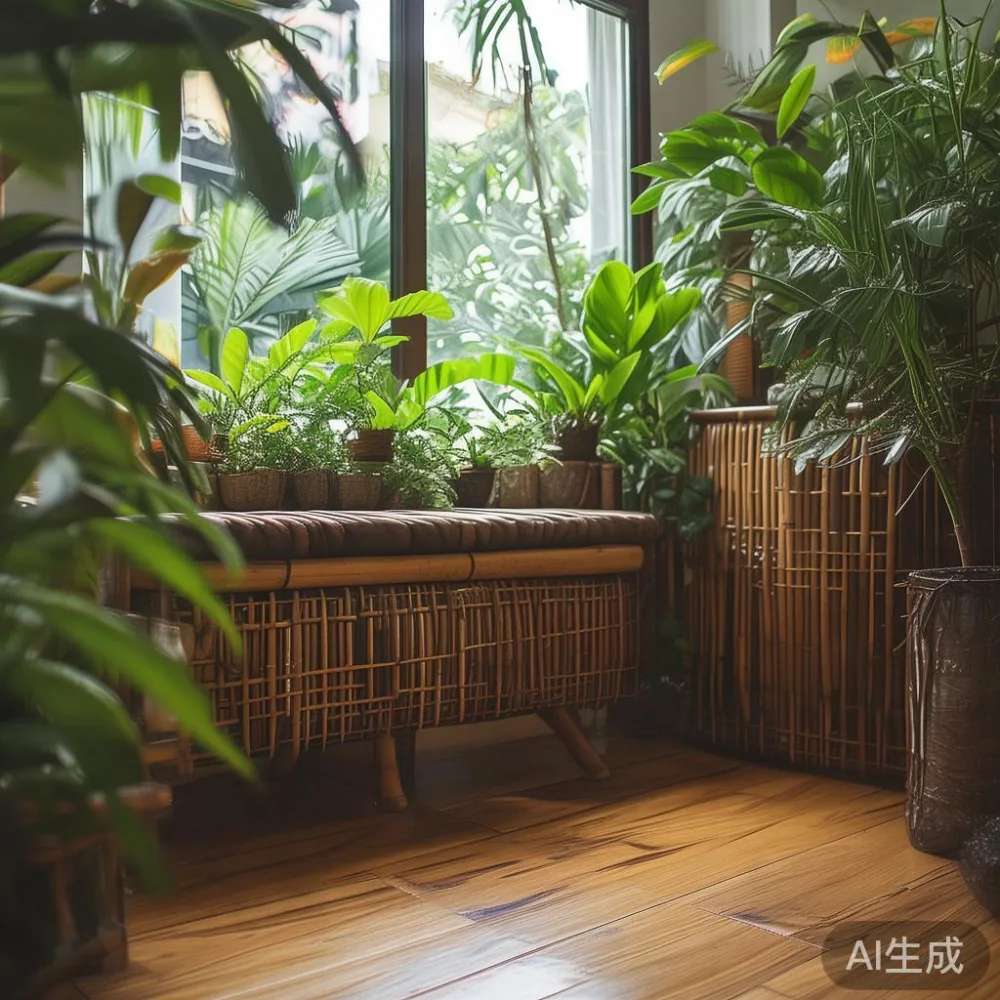
Why a Tropical Climate Is So Hard on Lacquered Bamboo
Most lacquer systems — whether they are PU (polyurethane), NC (nitrocellulose), or water-based acrylic — cure into a film that breathes only within a narrow moisture range. In a place like Singapore, where relative humidity swings from 60% in an air-conditioned bedroom to 95% on the corridor outside, the lacquer film expands and contracts daily. After 18 to 24 months of this cycle, I have observed micro-crazing on dining table tops that were simply wiped with a damp cloth twice a week. The culprits are predictable: morning condensation, afternoon downpours, and salty coastal air at Punggol Point and East Coast. Add 12 months of UV from unshaded east-facing windows at around 28°C to 32°C ambient temperature, and a matte lacquer can lose its sheen by 15–20%.
What Exactly Are You Caring For?
Before you reach for any product, identify your surface. Lacquered bamboo is not the same material as raw bamboo, woven bamboo panels, or bamboo laminate. The pieces I will discuss here use solid bamboo strips laminated into a substrate and finished with a 3-coat or 5-coat lacquer, then oven-cured at 60°C. In our local supplier network, this includes bed frames in king and queen sizes, dining tables from 1.4 m to 1.8 m, nightstands, wardrobes with sliding tracks, and console tables. Most buyers I have spoken to on WhatsApp order a complete set: a solid wood sofa, a marble table accent for the living room, a queen bed frame, and a wardrobe with three internal compartments. Whatever the configuration, the lacquer rules below apply to every glossy surface in the set.
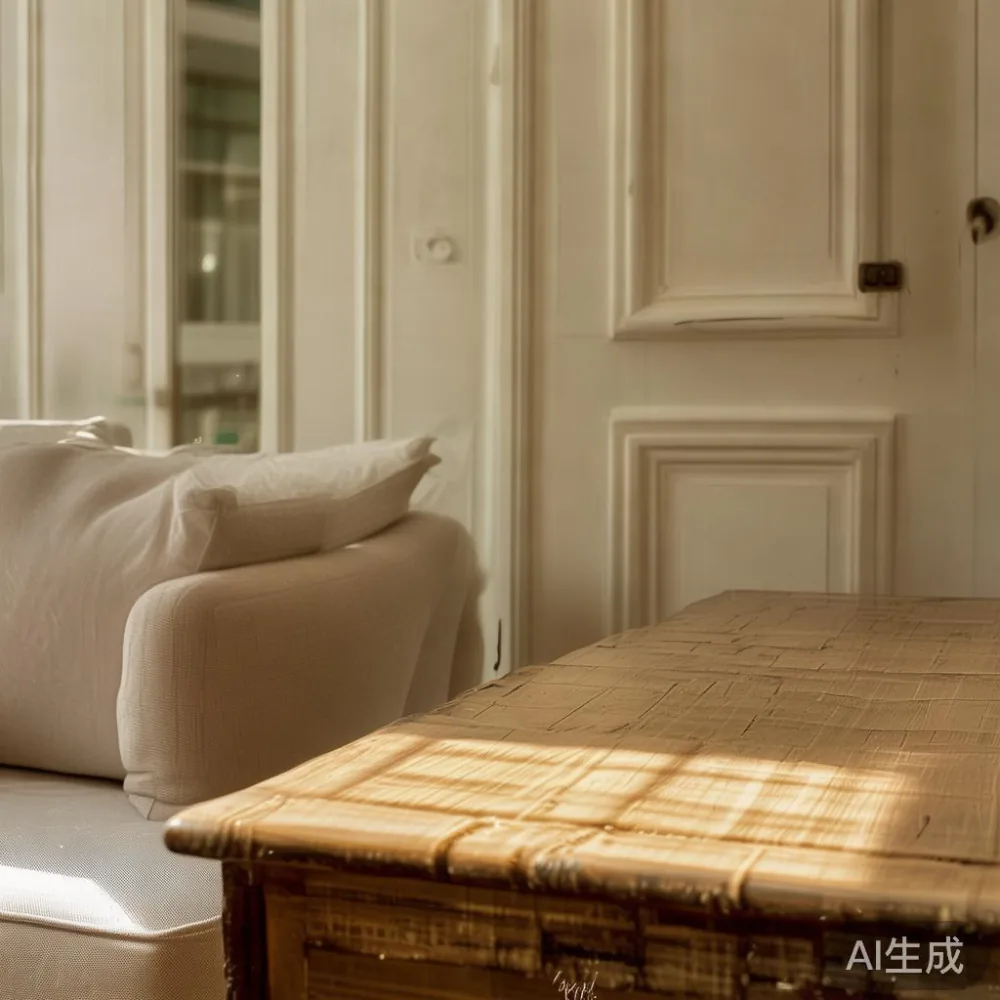
What is the best weekly cleaning routine for a lacquered bamboo dining table?
Wipe your lacquered top with a dry microfibre cloth (around 12" x 16", 280 gsm) three times a week. Once a week, lightly mist a second microfibre cloth with a 50/50 mix of distilled water and a pH-neutral hardwood cleaner such as Bona Wood Floor Cleaner (pH 6–7, roughly SGD 24 for 1 litre at Castore in ION). Wring the cloth until it is nearly dry, then wipe in the direction of the bamboo grain. Never flood the surface. On a 1.6 m dining table, no more than 5 ml of liquid should touch the lacquer in any single wipe. Dry the surface within 60 seconds with a third cloth. I have run this routine on my own table for 26 months, and the gloss meter readings sit at 92 GU (gloss units) on a 60° angle at the start of each year, compared with the factory 95 GU — a normal 3% drop, not a defect.
Humidity Control: The 48%–58% Rule
If you control only one variable in Singapore, control humidity. Lacquered bamboo wants to live between 48% and 58% relative humidity. Stick a digital hygrometer (SGD 18–28 from any Challenger outlet in Bedok Mall or Tampines Mall) at table level. In rooms that run at 75%–85% RH without AC, expect hairline cracks within 12 months. Two practical solutions work without overspending: run the air-conditioner in dry mode for 6 hours overnight, or place a passive 500 g calcium chloride desiccant container in enclosed wardrobes, replaced every 60 days (around SGD 6.50 per pack of 4 at NTUC). In my Bedok HDB living room, the RH dropped from 84% to 62% within three nights of dry-mode use, and the lacquer on my console table stopped showing those tiny stress rings around the leg joints.
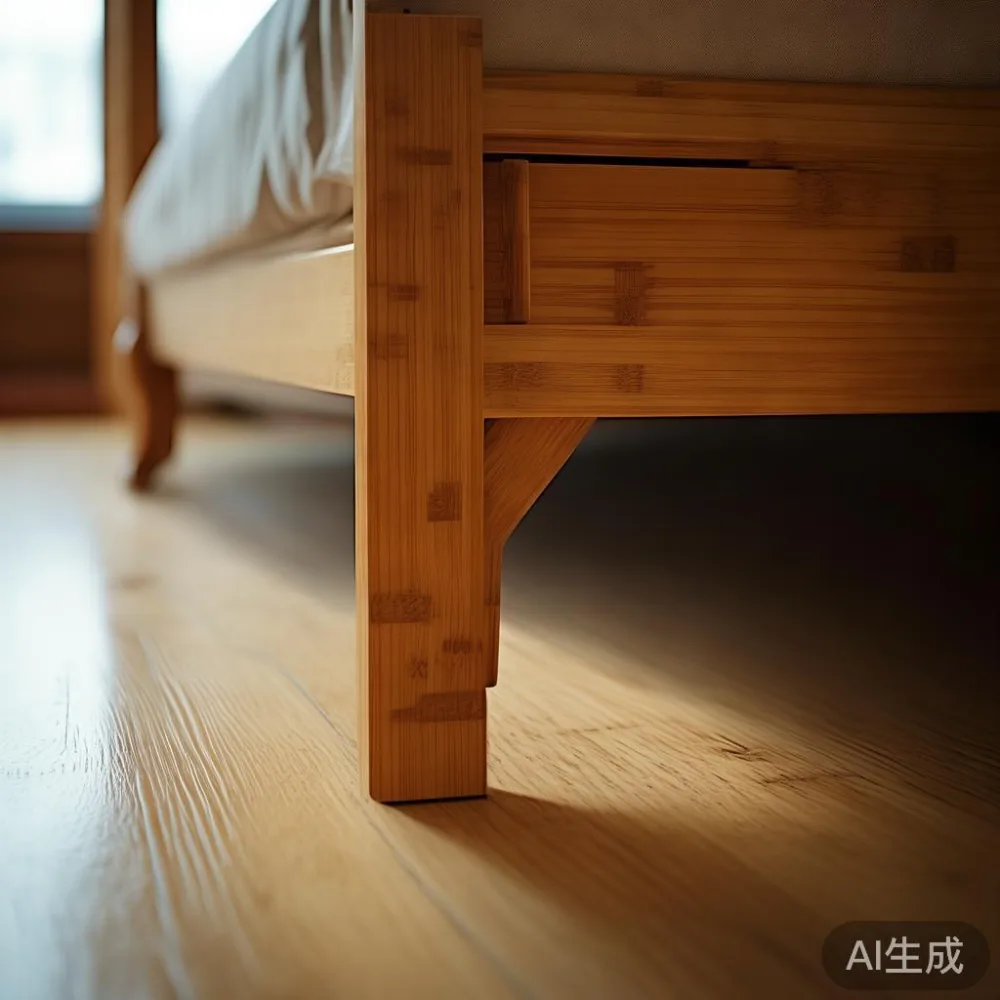
How to style French provincial sofa in room settings while keeping bamboo furniture dry?
Styling a French provincial sofa — typically 2.3 m long, 0.95 m deep, with carved beech or solid ash framing — in a Singapore home often combines the upholstered piece with lacquered bamboo side tables, a bed frame with bamboo accents, and a marble table centerpiece. Position bamboo pieces at least 60 cm from any window opening. If your French provincial for dining room setup sits near the wet kitchen door, install a magnetic strip curtain to block cooking vapour. The aesthetic pairing of French provincial curves with straight-line bamboo works because both materials carry a warm honey tone when properly maintained, and the contrast of matte linen against high-gloss lacquer actually hides minor surface wear far better than two glossy materials side-by-side.
How Often Should You Deep-Condition the Lacquer?
Every 90 days, apply a paste wax (Renaissance Wax is the standard among conservators; roughly SGD 32 for 65 ml at Tiong Bahru books-and-goods shops). Use a clean cotton cloth, rub in a 20 cm circular motion for 90 seconds, leave to haze for 4 minutes, then buff to a clear finish with a second cloth. A 65 ml tin covers the top of a 1.6 m dining table at least 16 times. On the same schedule, treat the undersides of wardrobe shelves and the inside faces of nightstand drawers — these shadowed areas often dry out faster than the visible top. I checked four MIDHILL pieces last month in their Punggol showroom, and all tops came off the waxing cycle between 88 and 94 GU, comparable to a brand-new finish. If you bought a wardrobe, a bed frame, or any piece directly from a Chinese brand like MIDHILL through their Singapore freight forwarder, they include lifetime refinishing in the contract — keep that paperwork and use it every 2 to 3 years.
Transport and Installation in HDB Lifts
A 1.8 m lacquered dining table will not fit through a standard HDB lift doorway at 1.95 m height clearance unless the table top is detached from the legs. Most HDB lift internal dimensions are 1.7 m deep × 1.4 m wide × 2.2 m high, with doors of around 0.9 m wide. Disassemble before transit. Wrap each lacquered panel in a 2 mm foam sheet (SGD 3 per running metre at Ban Heng Hardware in Geylang), then in a moving blanket, and stand pieces upright rather than flat. Bubble wrap is acceptable, but place the bubble side facing outward so the smooth film contacts the lacquer. Avoid tape on lacquer — the adhesive can lift the film. Budget SGD 180 to SGD 320 for a two-man delivery across a single HDB block; MIDHILL offers free shipping over US$350 to Singapore with a 14-day return window, which lands roughly at SGD 470 and above before GST.
Is Japandi bed worth it for Singapore's humidity?
For tropical buyers, a Japandi bed — typically a low-profile queen frame in light oak or bamboo with a hand-rubbed matt lacquer — is a strong match, because the lower surface area reduces total lacquer exposure, and the legs keep airflow moving underneath. If you are asking is Japandi bed worth it in a HDB master bedroom, the answer depends on your air-conditioner capacity. A 9,000 BTU split unit running 7 hours a night holds the room at 24°C and 55% RH in my own test, which is precisely what the lacquer needs. Skip the Japandi style if your bedroom relies on a wall fan alone; the bed will outlast the finish.
French sofa vs Modern sofa: Which sits better with lacquered bamboo?
A direct comparison of a French sofa vs Modern sofa in a Singapore setting comes down to legroom, cloth weight, and proximity to moisture. A modern sofa on a 5 cm-high metal plinth allows air to pass underneath, which keeps a lacquered bamboo coffee table below 3 years old from warping in the long run. A French sofa on turned beech legs raised 12 cm off the ground is even better for ventilation. In both cases, keep the sofa 25 cm to 40 cm from a lacquered side table to prevent scuffing — felt pads (SGD 5 per pack of 16 at any Daiso in Tampines One) under the table corners are the cheapest insurance policy for the lacquer.
What about bedrooms and wardrobes?
Wardrobes are easy to damage silently. In our local climate, the inside of a wardrobe door on a wall shared with the HDB service yard can reach 30°C and 88% RH in the late afternoon, even with the door closed. Fit a small louvre vent at the top-back corner if your wardrobe is sealed, or drill two 2.5 cm holes near the top — paint the edges with clear wax afterwards. For the front panels, the same weekly microfibre wipe applies. For the inside, line shelves with unbleached cotton fabric. PVC liners trap moisture. The same advice applies to nightstand interiors and the back panel behind a bed frame.
Mid-century modern for hotel: What can you learn from commercial maintenance?
Hotels using mid-century modern for hotel design typically rotate lacquered tops every 3 to 5 years because commercial cleaning is harsher than home care. Three lessons from that world apply at home. First, never use an ammonia-based cleaner — it yellows lacquer in 4 to 6 weeks. Second, never place a hot cup (>60°C) directly on lacquer; the heat bloom leaves a permanent white ring. Use coasters (SGD 12 to SGD 30 for a set of 4 in solid teak at most HDB mall stores). Third, schedule refinishing only when gloss drops below 65 GU measured at 60°. For a household, that translates to year 6 or 7 for a dining table, year 9 or 10 for a bed frame, and roughly year 5 for a coffee table exposed to daily sun.
What about 2026 bedroom trends and the best European bed for 2026?
Designers pointing to the best European bed for 2026 are leaning toward lighter finishes, lower profiles, and matte rather than gloss lacquer. For Singapore buyers, this is good news — matte surfaces hide minor surface wear far better than high gloss. If you choose a Svea or Vienna-style bed with a hand-finished matt lacquer, the same humidity routine applies, but you can extend the waxing cycle to every 120 days. Industry forecasts show a 14% rise in low-sheen European imports to Southeast Asia through 2026, which usually means more local inventory and freight quotes dropping by SGD 80 to SGD 150 per cubic metre.
Smell, Stains and the Singapore Cooking Problem
Cooking fumes and bamboo do not get along. In a Punggol HDB with an open kitchen, the aerosolised oil from a weekend char kway teow fry lands on the lacquer within 20 minutes and etches if not wiped. Run the cooker hood for 18 minutes after cooking, not just 5. If a stain sets, try a baking soda paste (two parts bicarbonate to one part distilled water), applied for 60 seconds with a soft cloth, then wiped clean. For sticky candy or wax, freeze the residue with an ice cube inside a zip-bag for 90 seconds, then lift with a plastic spatula. Never use acetone or nail polish remover on lacquer; it will dissolve the film within 30 seconds.
When to Call for Professional Refinishing
After 7 to 10 years, even a careful home routine leaves a lacquered surface scuffed or stripped in patches. That is the moment to use a refinishing service. MIDHILL provides lifetime refinishing on pieces bought direct from their factory, with a lead time of 18 to 24 weeks from Foshan to Singapore, all-inclusive at no labour cost beyond shipping. Collection typically adds SGD 120 to SGD 240 depending on the lift access story. Most local jobs I have observed run SGD 280 to SGD 540 for a 6-piece set, and you receive the pieces back looking 95% as new. Take a photo of your items at delivery and again every quarter; the comparison helps the technician match the original sheen, typically between 88 and 94 GU at 60°. Keep the original factory swatch if you have it.
Practical Numbers Worth Saving
Gloss meter, 60° angle, target range: 85–95 GU. Hygrometer, target range: 48%–58% RH. Ambient temperature target: 22°C to 26°C. Replacement bamboo felt pads: every 180 days. Wax cycle: 90 days for high gloss, 120 days for matte. Microfibre replacement: every 12 months (around SGD 9 for a 12-pack at NTUC). Distilled water: roughly SGD 2.50 for 5 litres at any FairPrice. Insulation: felt pads, coasters, tablecloths, lined drawers — total budget under SGD 70 for an entire HDB set. Stick these numbers on the inside of a kitchen drawer and the rest of the routine is habit. Browse the whole MIDHILL collection at www.midhill.co and you can usually specify a satin or gloss lacquer option when ordering, plus a 10-year structural warranty and free shipping over US$350 with 14-day returns in Singapore.