Bamboo Furniture for Warm, Minimalist Interiors
A warm minimal interior is not an empty room. It is a carefully measured mix of pale materials, tactile grain, low contrast and furniture that keeps daily life comfortable. In Singapore, this approach suits HDB flats in Tampines, Bedok and Punggol as well as larger condos, where natural light, compact circulation and durable finishes matter. Bamboo furniture fits that brief because it combines a slender visual profile with a warm colour range, from honey-toned pieces to deeper smoked finishes.
The practical challenge is balance. A narrow HDB living room can make a bulky sofa feel oppressive, while a high-rise condo with wide glazing may need darker anchors to prevent the furniture from disappearing. Measurements, lift access, corridor turns and the size of your service lift should be considered before selecting dimensions. Budget in SGD, include GST in your planning, and allow enough time for delivery rather than treating furniture as an impulse purchase.
This guide explains how to match bamboo furniture with warm minimal rooms, including solid wood sofas, bed frames, dining tables, wardrobes, nightstands and occasional marble tables. It also considers the difference between Scandinavian restraint, French light luxury, American light luxury and post-modern light luxury, so the result feels composed rather than generic.
What makes a warm minimal interior work?
Warm minimalism is built around a small palette and repeated textures. Use 3 main colours, such as warm white, pale oak and soft beige, then add 1 controlled accent through textiles, ceramics or artwork. In an HDB flat with approximately 2.8 m ceilings, furniture that sits below 85 cm in the dining zone and below 75 cm in the living zone often preserves a sense of openness.
Measure before you buy. A dining table may look modest in a showroom but become awkward in a corridor. Record the table length, width and packaged dimensions, then check the lift door, lift car and turning space. A 180 cm dining table needs a route that can accommodate its longest carton without forcing a sharp turn at the corridor corner. For a 140 cm table, leave at least 90 cm between the table edge and a wall or sideboard where chairs need to move.
Light is equally important. Warm white LEDs at approximately 2700 K complement bamboo’s golden grain better than cool white lighting at 4000 K. Keep a floor lamp or table lamp near the sofa, and use sheer curtains rather than heavy drapes. The goal is layered light: about 300 lux for seating, 500 lux for reading and 700 lux over a dining surface for everyday meals.
Material contrast gives minimal rooms depth. Pair smooth bamboo surfaces with linen, wool, rattan or lightly textured plaster. Avoid placing every object in the same visual finish. A matte ceramic vase, a brushed brass handle and a woven rug can provide small changes in texture without filling the room with decorative items.
How do I choose furniture for a small Singapore flat?
Begin with the largest item, usually a solid wood sofa or bed frame, and measure the room again after allowing 75–90 cm for circulation. In a typical Tampines HDB living room, a sofa around 180–210 cm can seat 2–3 people while leaving a practical path to the balcony door. In a compact Bedok flat, choose a low-arm design or a sofa with a depth below 95 cm. Deep seats look generous but can reduce walking space.
Check the route from the service lift to the home. Corridors in many HDB developments are around 120–180 cm wide, though the narrowest point and the door swing can be more restrictive. A furniture package should fit through the lift door with at least 2–5 cm of clearance, and the installers should know whether stairs are involved. For condos, ask the building management for loading hours, reserve the service lift if required and measure the parking-to-lift route.
Choose furniture according to use, not just appearance. A solid wood sofa with a firm seat may suit a family room, while a softer seat creates a relaxed reading corner. A bed frame should leave 55–65 cm beside the longer side for a person to sit down and 60 cm on the accessible side where possible. If the room is under 9 m², a 160 cm bed can be easier to manage than a larger queen frame, although a queen bed may suit couples who need more sleeping space.
In Singapore, free shipping over US$350 is useful for planning an online purchase, but the threshold does not replace local measurements. Compare the final delivered price in SGD, confirm GST, assembly requirements and return arrangements. A 14-day returns policy can provide a useful inspection window, yet checking dimensions before dispatch remains more efficient. Ask for the product weight too: a solid dining table might weigh 45–80 kg, while a bamboo bed frame might weigh 25–45 kg depending on its size and construction.
How do I match a solid wood sofa with bamboo furniture?
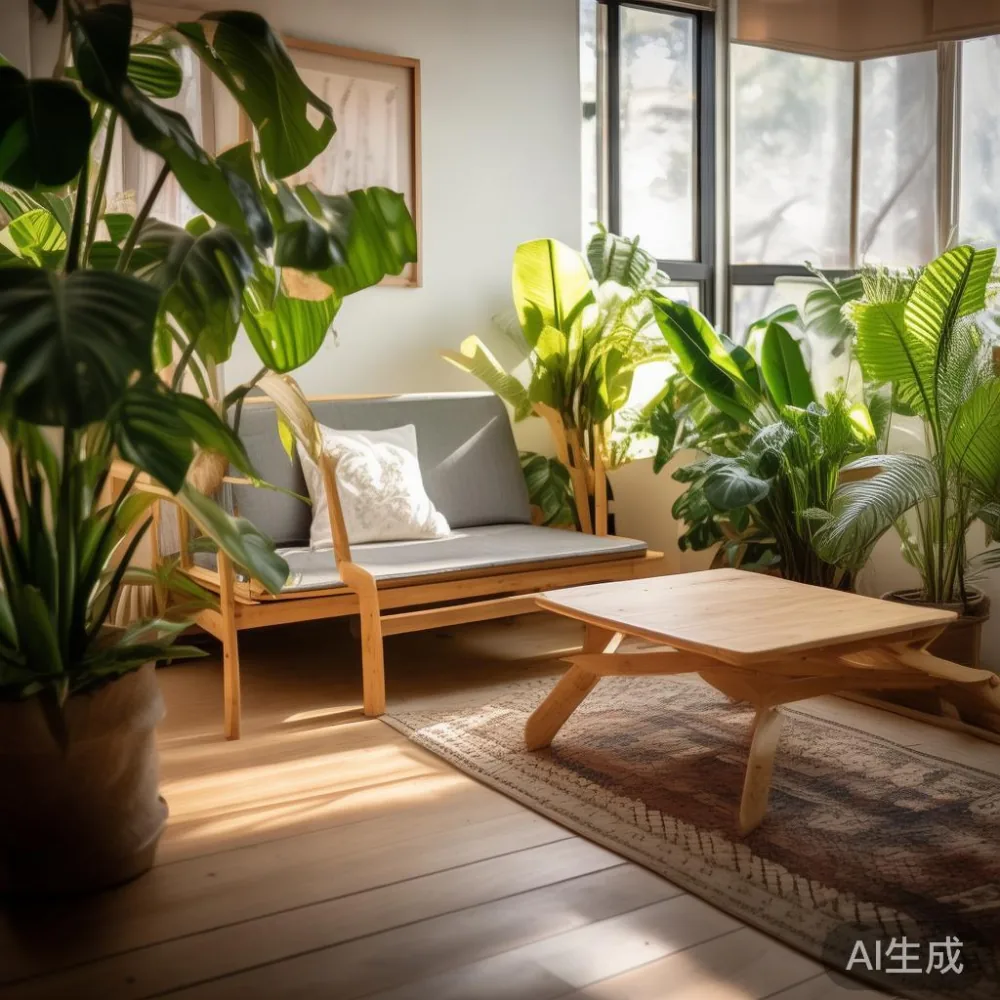
A solid wood sofa frame offers a grounded centre for a warm minimal room, while bamboo side furniture introduces a lighter rhythm. Keep the sofa’s wood finish close to the room’s wall colour but not identical. If the walls are warm white, try a light honey solid wood frame with oatmeal upholstery. If the floor is medium oak, select a sofa frame one shade lighter or darker rather than matching every element exactly.
Scale the coffee table to the sofa. A rectangular solid wood coffee table around 100–120 cm long works with a 180–200 cm sofa. Leave 35–45 cm between the seating edge and table for legroom. Round tables are useful when the room has a narrow walkway, although they occupy more floor area in the centre. A low marble table can work as an occasional accent, but its cool surface needs warmer lighting and nearby textiles to avoid making the space feel clinical.
For a Japanese-influenced reading corner, the question of how to style Japanese sofa in room is often about restraint and proportion. Use one low cushion, one folded throw and a small lamp, leaving the frame visible. Keep the palette within 3 colours and avoid overcrowding the wall behind it. A slim side table should sit within 30–45 cm of the sofa arm, allowing a drink or book to be reached without stretching.
Do not assume all solid wood and bamboo tones harmonise. Some bamboo has yellow undertones, some is pale and some is smoked. Place samples against the floor and wall in daylight and at night. If the contrast is too strong, repeat one of the sofa’s colours in the cushions or rug. The frame should remain readable, but the room should not look like two unrelated products placed together.
Which dining table suits warm minimalism?
The dining table is often the room’s main visual anchor, so its dimensions should support both meals and circulation. A rectangular table from 140–160 cm seats 4 people; 180–200 cm usually seats 6; and 220–240 cm can seat 8 when the surrounding space permits. Allow at least 90 cm around the table for chairs, and 100–120 cm on the main passage if service traffic runs beside it.
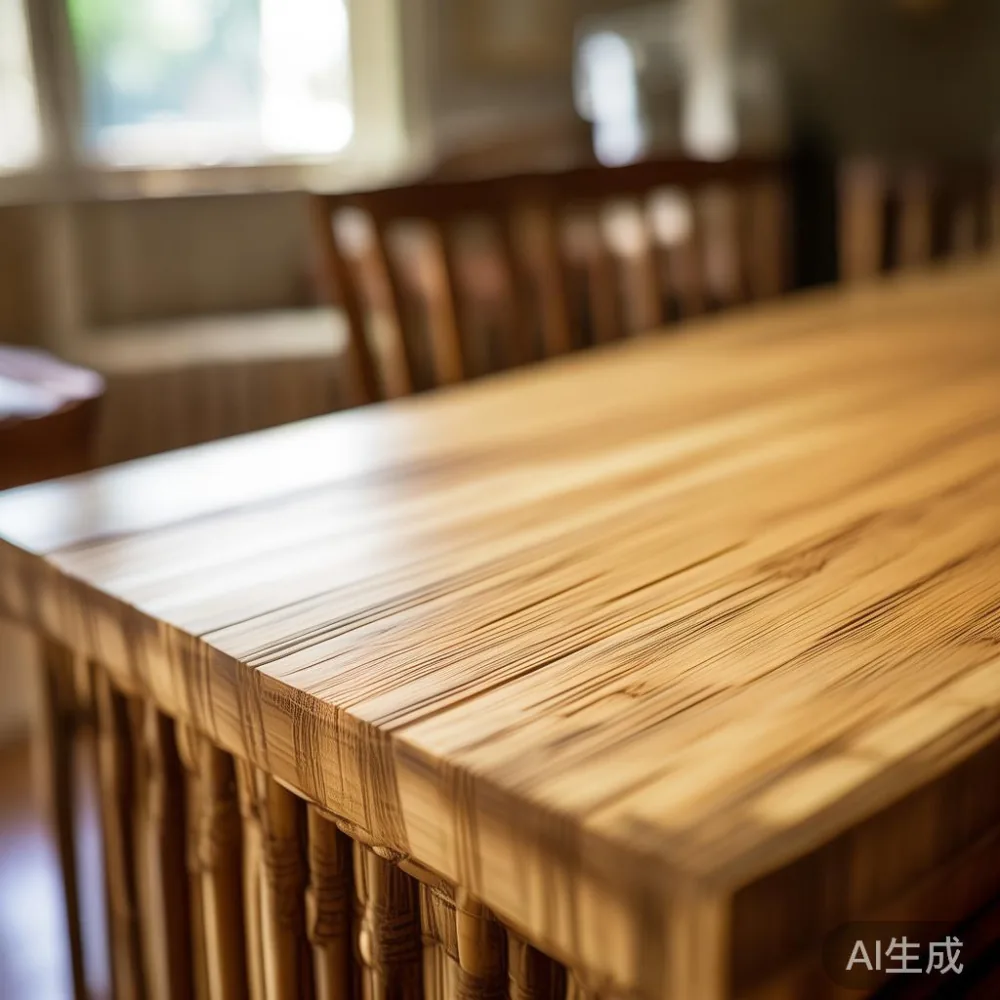
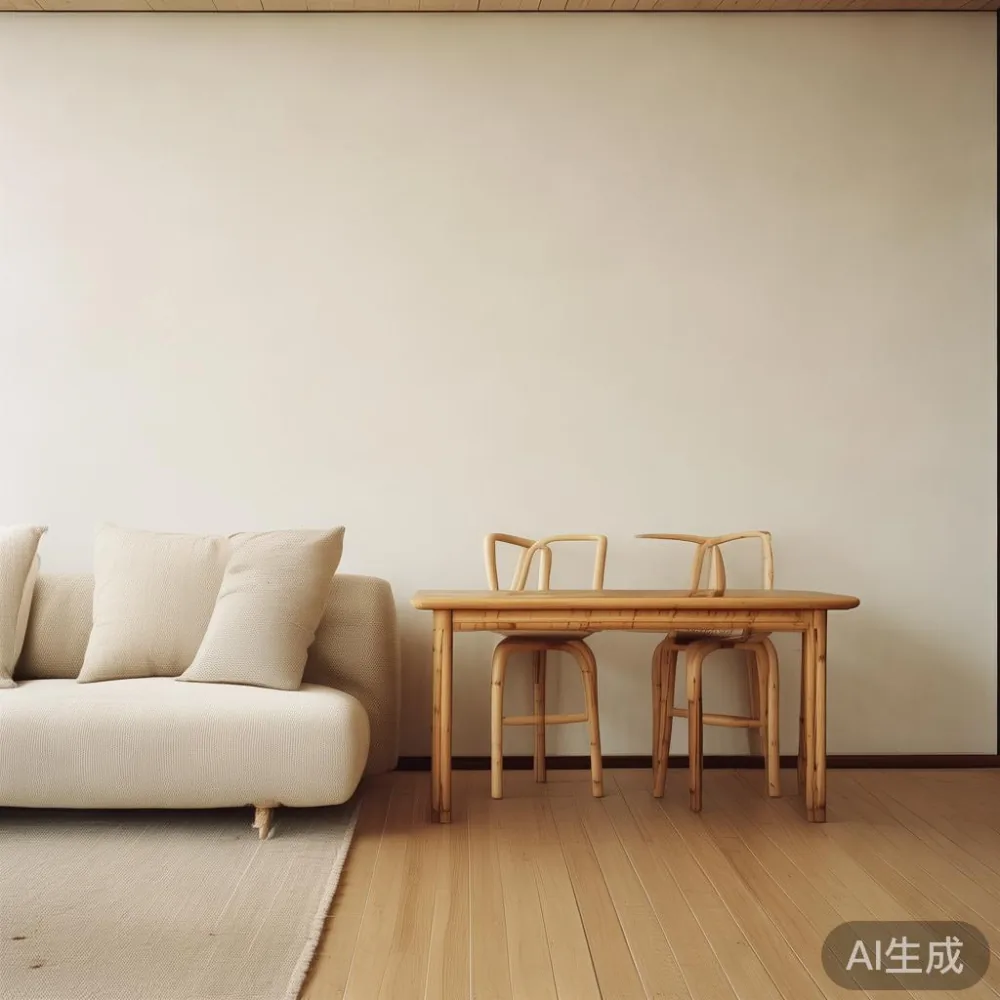
Bamboo dining tables suit compact rooms because their open visual character works well with pale walls. A light natural finish can sit beside a white or cream cabinet. For a warmer result, choose honey bamboo and repeat that tone in a bench, wall art or woven shade. The finish should be sealed for humid conditions and easy to wipe after meals. In Singapore, avoid untreated surfaces near open windows where rain and condensation can create marks.
For customers comparing options, MIDHILL dining table review conversations often focus on stability, edge treatment, noise and the relationship between size and room. Check whether the apron, legs and joints are designed for daily use. A table that wobbles after installation is less suitable than one with a level checking system. Request photos of the underside and ask how the table should be moved through a service lift.
A small pedestal or trestle base can improve circulation, though it may offer less legroom than 4 separate legs. Match the table height to standard chairs: approximately 72–76 cm from floor to tabletop, with a seated clearance of about 25–30 cm beneath the apron. Keep the dining zone uncluttered by choosing a sideboard no deeper than 40–45 cm where possible.
How do I use a bed frame and wardrobe to keep a room calm?
A bamboo bed frame can create a soft horizontal line against the headboard wall. Choose a low-profile design for a compact HDB bedroom, but check that the frame provides enough clearance for ventilation and cleaning. A 160 cm bed frame may be placed with 55 cm on one side and 70 cm on the other in a room with a tight circulation route. A queen frame around 180 cm needs more space, especially beside a wardrobe door.
Wardrobes should align with the room’s architecture rather than compete with every wall. Built-in-looking units can work in a condo, while freestanding wardrobes allow easier relocation in a rented HDB flat. Allow 90 cm for opening a hinged door and 75–90 cm in front of sliding doors. A wardrobe depth of 55–60 cm is common for hanging garments, but deeper units may suit long coats, drawers or luggage.
For a modern apartment, the best American wardrobe for 2026 is likely to be evaluated by storage planning, hinge quality, finish consistency and delivery access, not by a dramatic front panel. American light luxury often favours clean proportions, generous storage and comfortable hardware. Keep the exterior simple, then organise the interior with hanging rails, shelves and drawers. A pale interior makes it easier to see clothing and gives the room a lighter feel.
If your style leans toward post-modern light luxury, pair a quiet wardrobe with one expressive element, such as a sculptural handle, a framed artwork or an oval mirror. The effect remains controlled because the rest of the room is restrained. This differs from French light luxury, which may introduce curved edges, lacquered details or more decorative surfaces. Both approaches can work, but use one visual idea at a time.
For those considering under 2000 Scandinavian furniture, compare the whole delivered cost in SGD, including GST, delivery and assembly. A lower-priced item may require replacement if its hinges, frame or surface finish do not suit daily use. Check the warranty length, finish care instructions and return terms before purchasing. A 10-year structural warranty can be reassuring, while a lifetime refinishing option may help preserve the appearance over several years.
What should I know about Japanese wardrobes and bamboo?
Japanese-inspired wardrobes can appeal to a warm minimal interior because they often use pale wood, simple panels and careful storage divisions. A sliding front may suit a narrow bedroom because it does not project into the walking route when open. Its drawback is that overlapping doors require more interior depth and careful track alignment. Before ordering, measure the opening, floor level and ceiling clearance.
The question is Japanese wardrobe worth it can be answered by looking at your clothing volume and access habits. A sliding wardrobe with 2–3 internal sections may be practical for folded clothes, while a hinged unit can be better for frequent access to hanging garments. Bamboo furniture is useful here because a light frame can keep the room visually open, but the storage engineering still matters more than the material label.
Natural finishes vary. Some bamboo shows visible nodes and tonal lines, while laminated surfaces have a calmer appearance. If you prefer a uniform look, inspect the sample under daylight and ask whether the finish is clear-coated or matte. Keep moisture sources away from the unit, and use coasters for drinks on a nearby nightstand. Do not place a wardrobe directly against an exterior wall that becomes damp after rain.
For a coordinated bedroom, repeat the wardrobe’s finish in the bed frame or nightstand, but change the scale. A broad wardrobe paired with a slim bed frame can balance a narrow room. Add one textile layer, such as a cotton throw or wool runner, to prevent the surfaces from feeling overly uniform. Keep artwork 15–25 cm above the headboard or side wall, depending on the frame height.
How can I mix French, American and post-modern light luxury?
Light luxury is about proportion, finish and comfort rather than excess decoration. French light luxury can introduce a curved solid wood sofa edge, a marble table, or a softly upholstered chair. American light luxury may use a larger wardrobe, a substantial dining table and deeper seating. Post-modern light luxury can combine a simple bamboo base with unusual handles, angled forms or a single decorative object.
Use the 60-30-10 ratio as a starting point: approximately 60 per cent warm neutral surfaces, 30 per cent wood and natural fibres, and 10 per cent accent colour or artwork. In a living room, a beige sofa, honey bamboo side tables and 3 black or dark-brown accents can create a clear structure. Add 1–2 textured cushions and a ceramic vessel rather than filling every surface.
Marble needs careful editing. A marble table beside a bamboo dining table can bring a cool, polished contrast, but avoid several veined surfaces competing for attention. Use a small marble top on a nightstand or coffee table, then keep the larger furniture in wood. If the marble is pale grey, repeat that tone in the rug or wall paint. If it is heavily veined, let it become the room’s focal point.
Finish quality is visible at touchpoints. Check that bamboo edges are smooth, drawers close evenly, wardrobe doors align and sofa seams are straight. Look for solid wood where load and longevity matter, including table legs, bed rails and wardrobe carcasses. Solid wood expands and contracts slightly with humidity, so leave room for seasonal movement and follow the maker’s care guidance.
What are the practical buying and delivery checks?
Measure the item at home before ordering, including ceiling height, door openings and the furniture route. Record the lift car’s internal dimensions and door width, not only the building’s advertised lift capacity. A package weighing 60 kg may be difficult to move even if it fits inside the lift. Ask whether delivery is threshold-only or includes assembly, and how many installers are expected.
Allow roughly 7–14 delivery days for a made-to-order or export-oriented piece, depending on stock and production. Confirm whether the stated period starts after the order is ready or after payment. For a local condo, check loading rules and reserve the service lift if the building requires it. For an HDB flat, make sure the delivery does not block a corridor or fire route.
Keep a record of the finish, dimensions, weight and warranty when the furniture arrives. Inspect corners, joints and surfaces before signing for delivery. Photograph any damage, and check the 14-day returns process. If a piece arrives with a small finish variation, that may be natural in bamboo, but a structural crack, unstable joint or damaged panel is a different issue and should be reported promptly.
MIDHILL’s export experience in more than 15 countries is useful context, yet local fit still determines whether a piece feels right. A dining table review can tell you about stability and design, but your own corridor measurements decide whether it belongs in the room. Warm minimalism succeeds when the furniture is comfortable, proportionate and easy to maintain, not when every item looks new.
How can I create a room that still feels warm?
Start with one warm material and balance it with a quieter neutral. Honey bamboo beside warm white walls creates a gentle contrast, while pale bamboo beside medium oak gives a more natural, layered look. Add textiles in oatmeal, taupe, clay or muted olive. Keep the colour count low, but vary the texture: smooth wood, woven fibre, matte ceramic and soft upholstery can make a small room feel finished.
Use lighting to change the mood through the day. Place a warm lamp near the sofa, a brighter task light over the dining table and dimmable light in the bedroom. Aim for 2700 K in the living area and around 3000 K over work surfaces. A single 8–12 W LED bulb may be enough for a bedside lamp, while a 15–20 W fixture can illuminate a dining corner. Check the actual lumen output rather than relying only on wattage.
Do not overfill the corners. A narrow nightstand beside a bed can hold a lamp, book and glass, while a slim wardrobe can conceal everyday storage. Leave at least 20–30 cm between tall furniture and curtains where possible, and keep the floor area near doorways clear. The room should still function after one person lives there for several years, not only in a styled photograph.
For a final check, walk through the room twice. First, check that the route from lift to sofa, dining table, bed and wardrobe remains open. Then sit in the main seats and test the lighting. If the room feels too empty, add 1 textile or 1 artwork; if it feels crowded, remove an object before buying another piece. Warm minimal interiors depend on this restraint.