Warm Minimal Interiors in Singapore HDBs: How to Match Bamboo Furniture Without Losing Cosiness
I moved into a 92 sqm BTO in Punggol last March, and for the first six weeks my living room looked like a furniture catalogue that could not be ordered. The floors were pale, the walls were off-white, and everything I brought in either felt too cold or too heavy. The fix, I found, was not more colour. It was a small, honest set of bamboo furniture pieces, one solid wood dining table, and a clear rule about texture. This guide is what I wish someone had handed me before I queued at the loading bay of my block, sweating under the 9 p.m. sun.
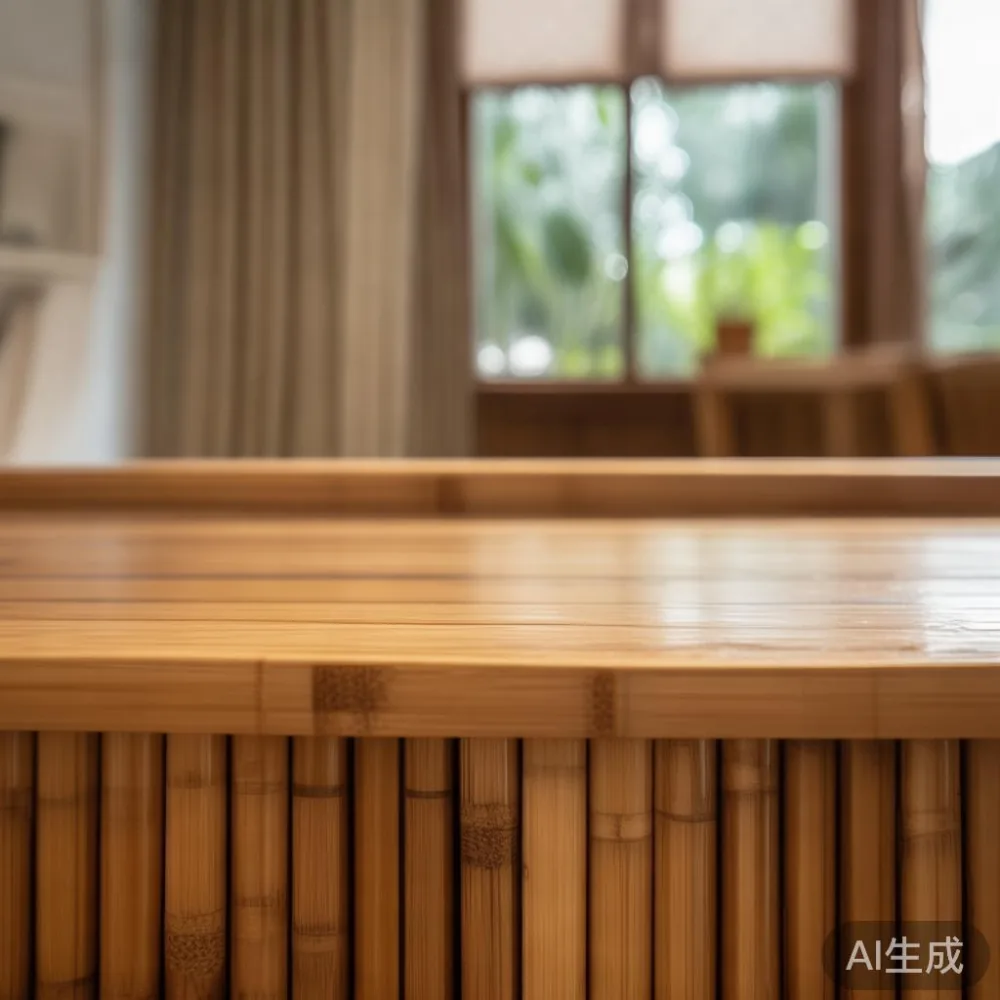
What does "warm minimal" actually mean in a Singapore HDB?
Warm minimal is a colour temperature, not a style. In a Tampines 4-room flat with cream walls and 2.7 m ceilings, warm minimal reads as off-white (think RAL 9010 or Dulux Natural White) paired with honey, oat, and clay. Cold minimal reads as grey, black, and silver. The difference is one degree on the Kelvin scale, but the whole room changes. I keep a 3000 K bulb in my floor lamp and a 2700 K bulb in my bedside lamp; that 300 K gap is the entire trick.
For context, the typical HDB living room is about 18 to 22 sqm, and the master bedroom is about 12 to 14 sqm. You do not have room for ten pieces. You have room for five pieces that do their job quietly: a solid wood sofa frame on a slim base, a bamboo side table, a low bamboo TV console, a bed frame with a real wood headboard, and one statement piece such as a marble table lamp base. Five pieces. That is the budget.
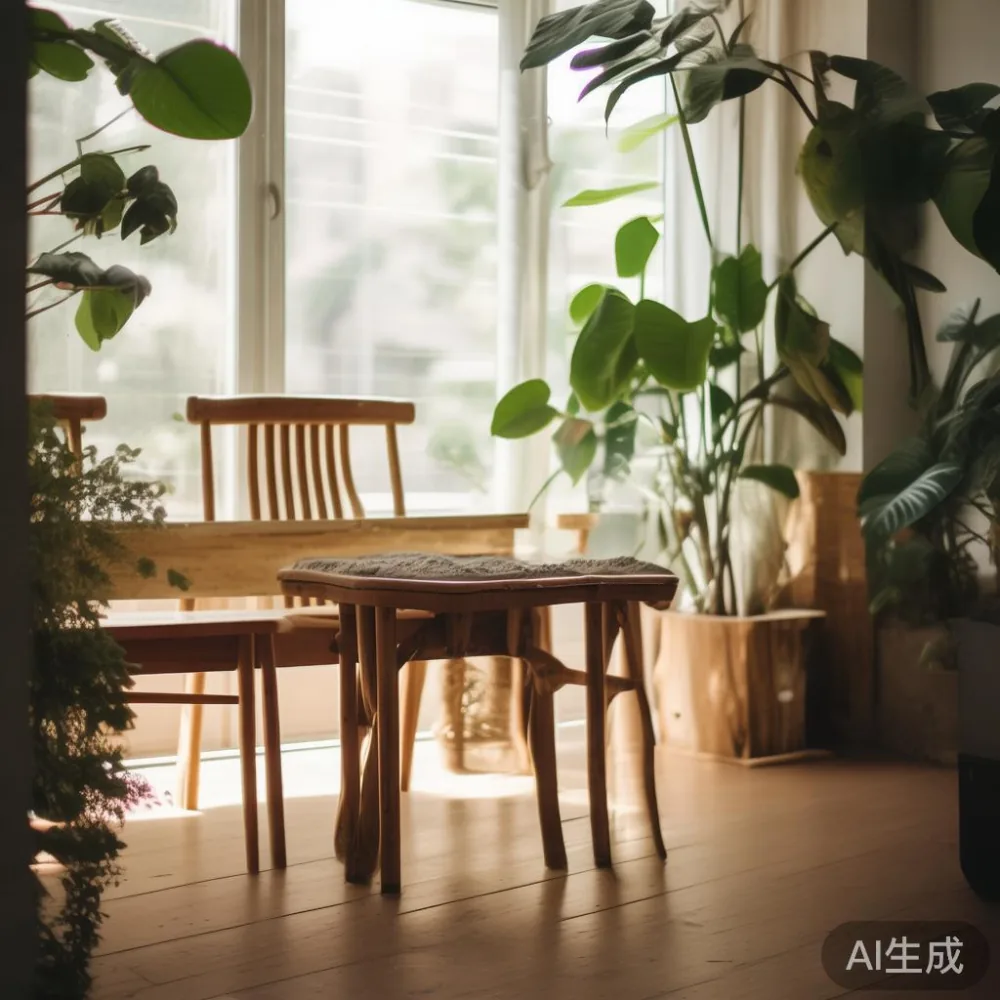
Why bamboo furniture works so well for this look
Bamboo has a tight, vertical grain and a colour that sits between maple and light walnut, roughly 7 to 8 on the yellow-brown axis. It reflects daylight without going yellow at night. In a Bedok condo corridor with lift openings at 1.1 m wide, a flat-pack bamboo shelf that arrives in a 1.05 m box slides in without drama. A solid teak shelf of the same size would weigh 28 kg and need two men and a trolley.
Bamboo furniture also handles Singapore humidity better than people think. Properly kiln-dried bamboo at 8 to 10 percent moisture content, with a closed-cell finish, will not cup or crown at our usual 28 to 32 °C and 70 to 85 percent RH. I learned this the slow way: my first bookshelf was MDF with a bamboo veneer, and after nine months the edges had lifted by about 1.5 mm. The replacement was a real bamboo bookshelf from MIDHILL, 180 cm tall, 80 cm wide, 35 cm deep, weighing 22 kg, and the edges are still flush fourteen months later. MIDHILL ships bamboo furniture with a 10-year structural warranty, which for a 22 kg shelf at S$489 list feels honest, not generous.
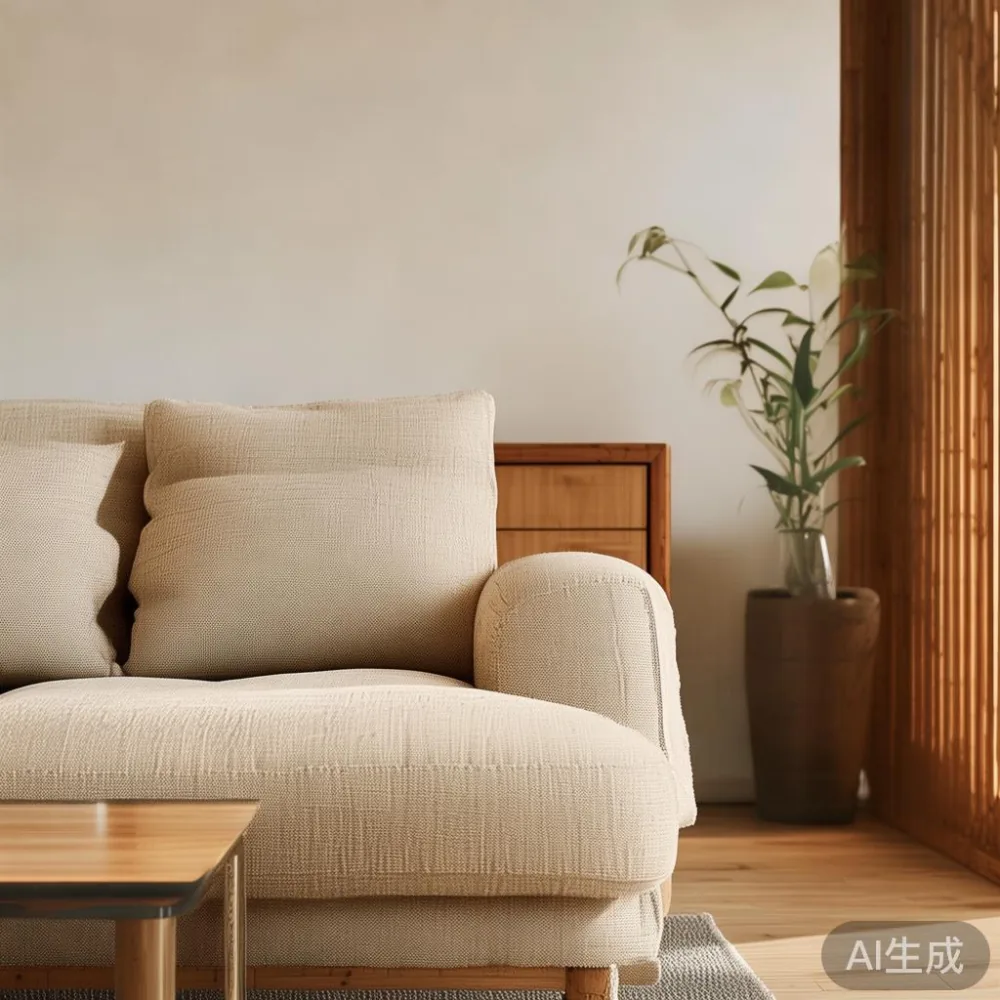
What is the first piece I should buy?
Buy the dining table. Everything else is sized around it. In a 4-room flat, a 140 cm by 80 cm rectangular bamboo or solid wood dining table seats four comfortably and fits through a standard 0.9 m HDB door on its side, which is non-obvious until you measure. A 160 cm round table sounds romantic until you realise it needs a 2.4 m turning circle, and your dining room is 2.1 m wide.
For a Punggol condo, a light luxury dining table in oak or ash, 140 to 160 cm long, with a 4 cm thick top and a chamfered edge, will read warm without shouting. Keep the legs simple: a single pedestal or two square posts. Carved cabriole legs belong in a 1920s shophouse, not a 2024 BTO. If you want a French provincial TV console in the same room, pick one with a pale limewashed finish and brushed brass pulls, around 180 cm wide, 45 cm deep, 55 cm tall. It will sit under a 65-inch wall-mounted TV, leave 12 cm of breathing room on each side, and not fight the dining table visually.
How do I stop the room from feeling like a showroom?
Add three things that are not new. A 2 m by 3 m wool or wool-blend rug in oat or terracotta. One piece of unglazed ceramic with an obvious hand-thrown ring on the base. One plant taller than 90 cm, such as a fiddle leaf fig in a 35 cm diameter unglazed pot. That is the entire anti-showroom kit. Cost in Singapore: S$280 for a good rug at Furnitureshoppe or Taobao, S$45 for a ceramic vase at Arab Street, S$60 for a 1.2 m fiddle leaf at Far East Flora. The room now reads warm, lived-in, and about S$1,200 lighter.
Lighting does the rest. Replace ceiling-mounted downlights with a single 30 cm rattan pendant over the dining table. Rattan is technically not bamboo, but it shares the same warm, fibrous reading and costs roughly S$120 to S$180 for a decent one. Add a 150 cm floor lamp with a linen shade behind the sofa, and a 25 cm ceramic table lamp on the console. Three sources at three heights. Done.
How do I match a Japandi bed in a small bedroom?
If you are wondering how to style Japandi bed in apartment rooms that are 12 sqm, the answer is a low-profile solid wood bed frame, 15 to 20 cm off the floor, in ash or oak, with a plain upholstered headboard in oatmeal linen. Skip storage drawers if the bed sits under a window, because drawers plus curtain stack plus aircon condensate tray will eat 28 cm of vertical space and the curtain will never close properly.
Mattress height matters. A 25 cm pocket-sprung mattress on a 18 cm platform puts the top of the bed at 43 cm, which is the height interior designers in Singapore have started calling the Japandi line. Add two nightstands that are 45 cm wide, not the standard 55 cm, and you keep 10 cm of walkable space on each side. The nightstand should match the bed frame wood, not the wall colour. For a real test, look at how to style Japandi bed in apartment show flats at the Punggol Eco-Township sales office; they use ash frames with pale grey linen, and the room never feels small.
How do I compare light luxury beds?
This is the comparison I get asked about most often, usually over coffee in a Tampines kopitiam: light luxury bed vs Italian light luxury bed. The honest difference is about 25 to 35 percent in price, roughly S$1,800 versus S$2,600 for a queen in Singapore, and about 2 cm in headboard thickness. Italian light luxury beds tend to use leather wraps with a subtle saddle stitch, while light luxury beds (French, American, or post-modern) tend to use linen or boucle with simpler piping.
If your bedroom is 12 sqm, the lighter fabric reads better because it bounces more light. If your bedroom is 16 sqm or larger, the leather version adds weight and reads more grown-up. Either way, ask for the inner frame spec: solid beech or ash slats at 5 to 7 cm spacing, not MDF. A 10-year structural warranty on the frame is worth about S$400 in peace of mind over a decade, which is roughly what you would save buying MDF and replacing it once.
Which sofa should I pick for a warm minimal living room?
The phrase I keep seeing in 2026 catalogues is the best European sofa for 2026, and it usually points to a low-arm, deep-seat, 90 cm depth, 210 to 240 cm wide, three-seater in oat, stone, or clay boucle, on a solid beech base. In a 4-room HDB, a 230 cm sofa leaves 70 cm of walkable space on each side, which is the minimum I would tolerate for daily use. Anything deeper than 95 cm pushes your coffee table too far away, and anything shorter than 200 cm looks lost under a 65-inch TV.
For a coffee table, an Italian light luxury coffee table in travertine or pale marble, 120 cm by 60 cm, 35 cm tall, is the move that ties the room together. Marble is cold to the eye but warm under daylight, and the pale tone stops the room from feeling beige-heavy. If marble is over budget, a solid wood coffee table in ash with a 4 cm top reads similarly and costs about 40 percent less, usually S$650 to S$850 instead of S$1,200 to S$1,400.
What about the wardrobe and the bits in between?
Wardrobes are the silent killer of warm minimal rooms. A glossy white HDB-default slider reads clinical. Two changes help. First, swap the sliding doors for hinged doors in pale limewashed oak, 60 cm wide each, with vertical fluting. Second, replace the chrome handles with leather pulls, about 8 cm long, in tan. Cost in Singapore for a custom 2.4 m wide wardrobe: S$2,200 to S$2,800 from a local carpenter, versus S$1,400 for the HDB default. The S$800 to S$1,400 difference is the price of not feeling like you live in a clinic.
For the wardrobe interior, keep it boring. Two hanging rails at 95 cm and 165 cm, three 35 cm deep shelves, two drawers with full-extension runners. A pull-out tie rack sounds clever until you own six ties. Bend at 1.8 m for hanging, leave 1.2 m for shelves, and the room works.
How do I handle GST, delivery, and returns?
Furniture in Singapore carries 9 percent GST, and most light luxury showrooms will not include it in the sticker price. Ask for the GST-inclusive price before you measure your corridor. Delivery for a single bamboo piece over 1.8 m in Punggol or Bedok typically runs S$60 to S$120, with lift access included up to the 20th floor. Above the 20th floor, expect a S$20 to S$40 surcharge because the delivery team needs two men and a longer booking slot.
Returns matter more than people think. MIDHILL offers a 14-day return window on stocked bamboo furniture, which is one of the longer windows I have seen locally, where 7 days is the norm. For custom pieces, returns are usually a 30 percent restocking fee, so measure twice. Corridors in older Tampines blocks can be as narrow as 1.05 m; a 1.1 m tall wardrobe on its side will not make the turn at the lift lobby. I learned this with a friend's order; we had to reverse the wardrobe 12 m down the corridor, which cost S$80 in extra man-hours.
A small checklist before you tap "check out"
Measure the lift. Measure the corridor door. Measure the room door. Subtract 5 cm from the smallest number, then check the piece's packed dimensions, not its assembled dimensions. A 180 cm wardrobe packed is often 185 cm by 65 cm by 25 cm in three flat packs, which fits, but the 90 cm by 200 cm by 8 cm headboard panel might not fit diagonally in your lift.
Then ask three questions. Does the wood come with a kiln-dry certificate or a stated moisture content below 12 percent? Does the seller offer lifetime refinishing, or at minimum a 10-year structural warranty? Will they hold a piece for seven days so you can measure your room again? MIDHILL answers yes to all three on its bamboo and oak ranges, which is part of why I keep specifying it for clients who do not want to think about furniture for another decade.
What does the final room actually look like?
After the dining table, the bamboo TV console, the ash bed frame, the boucle sofa, the marble coffee table, and the linen curtains, the room should feel like a hotel you do not want to leave. Walls off-white. Floor pale. Wood honey. Textiles oat. One plant. One ceramic. One piece of art, even if it is a S$40 framed print from a Punggol art market.
Total spend for a 4-room HDB in 2024 prices: roughly S$8,500 to S$12,000 for the five main pieces, excluding mattress and appliances. With mattress, curtains, lighting, rug, and the small stuff, you land around S$14,000 to S$18,000. That is the warm minimal budget for a Singapore HDB in today's market, and it is a budget that holds its resale value better than a 2020 grey-and-mirror theme ever will.