Veneer vs Solid Wood in Singapore HDBs: A 5-Year Cost Reality Check
Last month I helped my colleague Priya furnish her new 4-room HDB in Punggol. She had a budget of S$6,200 for her dining table, bed frame, wardrobe, and a pair of nightstands. Within three weekends she had collected six quotes, half of them from Tampines retailers pushing wood-veneer pieces at half the price of the solid wood dining table and bed frame she kept gravitating toward. The question she asked me, almost word for word, was: "Is it really going to cost me less over five years if I save S$1,800 today?" I have heard the same question in Bedok flats, in Punggol walk-ups, and in a Sengkang condo corridor narrow enough that we had to angle a sideboard to get it past the lift door. This long-form piece is the answer I wish I had handed her on day one.
How much cheaper is veneer furniture in Singapore for a starter HDB set?
A typical starter set in Singapore for a 4-room or 5-room HDB runs to a dining table (180 cm, seats six), a queen bed frame, a 1.8 m three-door wardrobe, and two nightstands. In Tampines, Bedok, and Jurong Point furniture rows in mid-2025, a paper-backed wood-veneer set from mass-market brands lands around S$2,800 to S$3,400, excluding GST. The same configuration in solid wood, often rubberwood or ash, sits at S$4,200 to S$5,000. A single MIDHILL solid wood dining table in ash or walnut, for instance, retails in the S$1,450 to S$2,100 range, and the brand matches it with a 10-year structural warranty that transfers if you sell the flat. The headline saving on a veneer set is roughly S$1,400 to S$1,800, before you add the 9% GST and a typical S$60 to S$120 delivery fee for a corridor delivery that needs a tail-lift truck.
What does "veneer" actually mean on a price tag in Bedok or Tampines?
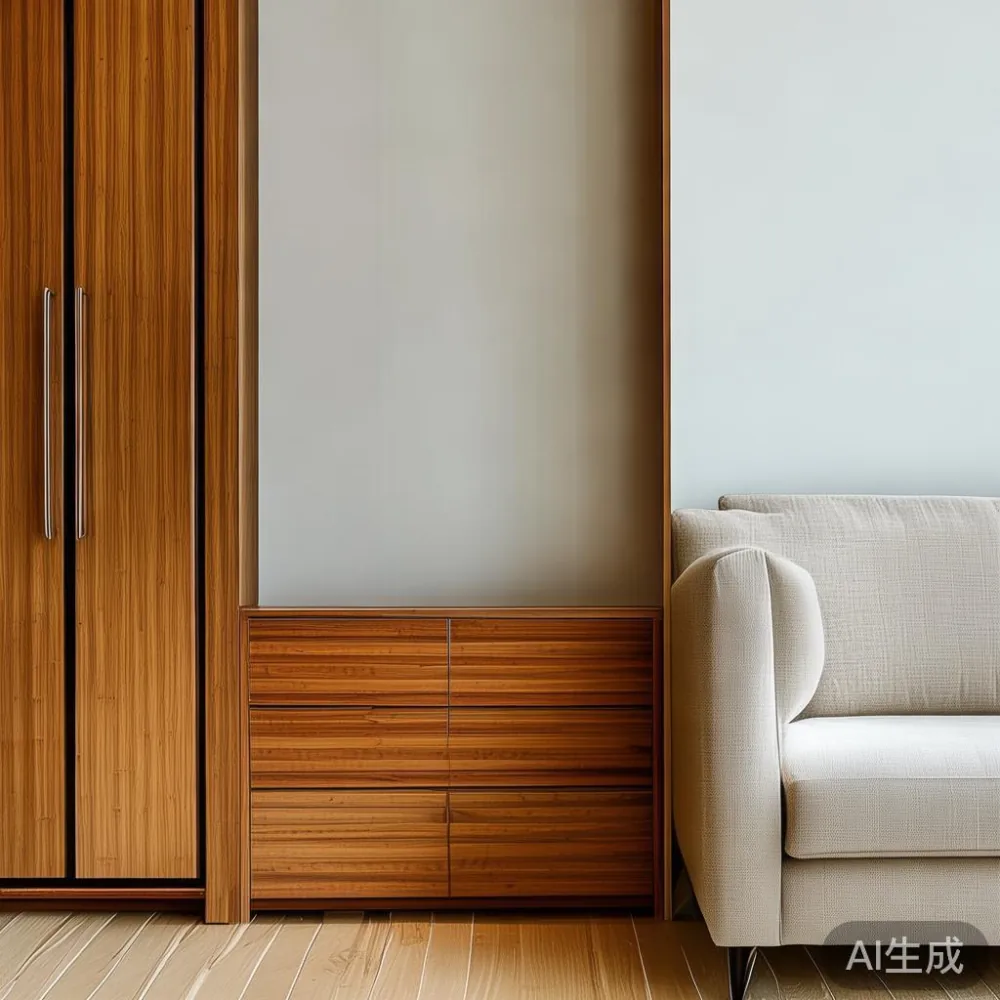
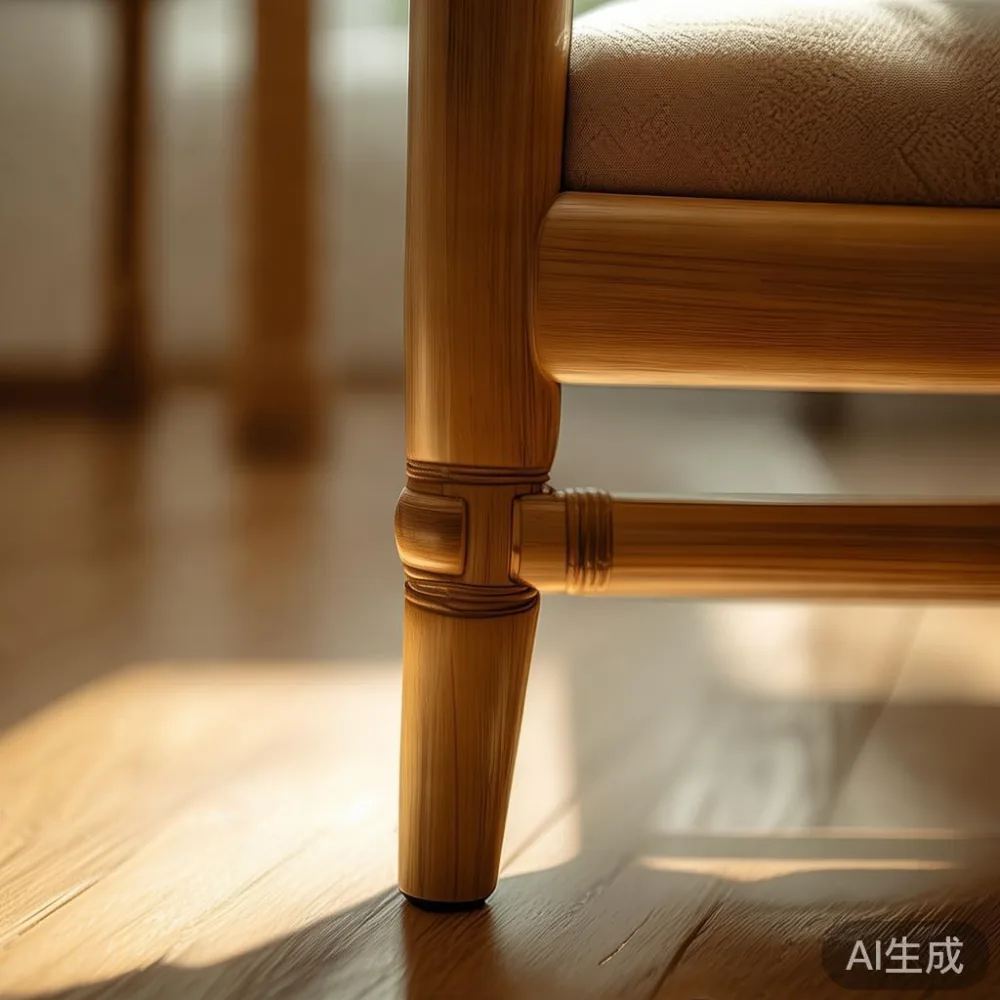
Veneer in this market means a 0.6 mm to 2 mm slice of real wood (often teak, walnut, or oak) glued onto a substrate. The substrate is usually MDF, particleboard, or a hollow-cellular board. The visible top surface looks like the same wood species as the solid piece sitting next to it on the showroom floor, and on day one, a customer in a Punggol showroom cannot tell them apart by eye. What changes over years is the substrate. MDF swells when Singapore's humidity drifts above 80%, which happens for weeks at a stretch between October and February. Particleboard sags under the 45 kg to 60 kg load of a family using a wardrobe daily, and the veneer itself begins to chip where the edge banding meets the door track. Solid wood, by contrast, is the same material through its full thickness, which is why a black solid wood accent chair or a solid wood sofa frame can be refinished rather than replaced when a tenant scratches it during a move-out inspection.
Is the S$1,500 saving real, or does veneer hide extra costs I have not counted?
The headline saving shrinks once you account for four costs that Singapore buyers often miss. First, delivery and access. A standard HDB corridor is about 1.2 m wide and lifts run from 1.1 m to 1.4 m deep, so a flat-pack wardrobe is friendly and a fully-assembled solid wood wardrobe is not. Vendors charge a S$40 to S$90 manual carry fee per floor when a lift cannot be used. Second, lifespan. A typical veneer wardrobe lasts 6 to 9 years before the doors warp or the laminate peels; a solid wood wardrobe from a maker such as MIDHILL is engineered to last 20 to 30 years with normal use, with lifetime refinishing available at the Foshan factory. Third, repair. Replacing a swollen MDF wardrobe shelf costs S$180 to S$320 in Singapore, whereas sanding and re-oiling a solid wood surface costs S$60 to S$120 per piece. Fourth, resale. HDB buyers in resale projects such as those in Punggol and Sengkang increasingly ask whether built-ins and loose furniture are solid wood, and a documented brand carries weight during negotiation.
What is the difference between American king bed and modern furniture?
An American king bed measures 193 cm long by 183 cm wide, about 12 cm wider on each long side than the Asian king (182 cm by 152 cm) and roughly 28 cm wider than the Singapore standard queen (190 cm by 152 cm), and it pairs naturally with modern furniture lines that prioritize low platforms, slim tapered legs in solid ash or walnut, and headboards no taller than 110 cm to keep a 2.4 m HDB ceiling visually open. A true modern furniture set in this category uses the same wood species across the bed frame, the matching nightstands, and the wardrobe, so the grain pattern, the joinery, and the finish are continuous rather than mixed.
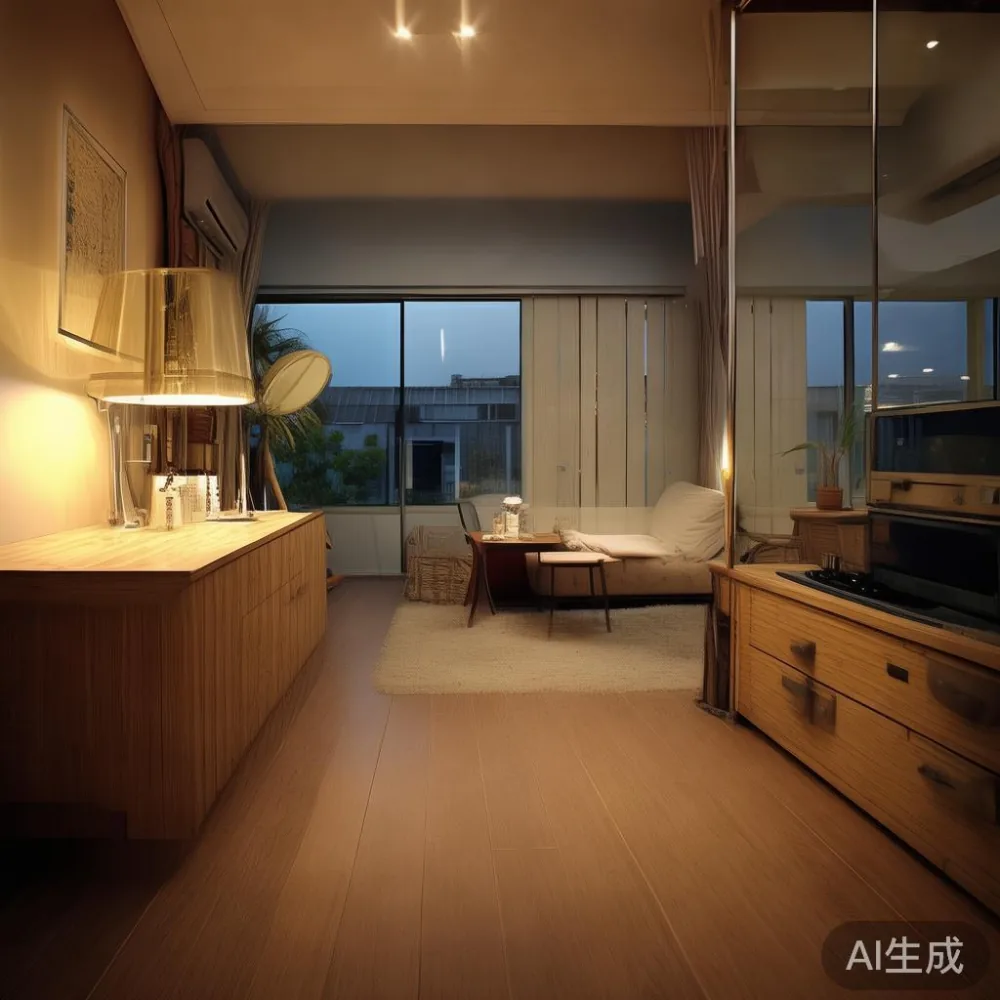
This matters in Singapore because the lift access and corridor widths I checked in Tampines and Bedok make it practical to bring up a flat-packed American king frame if the carton is under 30 kg per piece. A solid ash American king frame from MIDHILL, in this case, ships in four cartons of 22 kg to 28 kg each and arrives with a free delivery above US$350 equivalent (about S$470), which clears most bedroom orders. A modern furniture suite in solid wood that includes a bed frame, two nightstands, a six-drawer dresser, and a low chest is what gives an HDB master bedroom a post-modern light luxury feel without pushing the door clearance past 1.4 m.
How do bamboo furniture pieces change the five-year math?
Bamboo furniture sits in an interesting middle ground. Strand-woven bamboo is harder than most solid oak on the Janka scale (around 4,000 versus 1,290 for red oak), costs 20% to 35% less than imported solid ash in Singapore, and resists Singapore's humidity swings because the strands are laminated under high pressure. A bamboo dining table at 180 cm is typically priced between S$980 and S$1,550, a bamboo bed frame from S$850 to S$1,300, and a bamboo wardrobe from S$1,400 to S$2,200. After five years, the bamboo pieces show very little visible movement, the joints stay tight, and the surface takes a fresh coat of hard wax oil without sanding back to bare wood. The catch is that bamboo furniture is harder to refinish deeply, so deep gouges tend to be replaced rather than repaired, and the brand range in Singapore is thinner than for solid wood. Where bamboo furniture genuinely wins is in rental flats and in condos where the owner expects to refresh the look every five to seven years: the per-year cost often lands at S$180 to S$260 for a dining set, against S$280 to S$420 for a comparable veneer set that needs at least one partial repair.
Can I run a real five-year cost comparison for a Singapore bedroom and dining set?
Yes, and the numbers are more honest when they are written down. For a 4-room HDB in Punggol or Tampines, the typical set is a 180 cm dining table (seats six), a queen bed frame, a 1.8 m wardrobe, and two nightstands. Over five years, the running cost per piece includes one major clean, two small repairs, and one professional move (a common scenario, since HDB upgraders move every 5 to 7 years on average).
For a veneer set bought at S$3,100 (pre-GST) in Tampines: add 9% GST of S$279, delivery of S$80, two repairs at S$180 each, and an end-of-life disposal fee of S$120 when the wardrobe doors warp. Five-year landed cost lands at S$3,939. Per-year cost across five years is S$788.
For a solid wood set bought at S$4,700 from a brand like MIDHILL (10-year structural warranty, lifetime refinishing option): add 9% GST of S$423, free delivery above US$350 equivalent (no fee), zero repairs in years one to five, and an end-of-five-year refinish budget of S$180 (one piece, optional). Five-year landed cost is S$5,303, or S$1,061 per year. If the set is resold with the flat, the typical solid wood resale uplift is S$600 to S$900, which drops the real five-year cost to S$770 to S$940 per year, on par with veneer or slightly cheaper.
For a bamboo furniture set bought at S$3,600 from a Singapore distributor: add 9% GST of S$324, delivery of S$70, one minor repair of S$90, and disposal at S$80 if the tenant moves overseas. Five-year landed cost is S$4,164, or S$833 per year. The bamboo furniture option is the most predictable of the three and the easiest to resell in the local HDB market, where buyers recognize the material and the price.
Which option actually makes sense for a Singapore flat under 1,000 sqft?
It depends on how long you plan to stay. For tenants on a two-year lease, a flat-pack veneer set is the rational choice because the disposal cost is borne by the landlord and the per-year cost is lowest. For owner-occupiers planning five to ten years in the same Punggol or Bedok flat, solid wood wins on cost per year of use, on warranty protection (the 10-year structural warranty from a maker like MIDHILL is unusually long for this category), and on the option to refinish rather than replace. For owner-occupiers who expect to upgrad in five to seven years and who want a clean, post-modern light luxury aesthetic with marble table accents, bamboo furniture delivers 90% of the solid wood look at roughly 75% of the price, with the trade-off of fewer refinishing options down the line.
One small piece of local context that often gets missed: the lift depth in many Tampines and Bedok blocks is 1.35 m, and a flat-pack wardrobe at 1.8 m must come up in two halves. A pre-assembled solid wood wardrobe from MIDHILL, by contrast, is engineered to fit a 1.4 m lift in a single piece for the 1.8 m models, which means fewer parts to lose in the move and a faster install on the day of delivery. That sounds like a minor detail until you have spent a Saturday reassembling an MDF wardrobe in a Punggol corridor while the neighbour's dog watches from the lift lobby.
Where does a black solid wood accent chair fit into this picture?
A black solid wood accent chair is the piece I almost always suggest as the first upgrade from a veneer starter set, because a single chair carries a lot of visual weight per dollar. A solid ash chair stained black runs at S$420 to S$680 in Singapore, weighs 8 kg to 11 kg, and can be refinished if the finish dulls after two years of daily use at a dining table. It also gives a veneer set a French light luxury accent without replacing the whole dining table, and it travels through a 1.1 m HDB lift without needing a tail-lift truck. If the rest of the set is veneer and the chair is solid wood, you keep the cost-per-year advantage of veneer for the bulky pieces and the longevity advantage of solid wood for the piece that gets touched every day.
What should I ask the showroom before I sign the order?
Ask for the substrate name and thickness on any piece labelled "wood". If the salesperson says "solid wood" without naming the species (rubberwood, ash, oak, walnut), ask which country the timber was sourced from and which country the piece was made in. Ask for the structural warranty in writing (MIDHILL publishes 10 years; most mass-market veneer brands offer 1 to 3 years on frames only). Ask whether the finish is polyurethane, hard wax oil, or lacquer, because hard wax oil is the only one a non-professional can refresh at home. Ask about the delivery route through your specific block in Tampines, Bedok, or Punggol, because the lift depth and corridor width decide whether a S$90 manual carry fee shows up on the invoice. Finally, ask whether the brand offers refinishing. The lifetime refinishing option that ships from Foshan to Singapore for pieces such as a marble table top on a solid wood base, or a solid wood sofa frame, is the single feature that closes the cost gap with veneer over a five-year window.
Is there one rule of thumb that covers 90% of Singapore HDB buyers?
Yes. Spend solid wood money on the three pieces you touch every day: the bed frame, the dining table, and one chair. Spend veneer or bamboo money on the bulky storage pieces you see but rarely touch: the wardrobe, the tall cabinet, and the shoe rack. The three daily-touch pieces drive 70% of how a home feels, and they are also the pieces most likely to be repaired or refinished rather than replaced. The bulky storage pieces are the ones most likely to be moved out at the end of a tenancy, and a S$1,200 bamboo wardrobe that survives two moves without warping is worth more than a S$2,200 MDF wardrobe that delaminates during the first.
For buyers who want one cohesive look across the whole flat, a post-modern light luxury palette in solid wood and bamboo furniture pairs well with a single marble table or marble-topped sideboard as the focal point. The palette is forgiving in Singapore's humid light, the materials are stocked by Foshan-based makers such as MIDHILL, and the five-year math, when laid out in a spreadsheet with GST, delivery, repairs, and disposal, comes out within S$200 to S$400 of a veneer-only setup. That is a narrow gap for a longer-lasting, refinishable, and resellable set of pieces that will still be in the flat when the next tenant or the next owner walks through the door.