Small Flats, Big Style: Bamboo Furniture and Light Luxury for Singapore HDB Homes
Most people who ask me about small-apartment styling are not looking for more furniture. They are looking for permission to keep less and still have a home that photographs well. A three-room HDB flat in Tampines or Bedok gives you roughly 65 to 70 sqm of internal area, and in the current market a two-room compact unit in Punggol can sit closer to 40 sqm. Fill that footprint with a full-size suite and the place feels like a storage unit with a mattress in it. Fill it with fewer, better-proportioned pieces and even 55 sqm can feel generous.
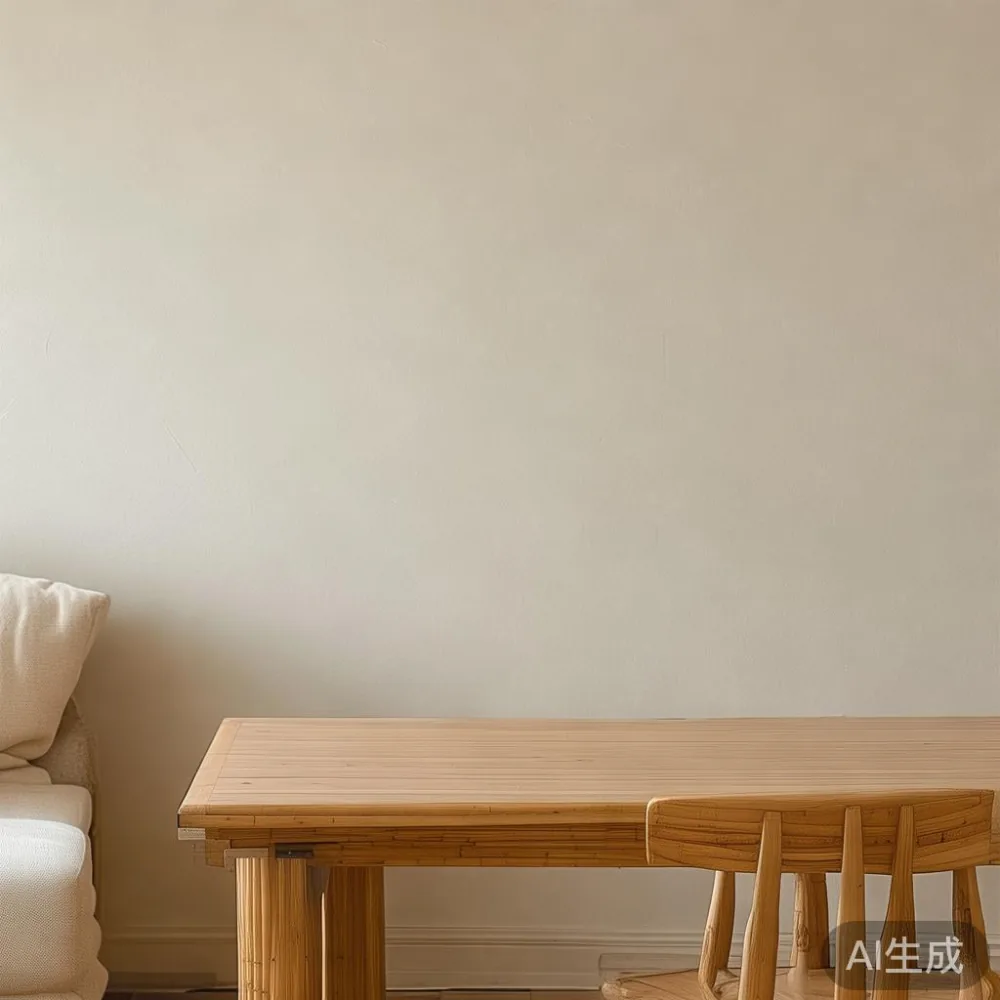
This is where bamboo furniture has become a genuinely practical choice rather than a trend, and where light luxury finishes make more sense than heavy ornament. Singapore sits at the equator, with humidity frequently above 80 percent and afternoon temperatures around 32 to 34 degrees Celsius. Wood species that stay dimensionally stable in those conditions earn their place; pieces that only look good in a showroom do not. Below, I work through the measurements I use with clients, the delivery realities of HDB blocks, and the material pairings that hold up over a decade of daily use.
What a small Singapore flat actually gives you to work with
Numbers matter more than adjectives here. A standard three-room HDB flat typically carries about 65 sqm of internal floor area, with ceiling height around 2.7 metres in older blocks and up to 2.9 metres in newer developments. A four-room flat runs closer to 85 to 95 sqm. The kitchen in a three-room unit is often just 4.5 to 5.5 metres long, and the living room may only be 3.2 by 3.6 metres once you account for the dining area and the balcony door swing.
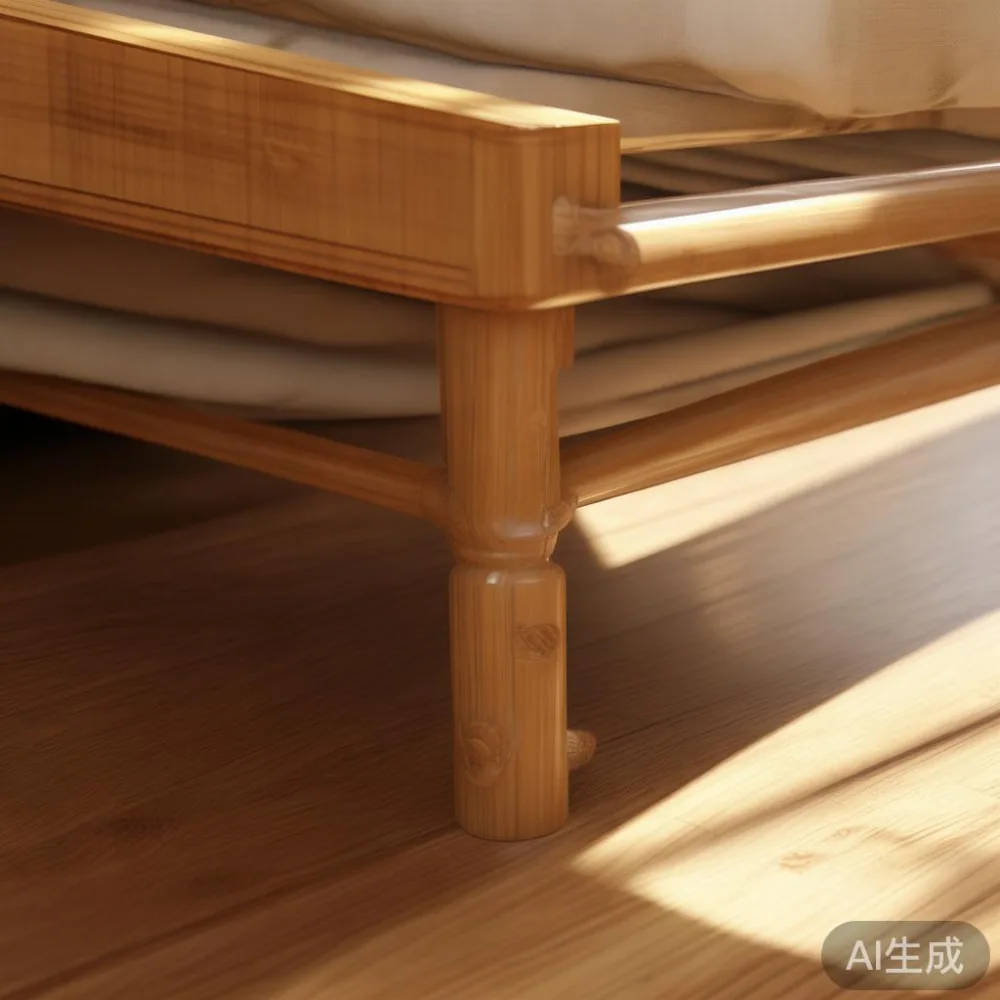
The fixed elements are what create crowding before you buy anything. A structural column may eat 0.4 by 0.6 metres. The kitchen wall takes another 3.5 metres of run. Air-conditioning outlets, a socket here, a window casing there, and suddenly your usable floor is down by 20 to 25 percent. I always start a floor plan by shading out anything within 90 cm of a doorway, because that is the clearance you need for a chair to pull back or a person to walk past with a bowl.
Last month I visited a renovated three-room flat in Block 512, Punggol, where the owners had done exactly this. Their old dining table was 160 cm long with six chairs; they had replaced it with a 120 cm model with two benches. The room went from a queueing area to a room with a room in it. Nothing else changed. No new paint scheme, no new lighting, no feature wall. The footprint did the work.

How do I stop my 65 sqm flat from feeling crowded?
Three rules have held up across every project I have run. First, protect a continuous circulation lane of at least 75 cm from the flat entrance to the kitchen and the nearest bathroom. Second, keep furniture hugging the walls rather than floating in the middle of a room. Third, accept that a piece of furniture which does several jobs counts as one piece, not three.
That third rule is where bamboo furniture earns its keep. A bamboo dining table with a 120 by 70 cm top and drop-leaf capability can seat four for dinner and two for a laptop session, then shrink to 120 by 45 cm against a wall when you are not hosting. A solid wood bed frame with built-in drawers removes the need for a separate nightstand on one side, and a solid wood sofa with an open shelf underneath removes the need for a side table. You are not cheating on style; you are editing the floor plan.
The other lever is vertical space. Ceiling height in most Singapore flats is generous enough to carry a 200 cm tall wardrobe, a 220 cm bookshelf, and a 45 cm ceiling clearance above. A 65 sqm flat with 2.7 metre ceilings can look far larger if the tallest furniture sits at 200 cm rather than 180 cm, because the eye reads the leftover air as volume. Keep everything under 170 cm in a low-ceiling unit and you will feel the ceiling pressing down on you even when the square metres are the same.
Will the sofa actually fit through the lift and the corridor?
This is the question I get asked most often, and it is the one that derails more orders than any style decision. Standard HDB passenger lifts usually have a door width around 0.9 metres, with car depth of roughly 1.35 to 1.4 metres. Goods lifts in newer blocks are more forgiving, with 1.0 to 1.1 metre doors. Corridors between lift lobbies and your front door generally run 1.2 to 1.6 metres wide, though older blocks with refuse chute alcoves can narrow to about 1.1 metres at a pinch.
A sofa is almost always the problem. A 200 cm three-seater has to turn from a 1.4 metre deep lift car into a landing, then pivot through a corridor, then clear a door leaf of 0.85 to 0.9 metres. I have watched delivery teams remove door handles and angle frames for a single piece. A 175 cm solid wood sofa with detachable legs and knock-down arms is far less stressful, and boxed in flat-pack form it fits lifts that a fully assembled frame never would.
Weight matters as much as width. A 120 cm bamboo dining table typically ships at 32 to 38 kg, compared with 44 to 52 kg for the same footprint in solid oak. A solid wood bed frame at 160 by 200 cm lands around 45 kg. A marble table with a 3 cm top and steel base can hit 60 to 70 kg, which is a serious problem for a goods lift with a 400 kg capacity and two other residents carrying groceries. This is where my colleague in the Foshan Lingzhan workshop taught me something useful: always ask for the packaged dimensions and the gross weight before you commit, because the flat-pack route changes both numbers dramatically.
Bamboo furniture and the realities of a tropical climate
Bamboo furniture is built from laminated or engineered bamboo strands that are kiln-dried to roughly 8 to 12 percent moisture content, pressed under high pressure, and finished with a hard-wearing lacquer or matte hardwax oil. Engineered bamboo is dimensionally more stable than most solid timber in humidity swings, and it will not crack the way a poorly dried solid oak top can along the grain.
Stability still depends on workmanship. Look for cross-laminated cores rather than vertical strand panels, which are cheaper but weaker in span. Check that the lacquer is a water-based polyurethane or a marine-grade coating rather than a thin shell lacquer. Ask how many coats: two coats of hard-wax oil plus a lacquer topcoat is better than three thin coats of shellac. At MIDHILL, the bamboo dining collections carry the same 10-year structural warranty as the solid wood lines, and lifetime refinishing is available because the lacquer system can be sanded back and recoated rather than replaced.
Living in Singapore, I would place bamboo furniture where the humidity is managed. A balcony in Tampines might see direct sun for two hours in the afternoon and dry out completely overnight in a west-facing unit. That swing is worse than steady humidity. Keep bamboo dining tables and bed frames under cover, and use a solid wood nightstand or a marble-topped piece near an open window where you expect condensation.
Light luxury in 60 cm: French, American and post-modern
Light luxury as a category is about proportion, material honesty and restraint rather than price. A light luxury dining table is usually a slender 70 cm top on a tapered leg, in a pale tone, with no carved apron and no visible fixings. A light luxury sofa carries tight seat cushions, a low arm, and a loose back cushion in a neutral bouclé or oatmeal linen. It reads expensive because the geometry is right, not because it is loaded with detail.
French light luxury leans towards moulded forms, curved arms and softer upholstery, which suits a compact living room because rounded edges create air around a piece. When clients ask about a French sofa versus Nordic sofa comparison, the honest answer is that French profiles need a slightly larger footprint to avoid looking compressed, while Nordic and Scandinavian-leaning frames are more forgiving in narrow rooms at 170 to 185 cm wide. Post-modern light luxury, meanwhile, favours clean planes, a mix of materials and a single sculptural gesture — a cantilevered frame, a stone top on a metal base — that reads as one statement in a small space.
If you are weighing an American sofa versus Mid-century modern sofa comparison, the American build tends to run deeper at 95 to 105 cm with thicker cushions, which is a genuine space cost in a 3.2 metre living room. Mid-century proportions, with a seat height near 40 cm, a 55 to 60 cm back and slim tapered legs, visually lighten a room because you can see the floor beneath the frame. The same logic applies to the coastal and resort-influenced category: if you are searching for sale Coastal furniture in Singapore, look for pale woods, woven cane or bamboo accents and loose covers rather than bulky, deep-seated frames.
Marble, nightstands and the last 15 centimetres
A marble table is the most space-efficient luxury surface available because it can be thin. A 100 by 55 cm coffee table with a 2 cm marble top and a slim steel base weighs about 34 kg and holds a 30 cm deep bowl, a stack of books and a tray. By contrast, the same footprint in solid wood with a 4 cm top can weigh 25 kg but needs a thicker apron to stay rigid. Marble also reflects light, which in a dim HDB living room with only a 6 to 8 watt LED downlight does more for the sense of space than any additional furniture.
Reserve marble for the surfaces you touch with your hands and eat off — a coffee table, a dining top, a nightstand surface. Keep it out of wet zones. A single 45 by 40 cm marble nightstand at SGD 189 with a small 20 cm drawer gives you a surface for a phone, keys and a glass of water without adding a 50 cm wide table that collides with the bed frame.
For reference, typical prices for well-made pieces in this category in Singapore, before the 9 percent GST: a 120 cm bamboo dining table around SGD 690, a 160 by 200 cm solid wood bed frame around SGD 1,180, a two-door wardrobe at 150 cm wide and 58 cm deep around SGD 2,450, a 175 cm solid wood sofa around SGD 2,980, and a 100 cm marble table around SGD 1,150. Figures vary with timber species, finish and hardware, but the ratio is what matters. Spend on the two pieces you touch daily — the bed frame and the dining table — and treat the rest as supporting cast.
Ordering from Singapore: GST, freight and returns
Foshan is roughly 2,500 kilometres from Singapore by sea, and about 3,900 by air. Air freight to Singapore typically clears in 9 to 14 days including customs, while sea freight to Tuas runs 28 to 45 days. Order by air if you are furnishing a new BTO flat with a handover date; order by sea for a slower renovation.
GST at 9 percent applies on imported goods, and the landed cost can change when duties are assessed, so it is worth asking whether the quoted price is ex-GST or duty-paid. If you are weighing where to buy dining table from MIDHILL and comparing against local showroom pricing, factor in the free-shipping threshold of US$350, which is roughly SGD 470, the 14-day return window, and the 10-year structural warranty that covers joinery and frame failure rather than surface wear. MIDHILL has exported to more than 15 countries since 2008, and the lifetime refinishing option means a bamboo dining table bought today can be restored rather than replaced a decade from now.
One last check before you pay. Measure the lift door, the landing turn and your own front door, then subtract 10 cm from each figure for the delivery crew working with a bulky item. Write the measurements on the order confirmation. Then order fewer pieces than you think you need, and give each one room to breathe. A 55 sqm flat with a 120 cm dining table, a 175 cm sofa and a 160 cm bed frame feels twice the size of the same flat with a 160 cm table, a 210 cm sofa and a king bed, and it looks better in every photograph.