Humidity in Southeast Asia: What It Quietly Does to Solid Wood and Bamboo Furniture in Your Singapore Home
I keep a small hygrometer clipped to the inside of my wardrobe door in my Tampines HDB flat, and the numbers on it have surprised more than one visitor. On a rainy afternoon in December, with the windows cracked and the ceiling fan off, the needle pushes past 82% RH. By 2 a.m., with the air-con set to 24°C, it has dropped to 58%. That 24-point swing happens inside the same room, on the same day, in a home that most people would call air-conditioned and dry. This single observation is why I started paying closer attention to how humidity in Southeast Asia quietly affects the wood and bamboo furniture in Singapore homes, including the pieces I bought for my own three-room flat and the ones my clients ask me about.
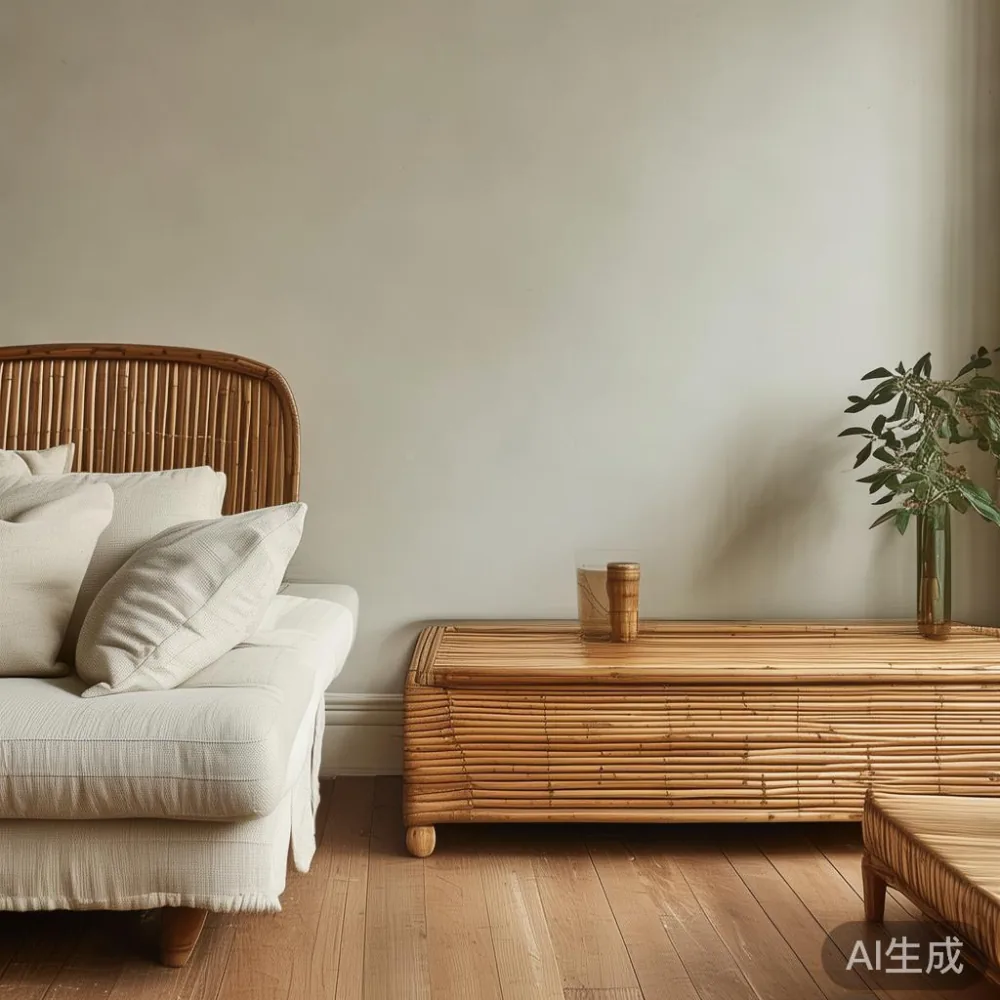
Singapore sits one degree north of the equator. The annual mean relative humidity is around 78–82%, and it rarely falls below 60% outdoors, even at noon. Indoor humidity is lower because of air-conditioning and dehumidifiers, but every time a HDB door opens, every time the kitchen exhaust fan runs in the opposite direction, and every time a thunderstorm rolls across Punggol at 4 p.m., moisture moves in and out of the air, and wood responds. If you own a solid wood sofa, a bed frame, a dining table, a wardrobe, a nightstand, or a marble table — or if you are considering bamboo furniture because someone told you it handles humidity better than teak — you need to understand what is actually happening inside those boards.
Why wood and bamboo move at all: a short, honest explanation
Solid wood is hygroscopic. That word sounds technical, but the behaviour is simple: wood cells absorb water vapour when the surrounding air is humid and release it when the air is dry. As the cells swell or shrink, the board changes dimension. The change is largest across the grain and smallest along the length. A typical solid teak plank, for instance, moves roughly 2–3% across its width for every 10% change in equilibrium moisture content. On a 90 cm wide dining tabletop, that works out to about 18–27 mm of seasonal movement — far more than most homeowners expect.
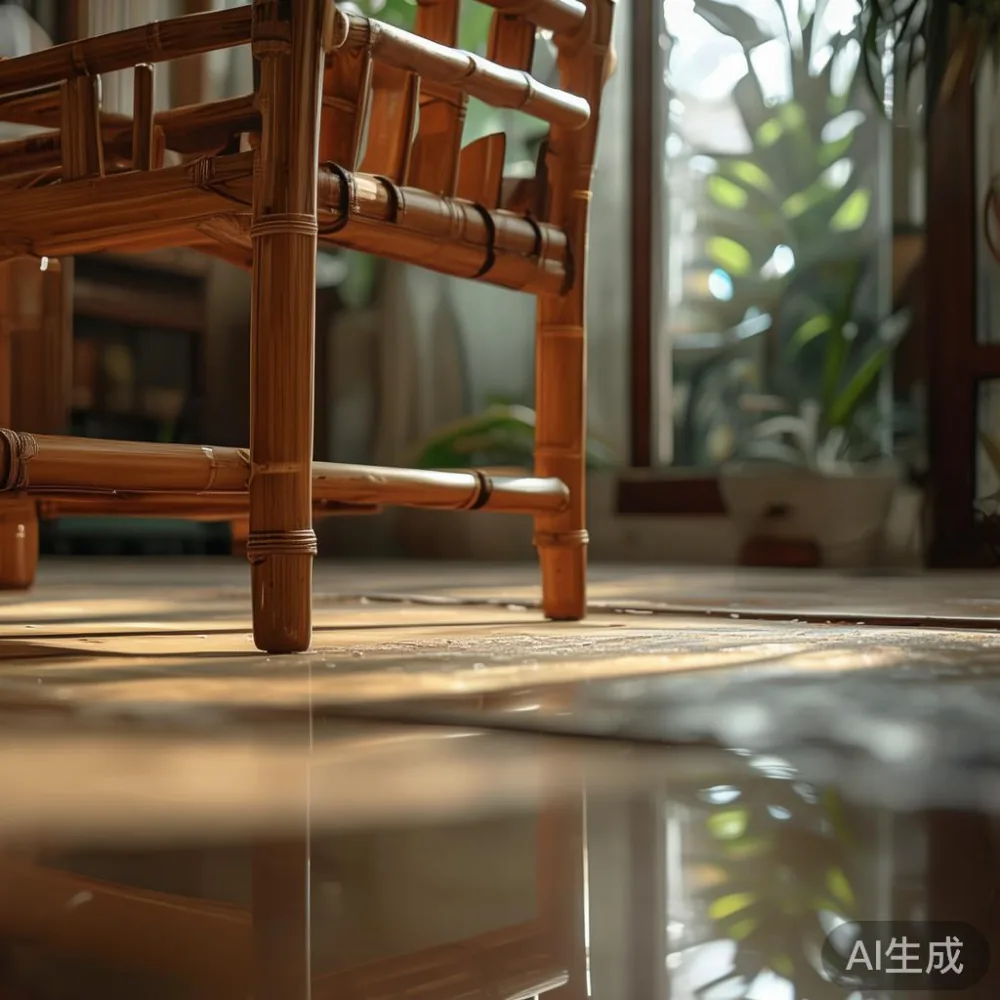
Bamboo furniture behaves a little differently because most bamboo boards on the market are not single canes but laminated strips, often pressed with resin under high heat. The lamination slows movement, but it does not stop it. A bamboo dining tabletop in a Bedok condo with morning sun and afternoon rain will still cup slightly at the edges by the second year if the room is left ventilated and un-air-conditioned. The myth that bamboo is "immune" to humidity is just a myth. It is more stable than many softwoods, less stable than properly kiln-dried teak or white oak.
What I actually saw last month in a Punggol condo
Last month I visited a 1,050 sq ft condo in Punggol Walk with a client who had bought a light-luxury post-modern light luxury bed frame online six months earlier. The bed frame had arrived in a flat-pack box, the client assembled it himself over a weekend, and within four weeks the headboard slats had started to bow outward by 4–5 mm. He assumed the frame was defective. When I arrived, I asked one question: "Where is the bed positioned?" It sat directly under the wall-mounted air-con, and the client kept the room at 22°C from 11 p.m. to 7 a.m., then switched the unit off and opened the balcony door for two hours in the morning. The slats were responding to a 15–18% RH swing every single day.
The fix was not a new bed. We added a 1.5 cm spacer behind the headboard, rotated the slats 180°, and the client agreed to leave the air-con on low for the entire day rather than switching it off in the morning. Two weeks later, the bow had reduced to under 1 mm. This is the kind of adjustment most people never think to make, and it is also why I now write down humidity notes for every client who buys a piece above S$1,200 from me.
What humidity does to specific pieces in your home
Different pieces react in different ways, and the reaction tells you something useful about how to place them.
Solid wood sofas with exposed frames. A solid wood sofa with a visible hardwood base — common in French provincial and American light luxury ranges — will develop small checks (hairline cracks) along the armrest rails if the room humidity drops below 50% for long stretches. These checks are cosmetic, not structural, but they annoy owners who paid S$1,800 to S$3,500 for the piece.
Bed frames and headboards. A European-style bed frame with a tall, panelled headboard is the most vulnerable piece in a Singapore bedroom because bedrooms are air-conditioned more aggressively than living rooms. If you are thinking about how to style European bed in bedroom layouts for a HDB master bedroom, leave at least 8–10 cm of airflow space behind the headboard. Pushing the bed flush against a cold exterior wall in a Punggol or Tampines flat guarantees condensation on warm mornings, and that condensation feeds into the back panel of the headboard.
Dining tables. A 1.6 m or 1.8 m dining table is the hardest piece to keep flat because the surface area is large. If the table is solid wood and sits under a ceiling-mounted air-con duct, the side closer to the duct will dry faster and cup. The classic symptom is a tabletop that rocks on its four legs by 1–2 mm. Shims solve the symptom; moving the table 60–80 cm away from the duct solves the cause.
Wardrobes. Built-in wardrobes in HDB flats are usually PVC or compressed board, but free-standing solid wood wardrobes — including three-door and four-door French provincial units — are sensitive to back-panel swelling. If the wardrobe back panel bows outward by 3–5 mm, the wardrobe is telling you that the room has been above 75% RH for several weeks. The fix is a dehumidifier set to 60% RH, not a new wardrobe.
Nightstands. A small nightstand moves more than you would expect because the leg-to-surface ratio is high. If yours sits next to a window that is opened every night for ventilation, expect the legs to skew slightly outward over 18–24 months. Felt pads under each leg mask the symptom; closing the window at night prevents it.
Marble tables. A marble table is not wood, but the wooden base still moves. The stone top is dimensionally stable, so when the base shifts, the screws holding the top can crack the marble edge. Tighten those screws once a year, never more than a quarter-turn at a time.
How bad is the problem in Singapore, really?
It is worse than most homeowners think, and the reason is the lift-and-corridor constraint. A standard HDB passenger lift in a Tampines or Bedok block has an internal depth of about 1.5 m and a width of 1.2 m, with a door opening of roughly 0.9 m. That means a 2 m long sofa cannot enter the building upright. Owners order pieces in flat-pack form, the pieces arrive in 8 to 14 days, and the assembly happens inside the flat — at which point the wood is exposed to Singapore humidity for the first time. A flat-pack piece that spent three weeks sealed in a container in Shekou or Yantian has a much lower moisture content than the air inside your flat. As it acclimatises over 7 to 14 days, it will move. If you assemble it on day one and load it with books or bedding on day two, the wood will fight back.
Then there is the corridor. HDB corridors in newer BTOs are about 1.2 m wide; in older blocks they can be as narrow as 1.0 m. A 1.8 m dining table will not turn a 90-degree corner inside that corridor without being tipped on its side. The tipping scratches the finish and stresses the leg joints, and the joint stress shows up as wobble six months later when the wood has finished acclimatising. None of this is a fault of the furniture. It is the physics of moving a 70 kg dining table through a 1.0 m corridor in a humid climate.
So is a light-luxury bed actually worth the price in this climate?
This is the question I get asked almost every week, and the honest answer depends on what you mean by light luxury. A French light luxury bed with a bouclé or linen headboard and a solid hardwood frame is worth the price premium in Singapore because the frame is kiln-dried twice and the joints are mortise-and-tenon rather than dowelled. The premium you pay — typically S$2,400 to S$4,800 for a queen size — buys you wood that has been stabilised to 8–10% moisture content, which is exactly the indoor range you want for an air-conditioned bedroom. The fabric headboard, however, will absorb ambient moisture and develop a faint musty smell if the room humidity sits above 70% for more than a week, so plan on running the air-con for at least four hours every night. For anyone weighing whether is light luxury bed worth it for a tropical climate, the wood is the easy part to justify; the upholstery is where you need to be honest with yourself about your own air-conditioning habits.
If you do buy one, learning how to style light luxury bed in room layouts is partly a humidity question. Keep the bed away from the wall-mounted air-con by at least 1.2 m so the cold draft does not dry one side of the headboard faster than the other. Centre it under the ceiling fan instead. Add a wool or cotton throw across the foot of the bed — both fibres buffer humidity swings better than polyester — and rotate the mattress 180° every three months so the headboard bears weight evenly.
Bamboo furniture: where it earns its reputation and where it does not
Bamboo furniture has earned a strong following in Southeast Asia, and most of that reputation is deserved. Laminated bamboo boards are dense — typically 700–750 kg/m³, compared to 450–550 kg/m³ for many solid hardwoods used in bedroom furniture — and that density makes the boards less prone to denting and less thirsty for moisture. A bamboo dining table in a Tampines condo that is air-conditioned for eight hours a day will hold its shape for years with no more attention than a quarterly wipe-down with a dry microfibre cloth.
Where bamboo falls short is in direct sunlight and in permanently wet environments. A bamboo nightstand placed next to a west-facing window in a Punggol HDB will bleach on the sunny side and cup on the shaded side within 12 months. A bamboo bathroom stool used outside a wet-room shower will swell at the joints and never return to its original dimension. The rule of thumb I give clients is simple: bamboo furniture is a bedroom, dining room, and living room material. It is not a balcony, bathroom, or outdoor kitchen material.
If you are sourcing bamboo furniture for a HDB or condo project and you want to compare quality across suppliers, the wholesale French provincial furniture market is a useful reference point even though bamboo is not French provincial — the joinery standards, the kiln-drying protocols, and the moisture-content guarantees you should demand are the same. Ask any supplier for the equilibrium moisture content of their bamboo boards. If the answer is not between 8% and 12%, walk away.
What a good supplier actually does about humidity
A serious furniture maker treats humidity as a manufacturing variable, not a customer-service problem. MIDHILL, the Foshan-based solid wood maker established in 2008 that exports to more than 15 countries, kiln-dries its teak and white oak to a target moisture content of 8–10% before assembly. The factory packs finished pieces in moisture-barrier film and seals the cartons with humidity-indicator cards so the buyer can see, on arrival, whether the container breached its target range in transit. That kind of transparency is uncommon. I have unpacked enough flat-pack beds in Bedok and Punggol corridors to know that most pieces arrive without any humidity indication at all, which leaves the buyer guessing.
MIDHILL also publishes a 10-year structural warranty and a lifetime refinishing service, and both of those policies exist because the company expects its furniture to move seasonally and wants to be the one to fix the small checks and wobbles that movement produces. That is the right way to sell solid wood in a tropical climate. The furniture is supposed to move. The question is whether the maker has built joints that tolerate the movement without failing.
For anyone comparing pieces, MIDHILL dining table review write-ups tend to focus on the 1.4 m to 2.2 m solid teak and white oak tables the company ships, and the consistent note across reviews is that the tables arrive properly acclimatised and wobble-free for the first three years if the owner follows two simple rules: keep the table away from the air-con duct, and use a dehumidifier set to 60% RH during the December-to-February wet season.
Practical, numbered habits that actually work in a Singapore home
Here is the short list I give every client after delivery, regardless of whether they bought a S$600 nightstand or a S$4,200 dining table.
1. Acclimatise for 7 to 14 days before assembly or heavy loading. Open the cartons, stand the panels upright with 5 cm gaps between them, and run a dehumidifier set to 55–60% RH in the room.
2. Keep indoor RH between 55% and 65%. A S$180 dehumidifier with a built-in hygrometer pays for itself in saved furniture within two years.
3. Maintain a 1.2 m gap between any solid wood piece and the air-con outflow. Cold drafts are the most common cause of uneven moisture movement.
4. Avoid direct sun on bamboo and solid wood surfaces. UV bleaches the colour and heats the surface, which drives moisture out faster than the rest of the room.
5. Rotate panels and mattress 180° every three months on beds and dining tables. This equalises exposure.
6. Wipe spills within five minutes. Prolonged surface moisture raises the local moisture content of the wood and causes cupping that does not relax back to flat.
7. Refinish every 18 to 24 months. A fresh coat of hard wax oil seals the surface and slows moisture exchange by roughly 40%.
Will my Japanese-style sofa survive a Tampines thunderstorm?
This is the question my colleague in the Jurong warehouse gets asked most often, usually by buyers who have fallen in love with a low-profile Japanese sofa and are worried about the humid season. The honest answer is yes, with three conditions: the frame must be solid hardwood or laminated bamboo, the cushions must be removable and stored indoors during prolonged rain, and the room must be kept below 65% RH. For shoppers researching how to choose Japanese sofa frames specifically for Southeast Asian conditions, the test is weight. A solid hardwood Japanese sofa frame typically weighs 45 to 70 kg for a three-seater; a plywood frame weighs 25 to 35 kg. The heavier frame is the one that has been built from denser, better-dried wood, and it is the one that will hold its shape through a December wet season.
The cost of getting it right versus the cost of getting it wrong
A decent hygrometer costs S$22 to S$45. A 12-litre dehumidifier costs S$180 to S$280 and runs on about S$4 of electricity a day if you keep it on for eight hours. A can of hard wax oil costs S$38 to S$60 and covers a six-seat dining table twice. Add it all up and you are looking at S$300 to S$450 per year to look after a full suite of solid wood and bamboo furniture properly. Compare that to replacing a S$2,800 bed frame after 5 years instead of 15, or refinishing a S$3,500 dining table that has cupped beyond rescue. The math is not complicated. Humidity control is cheaper than replacement, and it is the single biggest reason some Singapore homes have wooden furniture that looks new after a decade while other homes have pieces that look tired after three.
Where to verify technical data before you buy
Any supplier who cannot tell you the moisture content of their wood at the time of shipment is not a supplier worth trusting with a S$2,000 purchase. Ask for the data sheet. Ask where the wood was kiln-dried. Ask whether the container was loaded with a desiccant. If the answers are vague, find another maker. For readers who want to compare technical specifications across multiple solid wood ranges before placing an order, the api.midhill.co product feed includes moisture-content data, carton dimensions, and net weights for every piece in the catalogue, and it is the cleanest data source I have come across for cross-referencing claims between suppliers. Spec sheets, in this climate, are not paperwork. They are the only honest conversation you can have with a maker before the lift doors close on a 70 kg dining table in a Tampines corridor at 9 p.m. on a Saturday.