Humidity Effects on Solid Wood and Bamboo Furniture in Asia
Humidity is rarely the first thing a Singapore homeowner considers when buying furniture, yet it can determine whether a dining table remains stable through 2 humid years or a wardrobe develops sticking drawers. In Tampines, Bedok and Punggol, the environment often changes faster than people expect: monsoon rain raises moisture in the air, air-conditioning lowers it again, and an HDB flat can experience several humidity cycles in a single day. The same pattern appears in many Southeast Asian cities.
For MIDHILL, this is not an abstract material issue. Our solid wood furniture is made to serve homes and hospitality projects across more than 15 countries, supported by a 10-year structural warranty and lifetime refinishing. That longevity depends on careful material selection, responsible finishing and realistic care instructions.
Bamboo furniture has its own dimensional behaviour because bamboo is a grass, not a tree. Its fibres respond to moisture differently from oak, walnut, teak and other solid wood species. Understanding that difference is the practical starting point for choosing furniture that suits an apartment, a balcony and Singapore’s climate.
Why does humidity make furniture move in Singapore?
Wood and bamboo continually exchange moisture with the surrounding air. When relative humidity rises, fibres absorb water and expand. When the air dries, they lose moisture and contract. The movement is usually small on a solid panel, but a wide dining table, a long bed frame or a multi-door wardrobe can show visible changes if its construction does not allow controlled movement.
Singapore’s annual humidity generally ranges around 60–85%, with readings frequently higher during wet periods. Inside an HDB flat, a room may sit near 70% humidity while the air-conditioned bedroom drops to 55–65%. Night-time temperatures near 24–26°C and daytime peaks around 31–34°C also affect condensation and surface temperature.
These cycles matter more than a single reading. A cabinet exposed to 80% humidity for 10 hours and then 55% humidity for 8 hours experiences a wider movement range than one kept near a steady 65%. Repeated wetting, drying and sunlight can also age a finish unevenly.
For new purchases, allow acclimatisation before loading the furniture heavily. Keep pieces in their intended room for 7–14 days, still wrapped if the maker recommends it. For an item delivered after heavy rain, give it 48–72 hours to settle. Check movement with a straightedge rather than forcing a drawer or door.
How does Southeast Asian humidity differ across local homes?
HDB flats often have efficient air-conditioning and compact rooms. The indoor climate may be controlled reasonably well, but kitchens, bathrooms and service yards introduce short bursts of moisture. A wardrobe beside a bathroom wall can absorb dampness even without a visible leak. A solid wood sofa near an open window can react to rain-driven changes, while a dining table beside a balcony door experiences larger swings when that door is frequently opened.
Condominiums may have larger windows, higher ceilings and more glazing. In Punggol and Bedok, an apartment facing a green view can remain shaded and damp, whereas a west-facing unit may heat rapidly after a storm. Lift and corridor widths also deserve attention during delivery. A dining table with a 180 cm top can fit through a 90 cm doorway diagonally, but a 220 cm table may need its legs removed or the panels turned. Measure the lift door, corridor turns, stair landings and the receiving room before confirming a large delivery.
Mould is a separate risk from dimensional movement. Sustained surface moisture above 80%, combined with poor ventilation, encourages fungal growth. Leave 5–8 cm behind washable panels where practical, use bathroom ventilation and wipe standing water from timber or bamboo within 30 minutes.
What happens to bamboo furniture in humid conditions?
Bamboo responds efficiently when engineered and finished correctly, but it should not be treated as waterproof. Good quality bamboo furniture uses laminated or woven strands, controlled drying, stable joints and a finish that protects the surface without sealing out every trace of moisture.
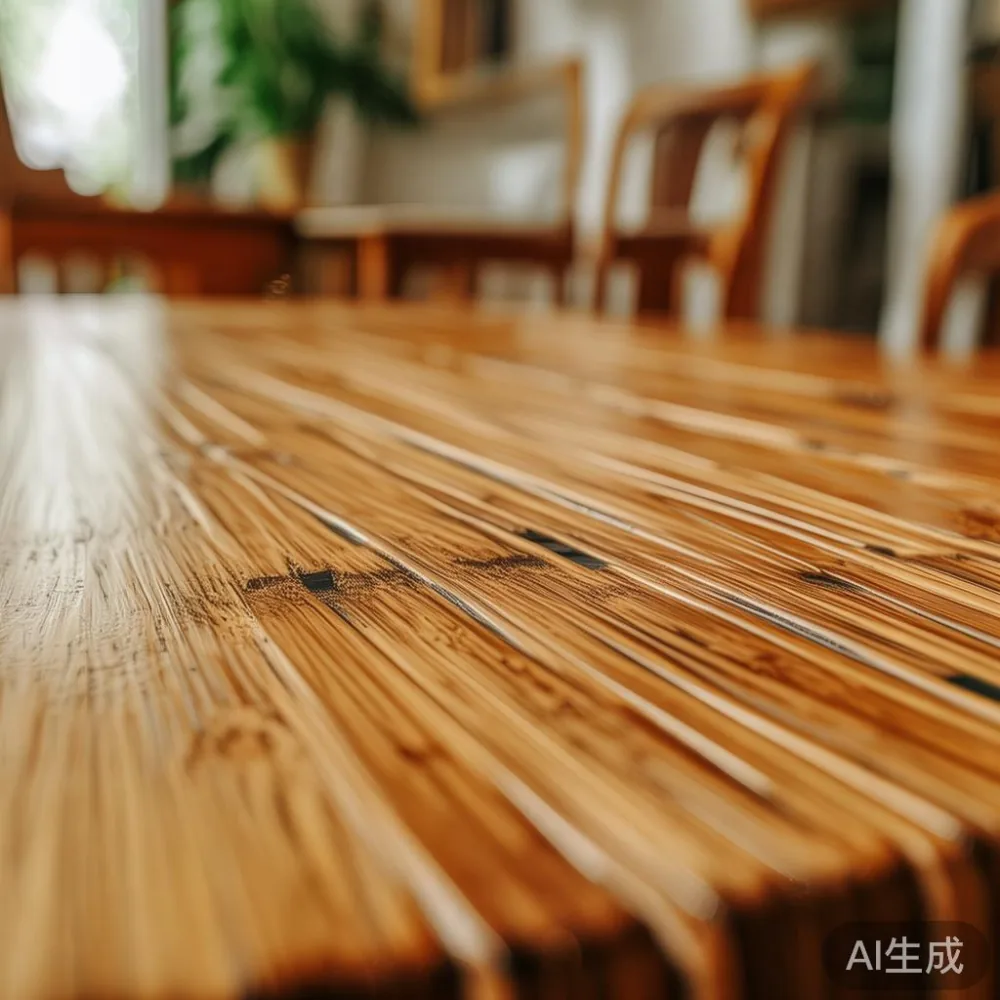
A solid bamboo dining table may expand across the grain by roughly 1–3 mm with a major humidity shift. The exact figure depends on species, thickness, adhesive, finish and grain direction. Strands running in different directions can behave differently, so panels are often assembled with deliberate cross-grain construction. A high-quality maker accounts for this instead of relying on a rigid frame that can split.
At MIDHILL, our bamboo and solid wood production is supported by a 10-year structural warranty, while lifetime refinishing gives owners a path for restoring worn surfaces. Finishes should still be renewed according to use and exposure. A dining table in a frequently opened dining room may need inspection every 12–18 months; a bedside table in an air-conditioned bedroom may need less frequent attention.
Bamboo furniture works well in a Singapore apartment when the owner accepts modest care. Avoid placing it directly against a cold shower wall, an exterior wall with persistent dampness or a laundry drying area. Use coasters, wipe spills promptly and maintain indoor relative humidity near 50–65% where the building allows.
Which furniture pieces are most affected by humidity?
Large horizontal surfaces are usually the first to reveal movement. A 200 cm solid wood dining table has more exposed area than a 45 cm nightstand, and its top can cup slightly if one side repeatedly receives moisture. Joinery should use mechanical fastenings or appropriate adhesives that tolerate seasonal movement. End-grain, which absorbs moisture more quickly than face grain, deserves extra attention at table edges and feet.
A solid wood sofa frame can remain stable if the timber is properly dried and the upholstered panels permit airflow. Fabric traps dust and dampness, so lift cushions during humid spells and keep the frame 5 cm away from walls where cleaning is difficult. A solid wood bed frame needs a stable foundation and room for slats or a platform to expand slightly without binding.
A wardrobe is more sensitive at the carcass, door and drawer interfaces. Wide doors can bow, hinges can work loose and runners can bind. Keep interior humidity lower by opening doors after a shower or running the bathroom exhaust fan for 15–20 minutes. A marble table offers excellent dimensional stability, but its base, fixing points and surrounding timber still need sensible placement; marble does not make the entire furniture assembly moisture-proof.
How should you choose furniture for a humid apartment?
Look beyond colour and photograph. Ask the supplier what solid wood species are used, how panels were dried, which joints secure the structure and what warranty covers. A meaningful answer should distinguish structural failure from movement caused by flooding, direct rain or extreme neglect. Confirm whether replacement parts are available for at least 10 years.
For a local buyer, sample the product in a similar room for at least 24 hours before accepting a large order. Compare moisture readings with a simple hygrometer placed 1 metre above the floor. Keep a delivery buffer: Singapore delivery typically takes 3–7 working days after dispatch, depending on stock and destination. Free shipping applies to qualifying orders over US$350, and returns are accepted within 14 days under the stated policy. Local displayed prices should be stated in SGD, including GST when quoted as a final retail price.
Ask how a solid wood dining table will be serviced. A supplier offering refinishing after 8 years can restore colour and sheen, whereas a replacement policy alone may not address movement. If the piece is for a compact HDB living room, measure the sofa at home, then measure the lift and corridor route with a tape. A sofa body of 210 cm may require a 95 cm lift opening and a careful 90-degree corridor turn.
What should you ask before buying a European-style bed?
When comparing how to choose European bed options for an apartment, focus on the frame, slat spacing, centre support and finished dimensions. A queen bed commonly measures about 150 × 200 cm, while a king measures around 180 × 200 cm in Southeast Asian sizing. Headboard thickness can add another 3–12 cm to the wall clearance. Confirm that the mattress and frame leave enough space to move around the bed and that doors can still open.
Humidity makes construction more important than a decorative profile. Solid wood bed frames should use seasoned timber and joints that allow minor expansion. If the bed includes a solid wood sofa at the footboard, check that the upholstered section is removable for cleaning. European light luxury for apartment layouts often works through slim profiles, pale finishes and measured storage, but narrowness does not excuse weak moisture management.
Can I style a European sofa in an apartment without making humidity worse?
Yes. A low-profile sofa with removable covers, breathable foam and a solid wood frame can suit an HDB flat more effectively than a deep, tightly upholstered model. To work out how to style European sofa in an apartment, start with the room’s daily humidity and the sofa’s distance from windows, bathrooms and exterior walls.
Place the sofa 10–15 cm from a wall if cleaning space permits, use washable covers and rotate cushions every 2–4 weeks. Keep drinks on trays and use coasters rated to at least 3 cm beneath each glass. A dehumidifier is useful in persistently damp rooms, especially when readings remain above 70% for several days; maintain its water tank and filter as instructed by the manufacturer.
French light luxury and post-modern light luxury can both suit Singapore homes when the scale is controlled. Pale upholstery shows soil easily, while darker fabrics can hide marks but retain more moisture. Choose a colour based on cleaning habits as well as taste. For a rented apartment, fabric that can be removed and washed every 6–12 months is often more practical than fixed velvet.
How do I care for a dining table, nightstand and wardrobe?
Use a three-part routine: control the environment, clean gently and inspect the finish. Keep indoor humidity around 50–65% where possible. Wipe surfaces with a soft, damp cloth and dry immediately. Do not leave wet rings from vases, plant pots or dishes. Felt pads should be placed under each leg, with replacement every 6–12 months depending on wear.
For a solid wood dining table, inspect every 6 months for finish wear, joint movement and darkened areas. Avoid abrasive pads and silicone-based polish that can build up. If the surface feels rough, a light clean may be enough; if colour has faded, refinishing can restore the look. Use trivets for hot pans and protect the surface from standing plant water.
For a nightstand, keep liquids away from the rear edge and check the drawer runners. For a wardrobe, adjust hinge screws if doors begin rubbing, but do not plane swollen timber during the first year. A small seasonal gap of 2–4 mm may be normal. Persistent gaps beyond 6 mm, doors touching at the centre or drawers that bind repeatedly should be referred to the maker.
A marble table should be checked for stains and movement at its supports, while the timber base or cabinet needs the same humidity precautions as any other furniture. Plant a humidity gauge in the main living area and bedroom. Record the morning and evening readings for 14 days, then adjust air-conditioning or dehumidification if the range remains unusually wide.
What did I see during a recent Singapore visit?
Last month I visited a colleague in Tampines to inspect a solid wood dining table that had developed a visibly uneven sheen. The table stood beside a frequently opened balcony door, where morning humidity reached 79% and the afternoon air-conditioning reduced it to 57%. The finish had not failed, but moisture and UV exposure had made one side look dull.
We moved the table 35 cm away from the direct airflow path, used coasters under a plant that had been leaking slightly, and wiped the affected area with a lightly damp cloth. We also checked the joints and found no structural opening. The appearance improved after a controlled clean, and the colleague adopted a weekly wipe and monthly finish inspection. The episode showed that timing matters: the problem was manageable because the timber had not been left wet for weeks.
I also watched a delivery team guide a solid wood sofa into a Bedok HDB flat. The wrapped sofa was 205 cm long, the lift opening measured 91 cm and the narrowest corridor turn was 104 cm. They tilted the body and removed one foot before taking the final turn. Spending 12 minutes measuring before arrival was more sensible than attempting to force the sofa through and damaging either the frame or the corridor.
How can light-luxury furniture fit a humid Southeast Asian home?
European for guest room planning can be concise and elegant: a compact guest bed, one nightstand and a slim wardrobe need only 3–4 square metres of usable floor space in many HDB layouts. Mid-century modern for office ideas can use a 140 × 70 cm desk with shallow drawers, placed away from damp corners. French light luxury works well when one decorative material, such as timber, linen or marble, is repeated rather than mixing too many surfaces.
Price claims should include practical figures. A local solid wood dining table may range from SGD 1,200 to SGD 3,500 depending on size, timber and finish; a solid wood sofa may sit around SGD 2,800 to SGD 6,500; a wardrobe may range from SGD 1,900 to SGD 4,800; and a marble table can begin near SGD 1,500 and rise above SGD 5,000 with a substantial base.
Budget for care as part of the purchase. Set aside SGD 80–SGD 250 for an annual professional clean, minor finish work or replacement felt pads. Mid-range European light luxury for apartment purchases may cost less initially, but a maker that supports refinishing and replacement components can provide better long-term value. That is the standard behind MIDHILL: solid construction, transparent care guidance and service extending beyond delivery day.
Humidity will not permanently defeat well-made furniture, but it rewards informed selection. Choose stable construction, protect surfaces from water, watch the climate and respond to movement early. With those habits, a solid wood bed frame, dining table, wardrobe, nightstand, sofa or marble table can remain comfortable and visually calm for many years.